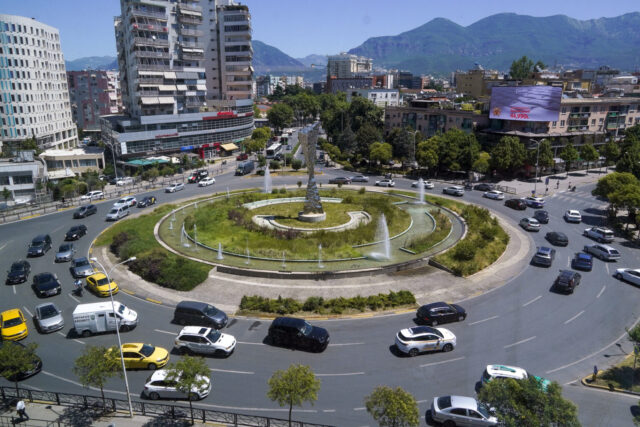
Equally concerning are the data on benzene, a substance classified as carcinogenic. At “21 Dhjetori” up to 42.8 micrograms per cubic meter were recorded, more than eight times above the European Union limit, while at Zogu i Zi the level reached 25 micrograms per cubic meter.
The plan also highlights worrying levels of lead (Pb) in all urban points monitored, signaling continued exposure to a heavy metal with known consequences for human health.
PHYSICIAN
However, according to specialists, the greatest risk continues to come from fine PM2.5 particles.
Referring to scientific evidence and recommendations from the World Health Organization, pulmonologist Jul Bushati explains that these particles are particularly dangerous due to their size.
“PM2.5 particles are so small that they pass through the pulmonary alveoli and can enter the bloodstream,” he explains.
According to Bushati, the level of 70.7 micrograms per cubic meter recorded at “December 21” is about three times above the European Union limit and almost five times above the WHO recommendation.
“PM2.5 levels of 70.7 µg/m³ according to studies represent a serious risk to the lungs, increasing the likelihood of inflammation, worsening asthma, COPD and increasing the risk of lung cancer,” he says.
“Daily exposure to air pollution is like a negative investment in health. The damage accumulates slowly and can appear after years as asthma, chronic bronchitis, COPD or cardiovascular disease,” adds Bushati.
The danger
The concern does not remain only at the level of theoretical risk. The data included in the Air Quality Management Action Plan, based on INSTAT and IHP statistics, show that in Tirana, an average of 108 deaths per year from respiratory diseases were recorded during the period 2012-2019, not including the pandemic years.
In 2023, the number of deaths from these pathologies is 91. The document addresses improving air quality as an important element for reducing the burden of respiratory diseases in the population.
Experts
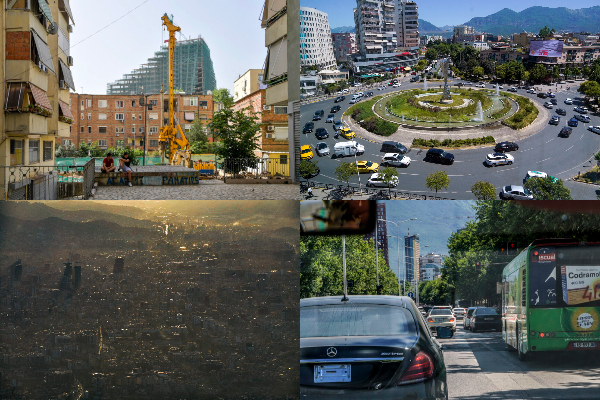
For environmental expert Olsi Nika, the distribution of the most polluted spots on the city map makes clear the main source of the problem.
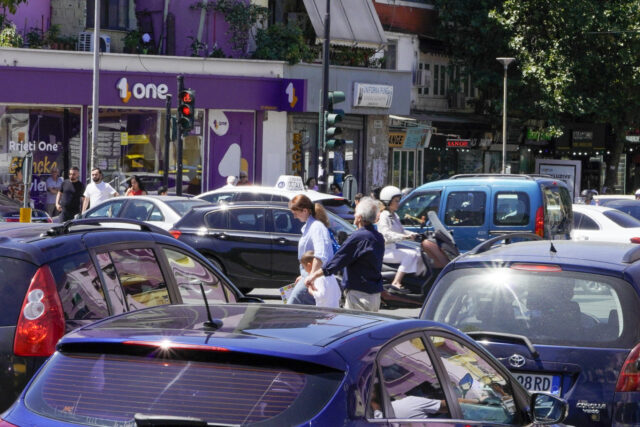
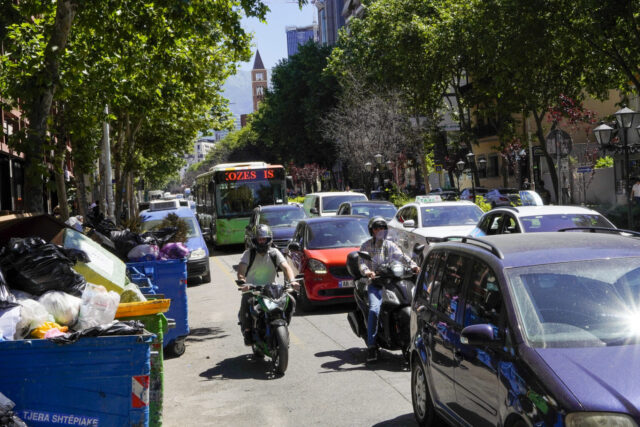
“When you see that the most problematic points are Ataturk, Karl Topia, Kavaja Street or other nodes with intense traffic, you immediately understand that the main source of pollution is road traffic” Olsi Nika
“When you see that the most problematic points are Ataturk, Karl Topia, Kavaja Street or other nodes with intense traffic, you immediately understand that the main source of pollution is road traffic,” he says.
“In many segments we have tall buildings, relatively narrow streets and heavy traffic, creating what in environmental literature is called the ‘street canyon effect’. Air circulates less and pollutants remain trapped for longer near the level where citizens are exposed,” he explains.
According to Nika, traffic remains the dominant source of pollution at the city level, while intensive construction activity particularly contributes to the increase in PM10 particles.
“The situation requires continuous monitoring of construction sites and more rigorous control of emissions during construction processes,” he adds.
Urban planning
But for urban planner Doriana Musai, pollution should not be seen only as a traffic problem or as a result of a few isolated construction sites.
“The report itself highlights that the main sources of pollution are heavy traffic and intensive construction activity, therefore pollution should be read not as an accidental phenomenon, but as a direct result of the urban development model that Tirana has embraced, especially in the last decade,” she says.
“The more the city has densified through intensive construction, the more new traffic flows have been generated”
“The more the city has densified through intensive construction, the more new flows of movement, vehicles, services and pressure on existing infrastructure have been generated. Tirana is not simply experiencing construction growth and traffic growth in parallel; it is producing traffic through the very way it is being built.”
According to Musai, the city has densified much faster than the mobility infrastructure has been reorganized, creating a contradiction that is also reflected in air quality.
At almost all monitoring points, the highest levels of particulate matter were recorded during the October-November period.
reason
Experts attribute this to a combination of heavy traffic, construction activity, the use of heating systems during the cold months, and the thermal inversion phenomenon, when cold air remains trapped near the ground and prevents the dispersion of pollutants.
Hall
Faced with this situation, the Municipality of Tirana has drafted a plan of measures that foresees the creation of Low Emission Zones (LEZ), the gradual electrification of public transport, the restriction of the most polluting vehicles, the expansion of the bicycle network, the increase of green spaces and stricter monitoring of construction sites.
“The real question is not whether Tirana is putting in bicycles or trees, but whether the urban model being produced reduces the need for cars,” says Musai.
The scale of the problem is also reflected in the financial bill of the solution. To turn the objective of cleaner air into reality, the Municipality of Tirana has estimated that around 71.6 billion lek in investments will be needed by 2040. The document allocates 7.89 billion lek for short-term interventions, 18.75 billion lek for medium-term measures and 45 billion lek for long-term projects, which include electrification of public transport, low-emission zones and the gradual reduction of the main sources of pollution in the city.
But even the experts themselves warn that the success of these measures will depend on how they are implemented.
“The real question is not whether Tirana is putting in bicycles or trees, but whether the urban model being produced reduces the need for cars,” says Musai.
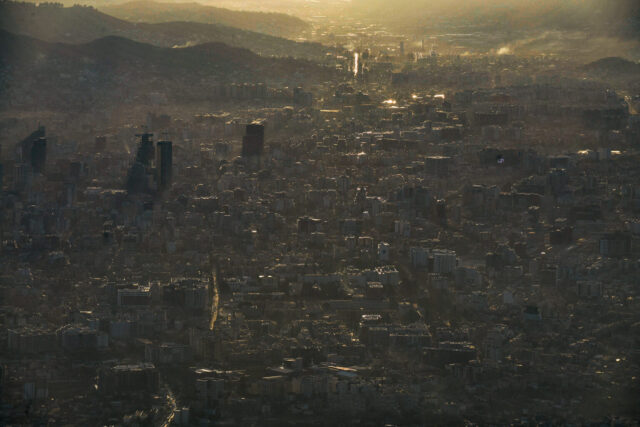
From Dajti, the smog is still there.
But today it is no longer simply a visual perception.
In “21 Dhjetori” Zogu i Zi, Kavaja Street or at the intersection of Dibra and “Bardhyl” Street, pollution has a name, address and numbers.
And according to data from the Municipality of Tirana itself, it continues to be absorbed every day by hundreds of thousands of residents of the capital. /Faktoje.al