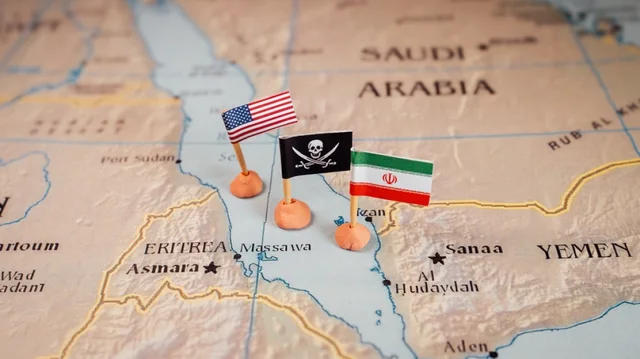
The global energy chain appears to be facing a new threat following developments in the Strait of Hormuz as Iran has reportedly asked Yemen’s Houthis to be ready to close the Red Sea oil shipping corridor in the event the United States attacks Iranian energy infrastructure.
According to Iran’s close allies, the idea has been discussed within the Islamic Republic’s leadership and the message has already been conveyed to the Houthis.
According to foreign reports, the Houthis were recently informed of Tehran’s request, which had not been reported until now. However, they did not provide further details on how the message was conveyed, nor did they clarify whether it followed Donald Trump’s threat on Tuesday to attack Iran’s energy infrastructure.
Houthis deploy drones near Bab el-Madeb
A group close to the Houthis said the group has completed preparations for attacks on ships, deploying missiles and drones near the Bab el-Mandab Strait, the gateway to the Red Sea in the Yemeni highlands overlooking Hodeida and the Gulf of Aden, and is now awaiting orders to launch operations.
Any threat to the Red Sea and the Bab el-Mandab Strait risks dramatically worsening the global energy crisis caused by Iran’s closure of the Strait of Hormuz, underscoring the explosive risks of a new round of military conflict.
With the Strait of Hormuz already closed, potential Houthi attacks on ships or ports in the Red Sea would cause a simultaneous disruption of both major oil export routes in the Middle East, opening a new front in both the energy crisis and Iran’s broader conflict with the United States.
Guard delegation is in Yemen
The same group added that representatives of Iran’s Islamic Revolutionary Guard Corps, who are already in Yemen, will oversee the decision on when to close the Bab el-Mandab Strait. In a sign of escalating tensions in the region, the Houthis fired missiles at Saudi Arabia, accusing the kingdom of bombing an airport under their control on Monday.
The move broke a four-year ceasefire in the conflict between Riyadh and the group. Torbjorn Soltvedt, chief Middle East analyst at risk analysis firm Verisk Maplecroft, said the resurgence of tension between the Houthis and Saudi Arabia comes at a particularly bad time.
“If the fighting intensifies and spreads to export infrastructure and maritime transport in the Red Sea, the only major alternative route for oil exports from the region will be threatened,” Soltvedt said.
It is learned that the kingdom was taking threats from Iran and the Houthis very seriously, adding that Saudi Arabia was aware that the Yemeni group was now coordinating closely with Iran in the Red Sea region.
The conflict began on February 28, when Israel and the United States attacked Iran, prompting Tehran to close the Strait of Hormuz, through which about a fifth of the world’s energy supplies passed before the war. Tensions escalated further after the collapse of a fragile June ceasefire between Tehran and Washington, reviving fears of a full-scale war.
“Closing the Red Sea will not be difficult”
Since then, a significant amount of Gulf oil has been diverted to the Red Sea via a Saudi pipeline, with the waterway now carrying about 7% of the world’s energy supplies. When the Houthis attacked merchant ships during the Gaza war, major shipping companies were forced to reroute their cargoes via the much longer and more expensive route around Africa.
Given that Saudi Arabia itself diverts 70% of its energy exports through the Red Sea port of Yanbu, any direct attack there would cause a major problem for oil markets. One of the regional sources said Iran’s leadership is seeking to pressure the United States by increasing the potential cost to the global economy.
The threat to shipping in the Red Sea and the flow of Saudi exports is, according to the source, part of the Iranian mindset. Closing the straits will not be difficult, noting that anyone with a weapon can disrupt shipping and does not need sophisticated missiles to do so.
Iran considers the Houthis part of the regional Axis of Resistance, an alliance that also includes Lebanon’s Hezbollah and Shiite militias in Iraq, which are already embroiled in the regional conflict between Tehran and Washington. However, the Houthi rebels have not yet officially entered the war. The United States says Iran provides the Houthis with weapons, funding and training, including support channeled through Hezbollah. Tehran denies the accusations.
Oil prices rise by more than 1%
Oil prices rose more than 1% as concerns about energy supplies intensified after escalating US attacks and reports that Iran had told the Houthis to be ready to close the Red Sea.
Brent crude futures rose 93 cents, or 1.09%, to $85.88 a barrel by 13:20 GMT, while U.S. West Texas Intermediate (WTI) crude rose 89 cents, or 1.12%, to $80.49 a barrel.
“Simultaneous disruptions affecting Hormuz and Bab el-Mandab would significantly increase pressure on the supply chain, limit tanker availability and increase insurance premiums,” explained Wael Makarem, head of financial markets strategy at Exness.