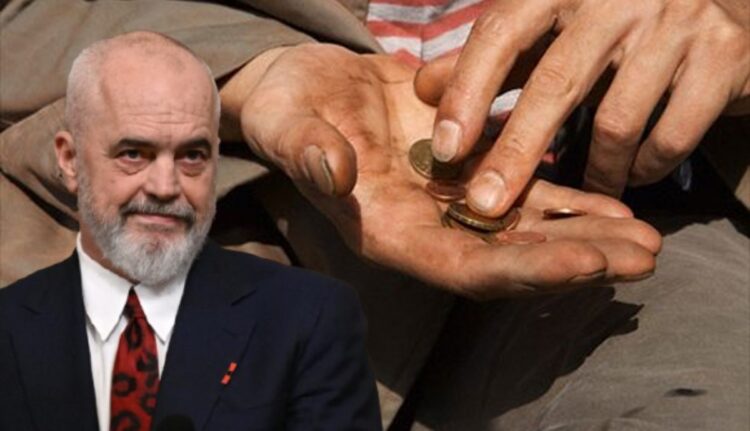
The country has not ensured effective harmonization, coordination, and monitoring of policies to meet the United Nations goal of eradicating poverty by 2030, according to a report by the Supreme State Audit Office.
The performance audit, which covers the period 2022-2024, examined the policies of the responsible ministries, central agencies, the Institute of Statistics, and the municipalities of Durrës and Elbasan.
“The harmonization of Goal 1 of the MDGs — Eradicate poverty in all its forms — with national strategies and programs is incomplete,” the report states. The SAI attributes this conclusion to the lack of a National Indicator Framework, the lack of measurable links between strategic documents and policies, and the fact that the Roadmap for achieving the goals has not yet been approved.
According to the audit, “inter-institutional coordination mechanisms for data collection, monitoring and reporting on progress towards SDG 1 have not functioned.” Most central and local institutions do not have structures or designated responsible persons for pursuing the objectives, while municipalities do not use data on economic assistance and social services to analyze progress against poverty.
The Integrated Planning Information System, which was supposed to link policies, strategic planning, budgeting and the Sustainable Development Goals, is not functioning.
In comments included in the report, the State Agency for Strategic Programming and Aid Coordination acknowledged that the platform is out of order and said it is cooperating with the Ministry of Finance to address the problems and update it.
The SAI described the implementation of measures to achieve the objective as “partially effective”, highlighting that more than 40% of the population is at risk of poverty or social exclusion and that the budget for social protection is significantly lower than the European Union average.
The report also cites INSTAT data, according to which the risk indicator of being poor was 19.2% in 2024. The SAI notes that children and the elderly remain among the most exposed groups, while inequalities between urban and rural areas limit access to education, healthcare and social services.
Financing related to Objective 1 increased from about 60 billion lek in 2016 to 80 billion lek in 2020 and about 100 billion lek in 2024. On the other hand, the report says that contributions from donors and other sources are not yet fully detailed, while the lack of functional systems makes it difficult to link expenditures to achieved results.
The SAI recommended the establishment and formalization, within 2026, of structures or contact points responsible for monitoring and reporting on the objective in central and local institutions. The auditor also requested the return to function of the integrated planning system and the inclusion of the report’s findings in the next meeting of the Inter-Ministerial Committee on Sustainable Development Goals.
“Further efforts are needed to ensure clear, measurable and sustainable progress” towards eradicating poverty in all its forms by 2030, the report concludes. /Monitor