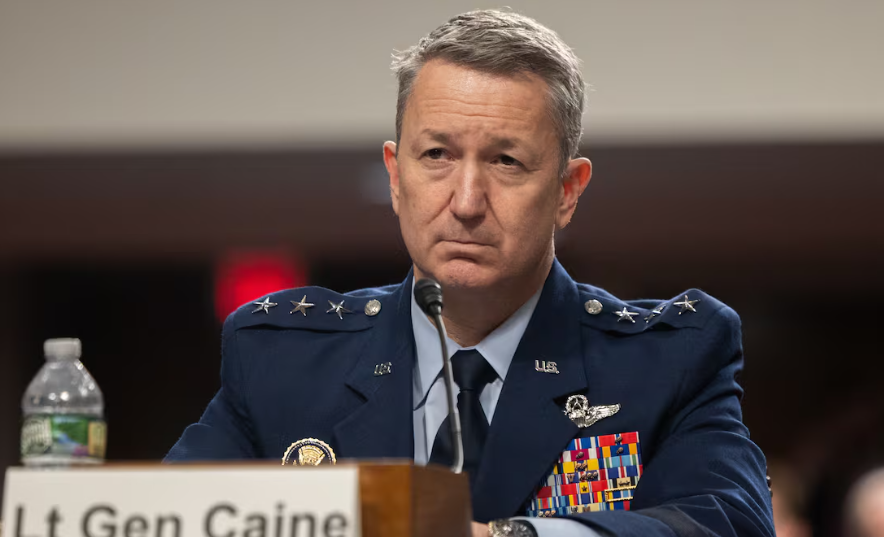
Discussions are intensifying within the US administration on how to avoid further escalation of the conflict with Iran. According to international media, General Dan Kaine, chairman of the US Joint Chiefs of Staff, has held meetings with top national security officials to analyze alternatives that could reduce tensions and pave the way for a solution.
Kaine reportedly exchanged assessments with key figures in President Donald Trump’s administration, including John Ratcliffe, Marco Rubio and JD Vance. The goal of these consultations is to create a unified position before presenting the president with possible options and the costs that each scenario would entail.
Trump’s dilemmas about the use of force
According to sources, Donald Trump remains skeptical of the idea of a ground operation in Iran. He is believed to support a strategy of pressure through aerial bombing, in the hope that Tehran will be forced to return to negotiations and accept Washington’s conditions.
However, military leaders do not share the same optimism. Kaine has warned that air power, while important, is not enough to guarantee the achievement of strategic objectives. He had raised the same concerns earlier in his testimony to Congress.
Although in the early stages of the conflict the US claimed to have severely damaged Iranian military capabilities, six months later the situation on the ground remains complex. The US administration’s top priority remains preventing Iran from developing nuclear weapons.
Reserves for a new offensive
In late July, the Pentagon discussed the possibility of a new, more intense campaign of strikes. Initially, Trump was reportedly inclined to approve an expanded operation, but during the consultations, serious concerns were raised about the consequences such a decision could bring.
Among the voices supporting a more aggressive approach were representatives of the US Central Command (CENTCOM), while Israel was also seen as supporting stronger military pressure on Tehran.
In the end, the US president decided not to authorize a new offensive for the time being, after allies in the Middle East warned that such an attack could trigger Iranian retaliation against strategic energy facilities in the Persian Gulf region.
Ammunition, another concern for the Pentagon
Another element influencing decision-making is the state of US weapons stockpiles. Sources close to the administration say that several key munitions systems have reached levels considered worrisome.
Kaine had warned even before the start of the conflict that a prolonged war would significantly consume American reserves, especially those used simultaneously to support Israel and Ukraine.
Concerns have also been raised by Gulf Arab countries, which fear that the reduction of American air defense systems could leave them more exposed in the event of an Iranian attack.
The strategy is being reviewed.
The Pentagon and CENTCOM have reportedly begun a review of their operational options. Military officials have been asked to come up with new ideas and unconventional alternatives to pressure Iran without escalating the conflict into a wider war.
Scenarios such as hitting bridges or other strategic targets have also been analyzed, but the dominant assessment remains that such actions would not fundamentally change the course of the conflict. According to one source, confronting Iran’s drone and missile infrastructure has become an ongoing battle where targets are constantly being replaced.
A lower cost solution is required.
The belief is gaining ground in Washington that a decisive military victory over Iran would require a large-scale ground intervention, a scenario that would have a very high cost in human lives and military resources.
Although such plans exist at the Pentagon for every possible situation, they are not reported to be currently on the Trump administration’s decision-making table.
For this reason, the focus seems to have shifted towards finding a compromise that would allow the US president to present a positive outcome on domestic policy, while at the same time leaving open the possibility of resuming negotiations with Tehran. One of the options being mentioned is reaching an agreement to guarantee free navigation in the Strait of Hormuz.
Meanwhile, neither General Kaine’s office nor the White House have commented on the content of the internal discussions. A US official has only stated that the chairman of the Joint Chiefs of Staff continues to present the president with professional assessments and a full range of alternatives for any possible development.