Archaeologists have discovered a mysterious underground tunnel during excavations at a Stone Age tomb in Germany that is thought to have been built in the Middle Ages, thousands of years after the tomb was created. The discovery was made near the village of Dornberg, in the state of Saxony-Anhalt, during a preliminary survey ahead of a construction project. Initially, a trapezoidal ditch from the fourth millennium BC was identified, several Neolithic graves from the third millennium BC and a Bronze Age mound from the second millennium BC.
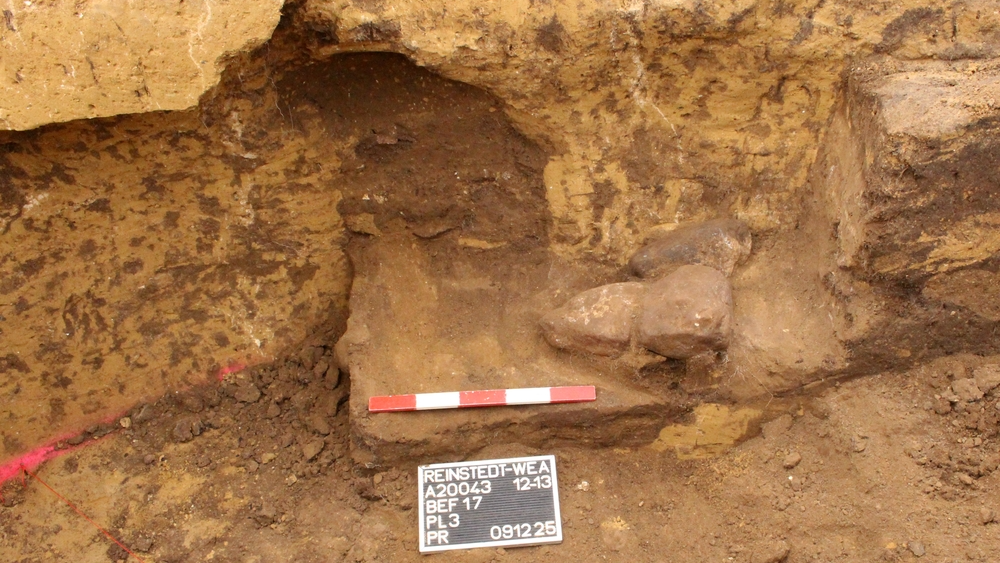
However, during the excavations, archaeologists came across an elongated oval pit and a large stone slab. The pit, about 2 meters long and 0.75 meters wide, interrupted the Neolithic ditch at a right angle. It continued further, turning into a system of tunnels known in German as erdstall, which means underground tunnel.
Would he bring weapons and KILL the team?/A shocking story has come to light from the camp of…
According to experts, these underground systems have been discovered in several areas of Germany and are thought to have been built during the Middle Ages. They are not considered residential spaces, while theories about their use range from hiding places to spaces for ritual activities.
A metal horseshoe, a fox skeleton, late medieval pottery fragments and layers of charcoal were found in one of the narrow passages in the newly discovered tunnel. The entrance had been deliberately blocked with large stones, suggesting an attempt to conceal the activity within.
Trump “does not part” with Iran, US president: It is time for regime change
Archaeologists question whether the area, due to its importance as a pagan burial site, was considered sacred even in the Middle Ages. Another hypothesis is that the location, avoided by the local population due to its reputation, may have served as a suitable place for clandestine activities.