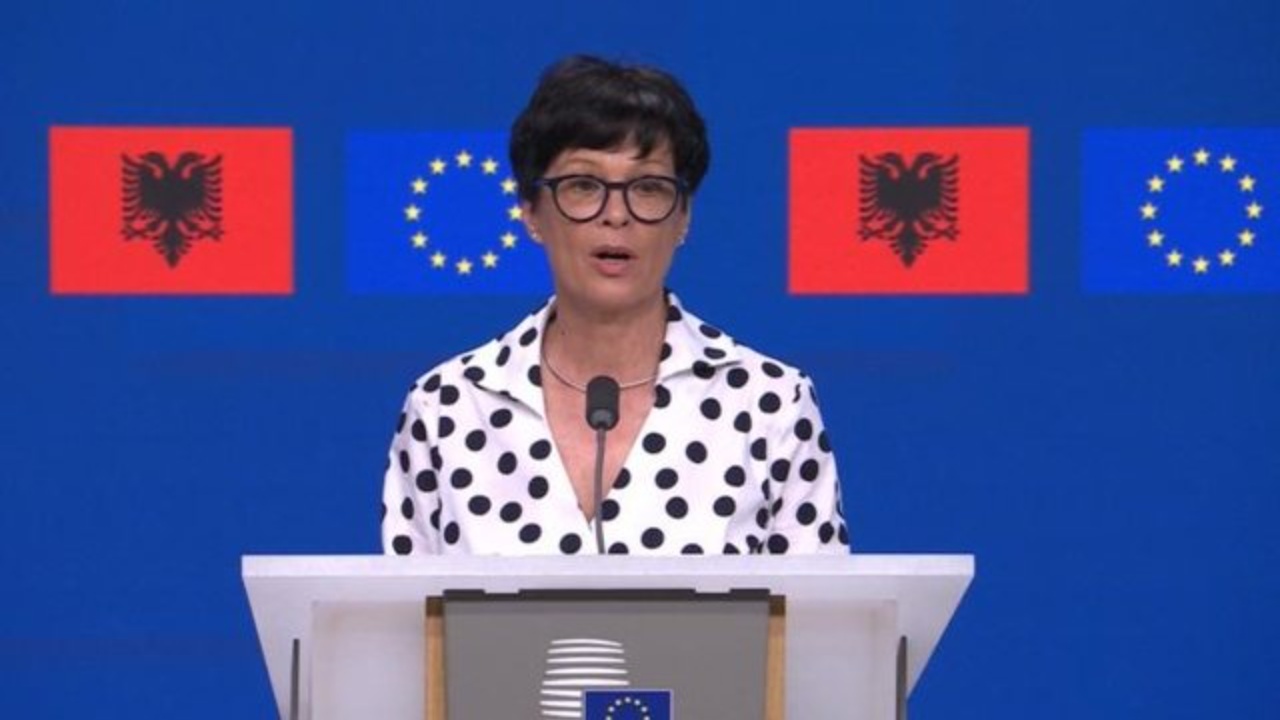
The European Union is preparing for a profound reform of the enlargement process, with gradual integration of candidate countries, stricter checks on democracy and the rule of law, as well as changes to the way the EU itself functions.
European Commissioner for Enlargement Marta Kos said in Zagreb on Tuesday that the world has changed and enlargement must change with it, heralding a new moment for the EU, which she compared to the “Helsinki Moment” of the 1990s, which preceded the Union’s major post-Cold War enlargement. According to Kos, the European Commission is preparing a new proposal for an EU with more than 30 member states.
One of the main changes would be to move away from the “all or nothing” logic. Candidate countries would be able to gradually benefit from integration into European structures, even before full membership. Kos cited as examples the benefits that candidate countries can already receive, such as participation in SEPA and connection to EU energy networks.
“A more structured approach is needed to overcome the time we no longer have,” Kos said, arguing that processes that last for decades could make candidate countries more exposed to political pressure from EU rivals.
Brussels also wants stronger guarantees against backsliding on democracy and the rule of law once a country becomes a member. Kos warned that the EU should not allow what he called “Trojan horses” inside the Union, referring to the risk of a new country moving away from democratic standards years after joining. But the idea could be controversial, as there is a risk that some new countries will be treated as second-class members.
Another goal is to reform the way the EU makes decisions. Kos said some changes could be made without changing the EU treaties, avoiding lengthy negotiations and difficult ratification processes. She proposed more flexible decision-making, less room for a single country to block the entire Union, and potentially smaller institutions.
The Commissioner singled out Montenegro as the most advanced candidate towards membership, while mentioning Albania’s progress in the area of the rule of law and the technical advances of Ukraine and Moldova. She also mentioned Iceland, which has voted to restart the accession process.
The review of enlargement policy comes at a particularly important moment for Europe, especially because of Ukraine’s accession process and the EU’s need to anchor Kiev more firmly in European structures. In essence, Marta Kos’s message is clear: the EU must reform so that it can enlarge. And instead of candidate countries waiting years or decades for full membership, Brussels is considering a model where they gradually move closer to the Union, while at the same time facing stronger standards and controls.