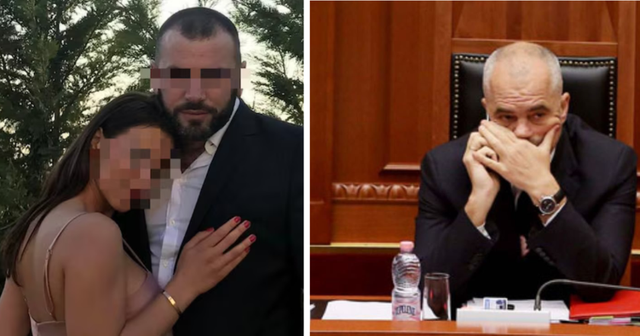
From a well-known businessman in the nightlife of Albania, to one of the names in the major cocaine trafficking files in Belgium.
Belgian media “Het Laatste Nieuws” brings the story of Ermir Ndreaj, known as “Cinco”, as it has revealed how he allegedly operated behind the scenes of international drug trafficking, while his communications show millions of euros, cocaine laboratories, transports from Ecuador and a luxurious life.
In one of the conversations revealed in the file, Ndreaj also talks about investments of millions of euros, including Prime Minister Edi Rama in his accounts.
“The Prime Minister of Albania is also participating,” he wrote, without providing further details in that communication about what he meant.
According to the Belgian prosecution, Cinco was not just an executioner, but the person who organized transports, secured warehouses, directed people and intervened whenever a drug shipment was in danger of being discovered.
Articles in Het Laatste Nieuws:
For a period, he lived in Britsenlei with his partner Elira, with whom he also owned the Clinique Cinq beauty salon. He owned a nightclub in Albania. Ermir Ndreaj, 44, looked like a successful businessman in every respect, and even had a watch worth 200,000 euros.
But “Cinco” was also the person who was called whenever a transport, a warehouse or a drug shipment was in danger of failing.
“We have 30 million euros of goods in our hands, we need to get rid of it as soon as possible.” How did the businessman function in the underworld and why will he regret losing his watch?
It was Tuesday, September 15, 2020. Time was limited. Any delay cost money and any mistake could expose the cargo. The message came from Ermir Ndreaj, known by the nickname “Cinco.”
With a few brief instructions, he organized everything needed: an invoice to give the shipment a legal appearance, a driver who knew nothing, and someone “from our side” who would accompany the shipment to make sure it ended up in the right place.
The cargo was what was later called “tuna cocaine.” Thousands of cans of tuna had been shipped from Ecuador via Antwerp to a Dutch food company. Now, hundreds of boxes had to be sent to a warehouse in Heirbaan, in Beveren-Melsele.
The documents stated it was a regular food shipment. In reality, according to the court file, cocaine paste was hidden in some of the cans. At 6:34 p.m., Ndreaj announced that the shipment had arrived. 796 boxes, with a total of 38,016 cans of tuna, were unloaded at the warehouse.
According to the file, 141 of these boxes contained cocaine paste. At 7:22 p.m., Cinco took a photo of the pallets. Just seven minutes later, the first cans were opened.
In the attic above the warehouse, boxes were stacked up to the walls. Among the greasy fish scraps and stacks of canned goods, five men were searching for what really mattered.
Nobody cared about the fish. What had to be taken out was the cocaine paste. The order was simple: everything had to be opened and as quickly as possible.
The operation began in an almost amateurish manner. The “boys” had only an ordinary can opener. Can after can, they opened it by hand. The work went extremely slowly. Additional can openers and even a mattress were purchased so that the men could rest while working.
When workers got tired, they were replaced by others. But for Cinco, everything was still moving too slowly. A day later, the situation suddenly changed.
At around 8:30 p.m., someone noticed people moving and lights on in the warehouses below them.
Was it the police? The phone calls started. People were cursing. Everything had to be removed. Immediately. The men called Ndreaj. According to the file, his boss, Bosnian Sani Al Murdaa, known as “Shade,” was completely alarmed.
The order was given in the communications group for everything to disappear immediately. A co-worker headed “like crazy” towards Melsele. In the end, the crisis was overcome. The next morning, Cinco provided three industrial electric can openers.
It is precisely these hours that show the role that Ndreaj played. He was not among the remains of the tuna. He was not the one opening the cans. He was the person who was called when work stopped or when the operation threatened to get out of control.
According to the federal prosecution, Ndreaj was not a simple soldier, but the right-hand man and confidant of Bosnian Sani Al Murdaa, a known drug lord with an international network and one of the key figures in the “Kookwas” dossier.
Al Murdaa handled international lines and supplier contacts. Cinco had to ensure that the operation in Belgium worked: organizing transport, finding warehouses, managing people, distributing money, and resolving crisis situations.
“He is a very cunning person,” the federal prosecutor said. “He checks and rechecks everything and, if something goes wrong, he starts investigating himself, for hours and days, until he finds a solution.”
His messages show just that. When an operation was delayed, Ndreaj would write to a colleague via Sky ECC: “I don’t even sleep.”
A little later, he explained the reason: “We have 30 million in goods on our hands, we need to get rid of it as soon as possible.”
The stress was obvious, but he didn’t sit idly by. His response was always the same: he gathered information, mobilized people, and tried to regain control.
His tone with the people around him was often very informal. The words “bro,” “brother,” and “my brother” were constantly repeated in conversations. But behind this friendly language was a clear division of roles. Everyone had their function, everyone had to do their part, and in the end everything revolved around one thing: money.
In the criminal world, Ermir Ndreaj was known for years as “Cinco”.
The pseudonym did not come from a criminal record, but from Albanian nightlife. Cinco Cavalli was the club in Durrës with which his name was associated for years. According to Albanian business records, Ndreaj sold his share in Cinco Cavalli in 2018. But the pseudonym remained.
Ndreaj is originally from Bajram Curri, in northern Albania, but he built his public reputation primarily as a businessman in the fields of hospitality, nightlife and aesthetics. His name was associated with Cinco Cavalli in Durrës, Savoy Garden in Tirana and Clinique Cinq in Antwerp and Tirana.
For a period, Ndreaj lived in Britsenlei with his partner from Ghent, Elira B. In 2020, Clinique Cinq was founded, a beauty salon in which he was involved according to business records and which later went bankrupt.
Meanwhile, Elira runs a salon in her own name in Tirana. According to Albanian media, they are still married. From the outside, he looked mostly like a businessman. But the intercepted communications reveal another world, where millions of euros circulate and where investments and profits are constantly being calculated.
The federal prosecutor’s office describes Ndreaj’s life after leaving Belgium as a “life of luxury,” with private jets, expensive clothes, luxury travel, and expensive watches. But more interesting than the list of luxuries is the way Ndreaj himself spoke about his wealth.
In a conversation with Al Murdaa, he was calculating the purchase of a hotel and the properties surrounding it. The total investment, according to him, would be around 15 million euros. Ndreaj immediately thought about the future: within three years, according to him, the property could triple in value.
And then he wrote: “all officially.”
At the end, he made a surprising statement: “Even the Prime Minister of Albania is participating.”
This shows that money for Cinco wasn’t just about financing a luxurious life. He was thinking about investments, capital returns, and creating a fortune that would grow year after year.
Meanwhile, his name also appeared in other cocaine trafficking files in Antwerp and in contacts with people from various criminal circles, from the circle of Nordin El H., known as “Dikke Nordin”, to members of the Assyrian clan Y.
In March 2021, everything changed. After the Sky ECC breach, investigators were able to read the communications of people suspected of being key figures in international drug trafficking. An account that would later be attributed to Ermir Ndreaj was also put under surveillance.
According to the file, his identification was not based on a single message, but on a series of clues. At one point, a court document was sent from this account in Ndreaj’s name.
In another case, the user shared a newspaper article about the “Frank de Tank” case, which also mentioned the name “Cinco”.
“Yes, bro, but it’s not normal. Why did they put me in the newspaper with that bigot? What do I have to do with him? Nothing.”
For investigators, this was one of the elements that led to Ndreaj’s identification. His expensive watches also helped in his identification.
The account user had written that his “RM” had been stolen in Barcelona. Investigators linked this, according to the file, to the theft of a Richard Mille watch in Ndreaj, where Spanish police had also intervened.
Later, messages about a Richard Mille worth around 200,000 euros emerged. The file also used a screenshot of alleged communications with his lawyer, Walter Damen, to link the Sky ECC account to Ndreaj. The defense later disputed the use of these messages to identify him.
The “Kookwas” file shows the scale of the operation in which Cinco helped organize the logistics in Belgium.
At least three ton shipments arrived in Belgium via Antwerp. The third was the one described at the beginning, which ended in Beveren-Melsele.
Then another problem arose: the quality of the cocaine. The cocaine extracted from the paste was breaking up and turning into particles. Customers began returning the blocks. Ndreaj engaged people involved in cocaine processing in the Netherlands to find a solution.
“Kookwas” also included industrial laboratories where cocaine was purified and further processed. In various places in Belgium, the drug was further processed. Here too, according to the file, Cinco appears: not as a chemist, but as a “fixer” – a person who solved problems.
The scale of the operation became clear in Marcinelle. In June 2021, police discovered a cocaine processing laboratory with an area of about 550 square meters. According to calculations in the file, 225 kilograms of cocaine were extracted there from the ton-long cargo.
A total of about 550 kilograms of cocaine may have been extracted from the three transports, theoretically worth 16.5 million euros, if calculated at 30 thousand euros per kilogram.
Meanwhile, Ndreaj’s sentences in Belgium were increased. At the end of June 2025, he was sentenced to 6 years in prison in the “Frank de Tank” case. A week later, he received another 7 years in another drug case.
In February 2026, he was given an additional 12 years in prison for his role in the “Kookwas” case. At that time, however, Cinco was not in a Belgian prison. In July 2025, he was arrested in Albania as part of an investigation by SPAK, the Special Prosecution Office against Corruption and Organized Crime.
A few months later, according to Albanian media outlet Zëri, he requested release due to health problems. The Special Court rejected the request. According to Albanian media, at that time Ndreaj was in the prison hospital.
The Albanian investigation also continued. On July 8, 2026, SPAK sent the file against 15 defendants to the court. Ndreaj is linked, among other things, to a drug episode in Guayaquil, Ecuador. According to SPAK, the file as a whole is related to 8,126 kilograms of drugs, of which 7,261 kilograms were cocaine.
Ndreaj is currently in prison in Albania.
Ndreaj denies any involvement in drug trafficking. He has appealed the convictions in Belgium. His lawyer, Walter Damen, states: “My client has been acquitted three times and rightly so.”
According to Damen, there is no real evidence in his files. On the contrary, he claims that Ndreaj’s health condition would not have allowed him to commit these acts.
The lawyer also says that several people have given statements against Ndreaj under pressure and then retracted them during questioning or in court.
Damen is also critical of the Albanian investigation.
According to him, SPAK used “very limited information from a Belgian file, without presenting the entire file and without including elements that are in favor of his client.”
“We patiently await the upcoming appeal proceedings and believe that the rights of the defense will be respected there.”