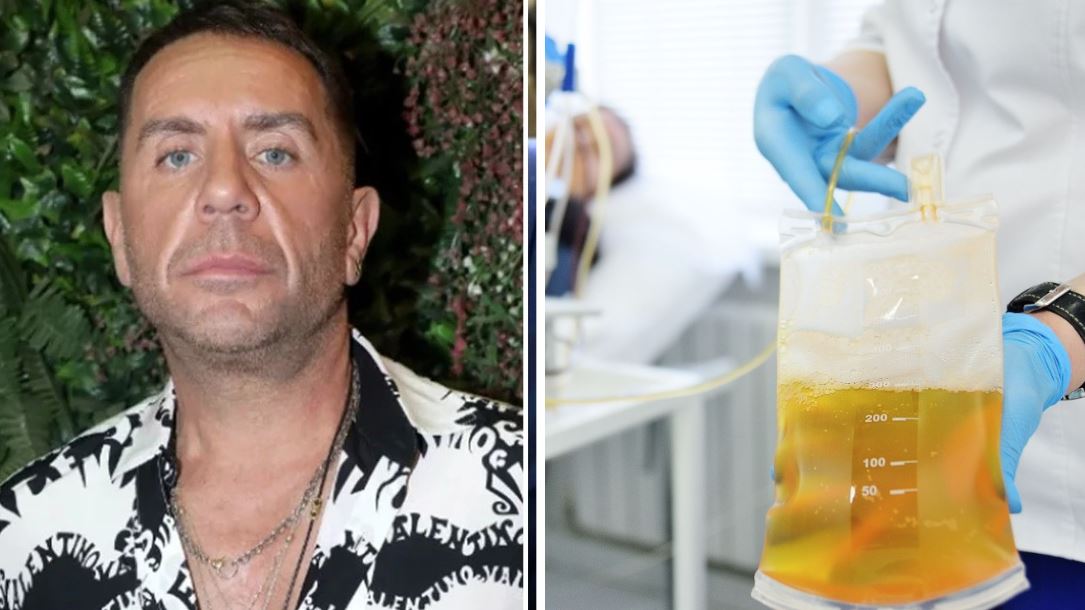
The announcement by the Hellenic Society of Hematology following the sudden death of singer Giorgos Mazonakis has brought back into focus the debate over the use of so-called alternative therapies and unregistered or scientifically uncertified treatments.
On this occasion, hematologist, Dr. Elias Pessach, emphasizes that “medicine is not welfare” and calls on citizens to be especially careful before undergoing such procedures.
In its announcement, the Hellenic Society of Hematology states that the sudden death of Giorgos Mazonakis has brought back to the forefront the uncontrolled situation in the field of so-called alternative therapies.
According to the data made public so far, the event is linked to a private clinic called the “Stem Cell Clinic”.
The association explains that hematopoietic stem cells, i.e. primitive cells that produce blood elements, have the ability to continuously regenerate blood. They are used in special hospital conditions for bone marrow transplants, which hematologists apply to patients with leukemia and other hematological diseases.
According to the Association, these cells exclusively regenerate blood cells and do not regenerate other tissues of the body. Any use of them for other purposes, the announcement emphasizes, is not scientifically documented and could be potentially dangerous.
Also, based on publications and statements from doctors, it is reported that Giorgos Mazonakis had gone to this clinic to undergo plasmapheresis.
Plasmapheresis is a therapeutic procedure performed with special equipment, in hospital conditions, and by specialized personnel. It is used primarily by hematologists and nephrologists to remove pathological antibodies from the blood, in the treatment of certain autoimmune diseases.
The procedure can cause side effects, mainly in the cardiovascular system, where among the most common are low blood pressure and heart rhythm disorders.
The association warns that in advertisements for so-called “alternative medicine,” plasmapheresis is presented as a way to “detoxify” the body, “well-being,” and “longevity.” According to it, these claims are not supported by clinical studies.
The Hellenic Society of Hematology says that in 2019 it had addressed a letter to the National Organization of Medicines (EOF), the National Organization of Transplants (EOM) and the Ministry of Health, warning about the risks of offering and advertising unproven or scientifically insufficient cell therapies.
In that letter, the Association demanded the immediate investigation of structures that offer unauthorized cell therapies, the strengthening of oversight mechanisms, and the official informing of the public about the potential risks.
The association now reiterates the call for the state, through the National Medicines Organization, to require clear evidence for the scientific basis and documentation of treatments advertised as “regenerative”.
At the same time, medical associations that license clinics are required to check the professional qualifications and scientific basis of applicants, as well as monitor the activity of their members.
Even scientific associations, according to the announcement, must publish on their official websites the scientific position on treatments that are advertised as “miracles” or as solutions to a wide range of health problems.
Finally, the Association calls on citizens to be skeptical and seek information from institutional sources and not from advertising materials.
Dr. Elias Pessach analyzes and hematologists
On the occasion of the sudden death of Giorgos Mazonakis, and without prejudging the cause of death or any responsibility, which will be determined by the official investigation, hematologist Dr. Elias Pessach says it is time to open a debate on the way some of these procedures are offered and advertised.
According to him, in recent years, centers offering treatments related to mesotherapy, anti-aging, longevity, “detoxification” and well-being have increased.
“Impressive English words, luxurious surroundings and promises of ‘purifying’ the blood, strengthening immunity, cell regeneration and eternal youth,” he writes, emphasizing the need to distinguish between different medical procedures.
According to Dr. Pessach, therapeutic plasmapheresis is not a “detoxification” procedure. It is a serious treatment that is performed outside the body: the blood is passed through a special device, the plasma is removed, and the blood cells are returned to the patient along with a replacement fluid.
The procedure is used in some serious hematological, neurological, and autoimmune diseases. It can cause low blood pressure, low blood calcium, allergic reactions, or arrhythmias and requires constant monitoring.
Dr. Pessach also distinguishes between plasmapheresis and PRP.
PRP involves taking a small amount of a person’s own blood, centrifuging it, and, usually, locally injecting platelet-rich plasma. According to him, PRP is not plasmapheresis and is not stem cell therapy.
Even stem cells, the hematologist emphasizes, are not an “elixir of youth.”
There are real, life-saving treatments with hematopoietic stem cells, such as transplants for patients with leukemia and other serious diseases. But that, he said, does not mean that every PRP or blood concentrate described as “rich in CD34+ cells” is an approved treatment for aging, dementia, heart disease or “strengthening the body.”
“Plasmapheresis is one thing, PRP is another, cell concentrate is another, and stem cell transplant is another,” he emphasizes.
According to Dr. Pessach, these terms are not interchangeable and should not be used to create the impression of a more advanced treatment or to mislead patients.
He also emphasizes that a center does not become a medical clinic just because it uses the word “clinic” in its name.
Procedures that require a special license, appropriate infrastructure, trained personnel, constant monitoring, and resuscitation equipment, according to him, cannot be performed everywhere and by anyone.
“No person can perform medical procedures just because they attended a seminar,” says the hematologist, adding that various healthcare professionals have clearly defined competencies by law.
“Even a medical degree is not a blank check. I am a hematologist,” he emphasizes.
Pessach cites as an example the fact that a patient with kidney stones or who needs prostate surgery would go to a urologist and not a doctor of another specialty just because he is a doctor.
In the same way, he adds, it is not enough for someone to be a doctor to buy a device and start advertising plasmapheresis, “stem cells”, exosomes or intravenous “youth serums”, without the proper training, documentation and licensing.
Any invasive or intravenous procedure, he said, must have a clear medical indication, be performed after obtaining a complete patient history and informed consent, and the preparations used must be traceable. The facility must also be able to immediately treat serious complications, including anaphylactic reactions or cardiac arrest.
Before undergoing such a procedure, citizens, according to Dr. Pessach, should ask themselves several questions:
Who will perform the procedure and what specialization does it have?
Is the facility licensed?
What procedure or product will be used exactly?
Is it approved for the purpose for which it is proposed?
Who will take care of the patient in the event of a serious complication?
“If there are no clear answers, we leave,” Pessach emphasizes.
In his analysis, the hematologist also raises the question of how these services are controlled in Greece.
According to him, a simple internet search with the terms “PRP”, “stem cells”, “serum”, “detox” or “wellness” is enough to find doctors of various specialties, dentists, aesthetic professionals and centers that advertise a wide range of treatments.
This, he emphasizes, does not necessarily mean that every activity is illegal. But it raises the question of who controls what procedure is carried out, by whom, in what structure, with what license, and on what scientific basis.
Finally, Dr. Pessach calls for the creation of a public registry of licensed structures, surprise inspections, control of medical advertising on the Internet, and the imposition of real sanctions when violations are found.
“State control cannot be awakened only when someone dies. Medicine is not welfare. Science is not marketing. And human life is not an uncontrolled field of experimentation,” the hematologist concludes./Top Channel