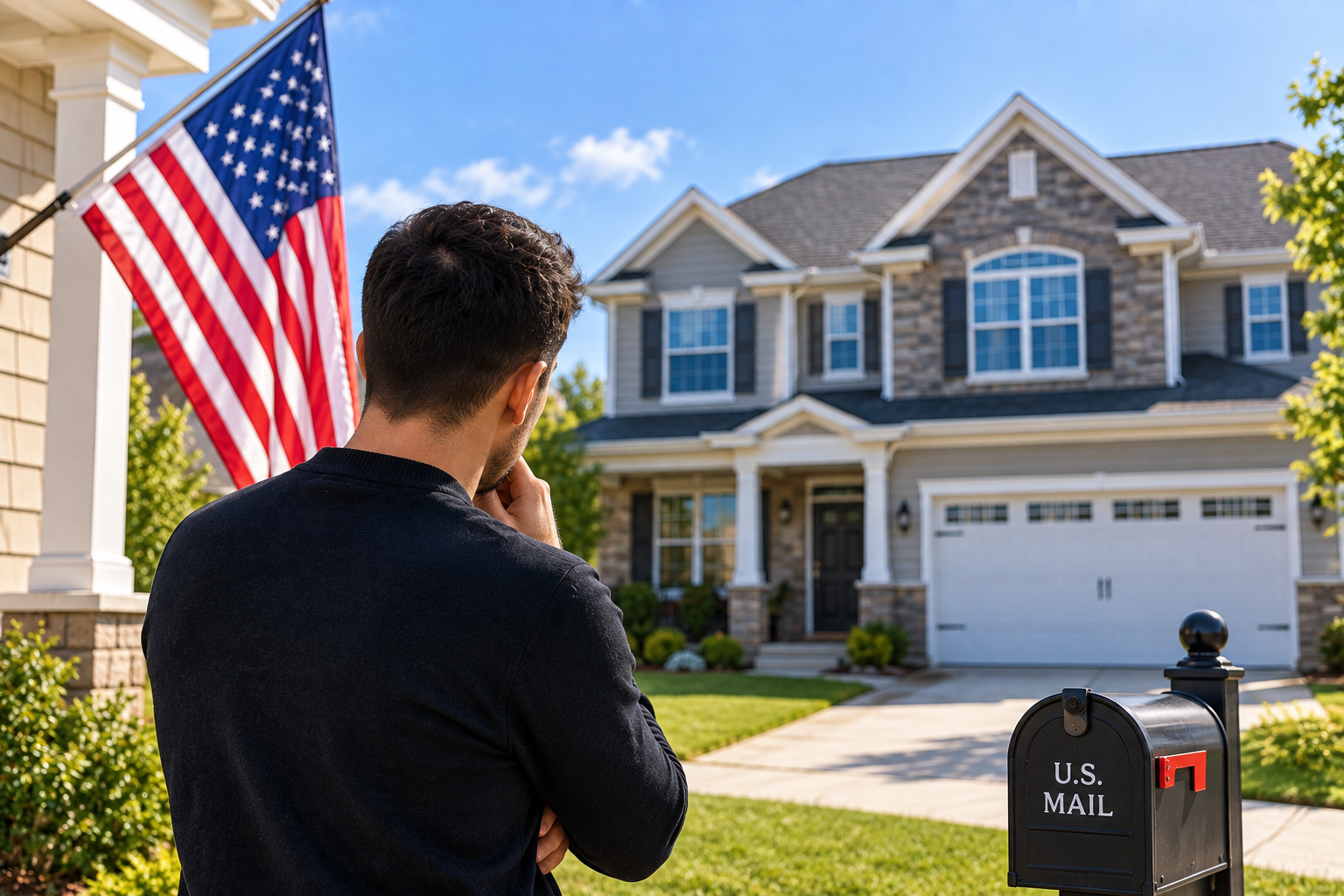
# Albanians Who Own a Home in America: These 7 Problems Could Cost You Thousands of Dollars
Buying a home in the United States is a major achievement for many Albanian families.
But getting the keys is only the beginning.
Once you become a homeowner, you—not the landlord—are generally responsible when the roof leaks, the HVAC system stops working, a pipe bursts, or another major repair becomes necessary.
And some problems that look small today can turn into bills worth thousands of dollars if they’re ignored.
For Albanians who own a home in America, here are **seven expensive problems worth watching before they become financial emergencies.**
## 1. A Small Roof Leak Can Become a Major Repair
A few drops of water might not seem serious.
You notice a small stain on the ceiling after heavy rain and think:
**“I’ll deal with it later.”**
But water can travel through areas you cannot easily see.
Depending on the problem, an untreated roof leak can contribute to damage involving:
Drywall
Insulation
Ceilings
Wood
Electrical components
Interior finishes
Moisture and mold
Instead of dealing only with a relatively small roof repair, you could eventually face multiple repairs inside the house.
### Watch for Warning Signs
Pay attention to:
Missing or damaged shingles
Water stains on ceilings
Moisture in the attic
Discoloration around walls
Leaks after storms
Sagging areas
Unexplained musty smells
Don’t wait for water to start dripping onto your furniture before investigating.
### Insurance Doesn’t Mean Every Roof Problem Is Covered
Homeowners insurance can cover certain sudden and accidental losses depending on the policy.
But don’t assume every old or deteriorating roof will simply be replaced by your insurer.
Insurance coverage depends on the cause of damage and your specific policy.
Maintenance and insurance are two different things.
## 2. Water Damage Can Spread Quickly
Water is one of the biggest enemies of a house.
The source could be:
A broken pipe
Leaking appliance
Damaged water heater
Roof leak
Plumbing failure
Sewer backup
Heavy rain
Flooding
The longer water remains where it shouldn’t, the more complicated the damage can become.
Imagine a pipe begins leaking behind a wall.
You don’t notice immediately.
Eventually, the problem can affect drywall, flooring, insulation and other parts of the structure.
The original plumbing repair may be only one part of the final bill.
### Know Where Your Main Water Shutoff Is
Every homeowner should know how to shut off the home’s main water supply.
If a pipe suddenly bursts, being able to stop the water quickly can potentially reduce the amount of damage.
Don’t wait for an emergency to figure out where the shutoff valve is located.
## 3. Mold Can Turn a Moisture Problem Into a Much Bigger Issue
Mold often begins with another problem:
**Moisture.**
A leak that isn’t properly dried can create conditions where mold develops.
FEMA guidance notes that after flooding, quickly drying the home and water-damaged items is important for preventing mold.
Mold may not always be visible.
It can potentially develop:
Behind drywall
Under flooring
Behind cabinets
Around windows
Inside areas affected by previous leaks
That’s why simply painting over a stain isn’t necessarily a solution.
You need to identify and correct the source of moisture.
### Don’t Ignore Musty Smells
If one room suddenly develops a persistent damp or musty smell, investigate.
The goal isn’t merely to remove visible mold.
It’s to understand:
**Where is the moisture coming from?**
Otherwise, the problem can return.
## 4. HVAC Failure Can Become a Major Household Expense
Your heating, ventilation and air-conditioning system is another expensive part of homeownership.
Depending on where you live in America, losing air conditioning in the middle of summer or heating during winter can become much more than an inconvenience.
HVAC problems can involve:
Air conditioner
Furnace
Heat pump
Ductwork
Thermostat
Electrical components
Refrigerant-related components
Other mechanical parts
Small repairs may be manageable.
Replacing major equipment can be much more expensive.
### Don’t Wait Until the System Completely Dies
Basic maintenance can help identify issues earlier.
Depending on your system, this can include:
Changing filters as recommended
Keeping outdoor equipment clear
Watching for unusual noises
Monitoring unexpected increases in energy use
Getting appropriate professional servicing
If your HVAC system is old, consider building a replacement reserve before it fails.
### Example
Suppose you know an expensive home system is approaching the end of its expected useful life.
Instead of waiting for an emergency and putting the entire replacement on a credit card, you save:
**$150 per month**
After two years:
**$150 × 24 = $3,600**
That doesn’t guarantee it will cover the entire replacement, but it gives you a financial buffer.
## 5. Electrical and Plumbing Problems Can Become Expensive
Homeowners often focus on what they can see:
Kitchen
Bathroom
Furniture
Paint
Garden
But some of the most important systems are hidden behind walls.
### Electrical Warning Signs
Problems worth investigating can include:
Frequently tripped breakers
Flickering lights
Burning smells
Warm or discoloured outlets
Buzzing electrical components
Outlets that suddenly stop working
Electrical problems should be taken seriously.
Use appropriately qualified professionals when electrical work is needed.
### Plumbing Warning Signs
Watch for:
Low water pressure
Unexpectedly high water bills
Slow drains
Water stains
Leaking faucets
Toilets that continuously run
Damp areas
Sounds of running water when everything is turned off
A small plumbing leak can waste water for months while also damaging the property.
## 6. Your Homeowners Insurance May Not Cover What You Think
This is one of the biggest financial misunderstandings among homeowners.
People often think:
**“I have homeowners insurance, so anything that happens to the house is covered.”**
That is not how it works.
Policies contain:
Coverage limits
Deductibles
Exclusions
Conditions
Different types of protection
For example, standard homeowners insurance generally does **not** cover ordinary flood damage. Separate flood insurance may be necessary depending on your situation.
That distinction can be extremely important.
### Understand Your Deductible
Suppose a covered loss causes:
**$6,000**
of damage.
If your applicable deductible is:
**$2,500**
you may be responsible for that amount before insurance coverage applies according to the policy.
Don’t discover your deductible for the first time after a disaster.
Check it now.
### Replacement Cost vs Actual Cash Value
Another important issue is how a policy values covered property.
Depending on the policy, a claim may involve **replacement cost** or **actual cash value**.
These can produce very different outcomes because actual cash value can account for age and condition, while replacement-cost coverage generally focuses on the cost of replacing or repairing with comparable materials, subject to policy terms.
Read your policy rather than assuming “insured” means every dollar of every repair will be paid.
## 7. Property Taxes and Insurance Can Increase Your Housing Cost
You bought the house.
Your mortgage principal and interest may appear predictable.
Then your monthly housing payment changes.
Why?
For many homeowners, property taxes and homeowners insurance are collected through an **escrow account** as part of the mortgage payment.
Those costs can change over time.
### Example
Imagine your monthly housing payment effectively includes:
Mortgage principal and interest: **$2,000**
Property taxes: **$500**
Homeowners insurance: **$200**
Total:
**$2,700**
Later, property taxes or insurance increase.
Your required monthly payment could rise even though the underlying mortgage interest rate did not change.
This surprises homeowners who think:
**“I have a fixed-rate mortgage, so my total payment can never change.”**
The mortgage principal-and-interest portion may be fixed, but taxes and insurance can still change.
## Don’t Forget Flood and Disaster Risk
Where your home is located matters.
A property may face risks from:
Floods
Hurricanes
Wildfires
Tornadoes
Severe storms
Earthquakes
Other natural hazards
The financial impact isn’t limited to physical damage.
Disaster risk can also affect insurance availability and cost.
CFPB recommends investigating a property’s flood and disaster risk and notes that flood insurance can be an additional expense because standard homeowners policies typically don’t cover flooding.
Don’t wait until after a disaster to learn what your policy excludes.
## Why an Emergency Home Fund Matters
Homeowners should expect that something will eventually need repair.
The question is usually:
**What will break, when will it happen, and how much will it cost?**
Imagine you have:
**$800**
in emergency savings.
Then during the same month:
HVAC repair: **$1,500**
Plumbing problem: **$700**
Roof repair: **$1,200**
Total:
**$3,400**
Without savings, you may have to use a credit card or another form of borrowing.
If that debt carries high interest, a home repair can become even more expensive.
CFPB specifically recommends considering emergency savings for unexpected repairs and replacements when determining whether homeownership fits your budget.
## A Simple Home Maintenance Reserve
Suppose you decide to save:
**$250 per month**
specifically for your house.
After one year:
**$250 × 12 = $3,000**
After three years, assuming you haven’t needed to use it:
**$9,000**
That reserve could help with:
Appliance replacement
Plumbing
HVAC repairs
Roof work
Insurance deductibles
Electrical repairs
Other unexpected home expenses
The appropriate amount depends heavily on your house, its age, condition, location and your overall finances.
The important thing is having a plan.
## Older Homes Need Extra Attention
A beautiful older house can be an excellent purchase.
But age can increase the probability that expensive systems need attention.
Before buying—or if you already own an older property—understand the condition of:
Roof
Electrical system
Plumbing
Foundation
HVAC
Water heater
Windows
Sewer or septic system where applicable
Major appliances
Don’t judge a house entirely by a renovated kitchen and fresh paint.
A $20,000 kitchen looks great.
But the condition of the roof, foundation, electrical system and plumbing could have a much bigger impact on your finances.
## Don’t Automatically Choose the Cheapest Contractor
When something breaks, homeowners often panic.
You search online and call the first person who says:
**“I can fix it today for cash.”**
For significant work, consider getting multiple written estimates when circumstances allow.
Verify appropriate licences, insurance or credentials where required in your state or locality.
Understand:
What work will be performed
Materials being used
Total price
Payment schedule
Warranty
Timeline
Who obtains required permits
Be cautious about paying the entire amount upfront for substantial projects without understanding the agreement.
## Homeownership Costs More Than the Mortgage
Consider a hypothetical homeowner.
Mortgage principal and interest: **$2,100/month**
Property taxes: **$550/month**
Insurance: **$220/month**
HOA: **$150/month**
Maintenance reserve: **$250/month**
Total:
**$3,270 per month**
And that still doesn’t include:
Electricity
Gas
Water
Internet
Landscaping
Unexpected major repairs
The person might say:
**“My mortgage is only $2,100.”**
But their actual cost of owning and maintaining the property is much higher.
This is why CFPB recommends considering the **total monthly home payment**, plus maintenance, repairs and utilities—not just principal and interest.
## The 7 Problems Every Homeowner Should Watch
For Albanian homeowners in America, keep an eye on:
**1. Roof problems** — Small leaks can spread damage into other parts of the house.
**2. Water leaks** — Hidden plumbing problems can damage walls, floors and other materials.
**3. Moisture and mold** — Fix the source of moisture, not just the visible stain.
**4. HVAC problems** — Prepare financially before an ageing system completely fails.
**5. Electrical and plumbing issues** — Warning signs shouldn’t be ignored.
**6. Insurance gaps** — Know your deductible, coverage limits and exclusions, especially for flooding and other disaster risks.
**7. Rising property taxes and insurance** — Your total housing payment can increase even with a fixed-rate mortgage.
## The Bottom Line
For Albanians who own a home in the United States, buying the property is only one part of the financial journey.
The expensive surprises often come later.
A leaking roof.
A broken HVAC system.
A hidden plumbing problem.
Water damage.
An insurance claim with a large deductible.
A property-tax increase.
A disaster your standard insurance policy doesn’t cover.
Any one of these could potentially create a bill worth thousands of dollars depending on the property and severity of the problem.
That’s why responsible homeownership means more than making the mortgage payment every month.
**Inspect problems early. Maintain the property. Understand your insurance. Keep an emergency fund. Budget for repairs before they happen.**
Your house may be one of the largest assets you’ll ever own.
Protecting it can also mean protecting your family’s finances.
*Disclaimer: This article is for general educational purposes only and does not constitute personalised financial, insurance, legal, tax, construction or home-maintenance advice. Costs and insurance coverage vary substantially by property, insurer, location and circumstances. Consult qualified professionals for significant structural, electrical, plumbing, HVAC, insurance or financial issues.*