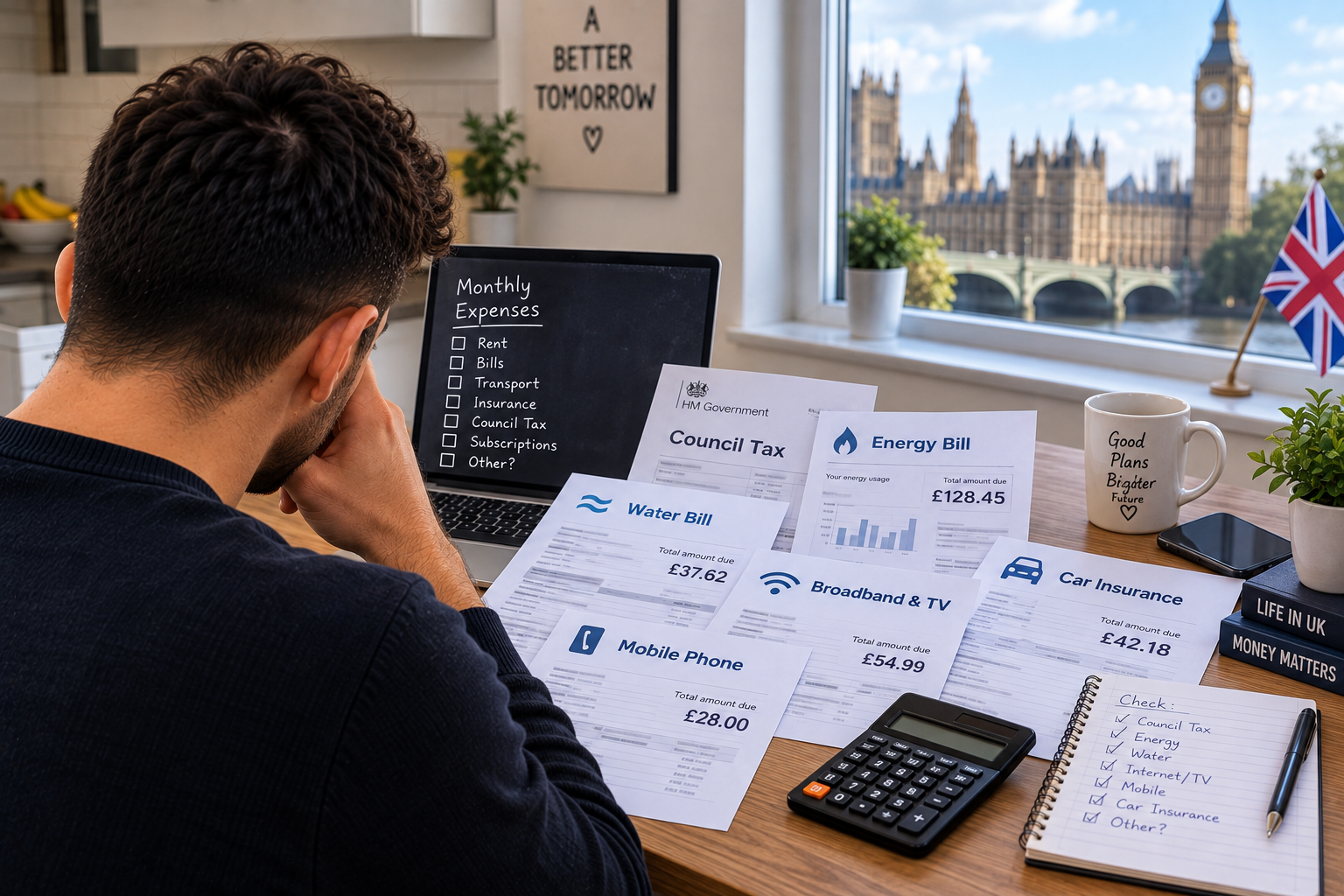
Your salary arrives in your bank account, but within a few days, a surprising amount of it has already disappeared.
Rent or mortgage, Council Tax and groceries are easy to remember. The harder expenses to notice are often the smaller recurring payments: subscriptions, insurance instalments, phone contracts, bank charges and other Direct Debits.
For Albanians living and working in England, reviewing these payments can be one of the simplest ways to understand where your money is actually going.
A £10 or £20 charge may not look important. But several recurring charges combined can become hundreds—or even thousands—of pounds over a year.
Here are **six monthly fees and payments worth checking.**
## 1. Phone, Broadband and TV Contracts
Start with the services almost every household uses.
You may be paying separately for:
Mobile phone
Home broadband
TV package
Extra data
Device financing
Premium channels
Additional SIM cards
Streaming add-ons
The problem is that contracts can continue quietly in the background.
Perhaps you originally signed up for an introductory deal. Months later, the promotional period ended, but you never reviewed the new price.
Or perhaps your phone itself has effectively been paid for, but you haven’t checked whether a different SIM-only arrangement could suit you better.
### Look at the Real Annual Cost
Suppose your household pays:
Mobile: **£55/month**
Second mobile: **£35/month**
Broadband: **£42/month**
TV package: **£50/month**
Total:
**£182 per month**
Over 12 months:
**£2,184**
Now the contracts deserve more attention.
Check your latest bills and ask whether you’re actually using everything you’re paying for.
## 2. Streaming Services and Digital Subscriptions
This is one of the easiest categories to forget.
One subscription costs:
**£8.99**
Another:
**£12.99**
A third:
**£17.99**
None looks particularly expensive.
But then add:
Music subscription
Cloud storage
Gaming membership
Premium app
News subscription
Fitness app
AI/software subscription
Extra streaming services
Imagine your recurring digital payments total:
**£95 per month**
That’s:
**£1,140 per year**
### Check Your Bank Statement
Review at least the last few months of transactions.
Look for recurring payments you no longer recognise or use.
Ask:
**When did I last use this service?**
**Has the price increased?**
**Am I paying for two services that do almost the same thing?**
**Could I use a cheaper plan?**
**Did I forget to cancel a free trial?**
The objective isn’t to cancel everything.
If you use a service every day and it provides value, keep it.
Remove the subscriptions that take your money without providing meaningful value.
## 3. Insurance Paid Monthly
Insurance is another recurring cost that can disappear into your Direct Debits.
Depending on your circumstances, you might have:
Car insurance
Home insurance
Contents insurance
Life insurance
Pet insurance
Breakdown cover
Income-related protection
Other policies
Paying insurance monthly can make the premium easier to manage, but you should understand the **total annual cost**, not just the monthly instalment.
For example:
**£85 per month**
sounds very different from:
**£1,020 per year.**
Before renewal, check what you’re paying, what the policy covers, the excess and whether the price has changed.
Don’t automatically cancel important insurance simply to reduce monthly expenses.
Instead, understand whether the policy still suits your needs and compare equivalent cover where appropriate.
## 4. Bank, Credit Card and Overdraft Charges
Your bank account itself can sometimes cost money.
Possible charges may include:
Packaged-account fees
Overdraft interest
Credit-card interest
Foreign transaction fees
Cash withdrawal charges in certain circumstances
Late-payment charges
Other account-related costs
Suppose you’re regularly using an overdraft.
You might think:
**“I’m only £500 below zero.”**
But if you continuously rely on borrowing, the associated interest can become another recurring household expense.
The same is true with credit cards.
### Minimum Payments Can Hide the Real Cost
Imagine you have:
Credit-card balance: **£3,500**
You make the required minimum payment every month.
The balance may decline slowly, particularly if interest continues to be charged and you’re still using the card.
Check:
Current balance
APR
Interest charged last month
Minimum payment
Any promotional rate
When a promotional rate ends
Additional fees
Don’t look only at:
**“How much do I have to pay this month?”**
Also ask:
**“How much is this debt costing me?”**
MoneyHelper warns that paying only the minimum on credit-card debt can mean it takes longer and costs more to clear the balance.
## 5. Car Finance and Other Vehicle Payments
Your car can contain several recurring expenses that don’t appear under one transaction.
You might have:
Car finance
Insurance
Fuel
Vehicle tax
Breakdown cover
Parking permit
Maintenance plan
MOT and servicing costs
Tyres and repairs
Suppose your finance payment is:
**£290 per month**
You may mentally think:
**“My car costs £290.”**
But consider a hypothetical month:
Finance: **£290**
Insurance: **£110**
Fuel: **£180**
Parking: **£60**
Vehicle tax equivalent: **£20**
Maintenance reserve: **£60**
Total:
**£720 per month**
That’s dramatically different from £290.
### Check Your Finance Agreement
If the vehicle is financed, know whether you have:
HP
PCP
Personal loan
Another finance arrangement
Understand:
Monthly payment
APR
Remaining term
Total amount payable
Final payment where applicable
Mileage conditions where applicable
Don’t wait until the final year of a PCP agreement to discover that keeping the vehicle may require a substantial optional final payment.
## 6. Memberships, Apps and Services You Barely Use
This category goes beyond Netflix-style subscriptions.
Think about:
Gym membership
Professional memberships
Delivery subscriptions
Cloud storage
Security software
Website services
Parking apps
Premium banking packages
Meal-plan memberships
Online learning platforms
Children’s subscriptions
Software
Charity Direct Debits
Other recurring services
You may genuinely want to keep many of them.
The problem is forgetting that they exist.
### The £15 Example
One forgotten payment:
**£15/month**
Annual cost:
**£180**
Four similar payments:
**£60/month**
Annual cost:
**£720**
Six:
**£90/month**
Annual cost:
**£1,080**
Small numbers become meaningful when multiplied by 12.
## Direct Debits Deserve a Regular Review
Open your banking app and find your Direct Debits and recurring payments.
Don’t immediately cancel anything you don’t recognise—first establish what it is and whether cancelling could affect an active contract, insurance policy, debt payment or essential service.
Then create three groups:
**Essential** — bills and services you genuinely need.
**Useful** — services you use but could potentially renegotiate or replace.
**Unnecessary** — subscriptions or memberships you no longer use.
This simple exercise can reveal spending you’ve ignored for months.
## Don’t Forget Annual Payments
Some expenses don’t appear every month but should still be part of your monthly budget.
Imagine:
Car insurance: **£840/year**
MOT and servicing: **£400/year**
Home insurance: **£360/year**
Other annual memberships: **£240/year**
Total:
**£1,840 per year**
Divide that by 12:
**Approximately £153 per month**
If you don’t budget for those costs monthly, every annual bill can feel like an emergency.
Setting aside money throughout the year can make predictable expenses easier to manage.
## A Household Example
Imagine an Albanian household in England has the following overlooked or easily underestimated recurring expenses:
Phone/broadband/TV: **£160**
Streaming/digital subscriptions: **£70**
Insurance: **£150**
Debt interest/fees: **£80**
Additional car-related costs: **£250**
Memberships/apps: **£60**
Total:
**£770 per month**
That doesn’t mean all £770 is unnecessary.
Most of it may be paying for legitimate services.
The purpose of reviewing the expenses is to identify the portion that is:
Unused
Overpriced
Duplicated
No longer appropriate
Or simply forgotten.
Even reducing unnecessary spending by:
**£100 per month**
would equal:
**£1,200 per year.**
A £200 monthly difference would equal:
**£2,400 per year.**
## Watch for Price Increases
Recurring payments can become more expensive over time.
You signed up at:
**£25/month**
but perhaps you’re now paying:
**£34/month.**
Because the payment leaves automatically, you may not notice.
Check recent statements against older ones.
Look specifically at:
Broadband
Mobile
Insurance
Streaming
Software
Memberships
Other subscriptions
Ask whether the service has become more expensive and whether you still consider it good value.
## Be Careful When Cancelling Direct Debits
Cancelling a Direct Debit through your bank does not necessarily cancel the underlying contract or money you legally owe.
For example, if you’re still within a valid phone, broadband, finance or other contractual commitment, stopping the payment could create missed payments or arrears rather than ending the agreement.
Check the cancellation terms first.
This is especially important for:
Loans
Credit cards
Insurance
Car finance
Utilities
Phone contracts
Broadband
Other contractual services
Cancel the **service or agreement correctly**, not merely the payment mechanism.
## Try a 30-Day Spending Audit
For the next 30 days, track every payment leaving your account.
Separate spending into:
Housing
Council Tax
Energy
Food
Transport
Insurance
Debt
Phone/internet
Subscriptions
Entertainment
Shopping
Savings
Other
At the end of the month, calculate the total.
You may discover that your biggest problem isn’t one enormous expense.
It could be ten or fifteen smaller payments.
## The 6 Payments Worth Checking
For Albanians living in England, review these six categories:
**1. Phone, broadband and TV** — Check whether your contracts still offer good value.
**2. Streaming and digital subscriptions** — Cancel services you genuinely don’t use.
**3. Insurance** — Understand the annual cost and review cover at renewal.
**4. Bank, credit-card and overdraft costs** — Interest and fees can quietly consume income.
**5. Car-related payments** — Calculate the entire cost, not just finance.
**6. Memberships and recurring services** — Find forgotten Direct Debits and subscriptions.
Then review annual bills and convert them into monthly amounts for budgeting purposes.
## The Bottom Line
For Albanians living and working in England, earning £3,000 per month doesn’t mean you have £3,000 available to spend.
Your income may already be committed before the month begins.
The easiest way to understand your finances is to stop guessing.
**Open your bank statements.**
**Review your Direct Debits.**
**Check subscriptions.**
**Look at interest charges.**
**Calculate the real cost of your car.**
**Convert annual bills into monthly expenses.**
You don’t necessarily need to eliminate everything.
You need to identify the payments that no longer make financial sense.
Because **£10 here and £20 there may feel insignificant today—but repeated every month, they can become thousands of pounds over several years.**
*Disclaimer: This article is for general educational purposes only and does not constitute personalised financial, credit, debt, insurance or legal advice. Fees, contract terms and household circumstances vary. Before cancelling an essential service, insurance policy, credit agreement or Direct Debit, check the underlying contractual and payment obligations.*