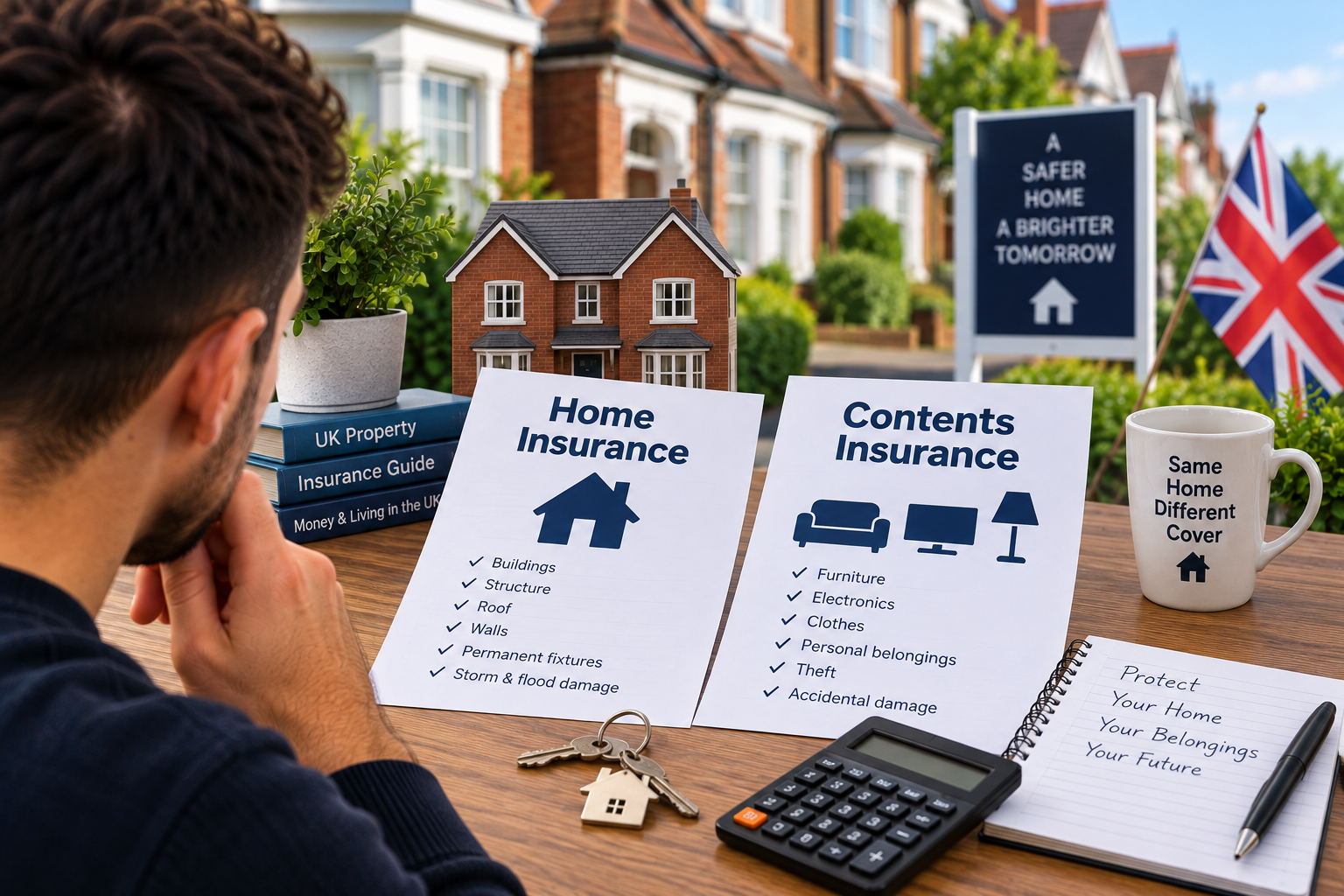
Albanians in the UK: Home Insurance vs Contents Insurance — What’s the Difference?
If you own or rent a home in the UK, you may have heard several insurance terms:
Buildings insurance.
Contents insurance.
Home insurance.
They sound similar, but they do not necessarily protect the same things.
For Albanians living in the UK, understanding the difference is important because having one type of cover does not automatically mean everything inside and around your home is insured.
A simple way to think about it is:
Buildings insurance protects the structure of the home.
Contents insurance protects many of the belongings you keep inside it.
And home insurance is often used as a general term that can refer to buildings insurance, contents insurance, or a combined policy containing both.
Here’s what you should understand before choosing or renewing a policy.
1. What Is Buildings Insurance?
Buildings insurance is designed primarily to protect the physical structure of your property against insured events listed in your policy.
Think about the parts of the property that would normally stay behind if you moved house.
Depending on the policy, this can include elements such as:
Walls
Roof
Floors
Windows
Doors
Ceilings
Permanent bathroom fixtures
Fitted kitchen components
Pipes
Other permanent parts of the building
Policies commonly cover specified risks such as fire, storms, flooding, escape of water and other insured events, but exactly what is covered varies by insurer and policy.
Simple Example
Imagine a serious storm damages part of your roof.
The roof belongs to the building itself.
That would generally be an issue for buildings insurance, subject to the policy’s terms, exclusions and excess.
But imagine water enters through the damaged roof and ruins your television.
The television is not part of the structure.
That is where contents insurance may become relevant.
One incident can therefore involve two different categories of cover.
2. What Is Contents Insurance?
Contents insurance is designed to cover many of the personal possessions inside your home against risks specified by the policy.
One useful question is:
“If I moved home, would I normally take this item with me?”
If yes, it is more likely to be considered part of your contents.
Examples can include:
Televisions
Computers
Furniture
Clothing
Jewellery
Kitchen appliances that are not permanently fitted
Personal possessions
Some electronics
Home furnishings
Other household belongings
Exactly what qualifies and how much protection you receive depends on the policy.
3. What Does “Home Insurance” Mean?
This term can create confusion.
“Home insurance” isn’t always a completely separate third category.
It is commonly used as an umbrella term for:
Buildings insurance
Contents insurance
or
Combined buildings and contents insurance.
Therefore, if someone tells you:
“I have home insurance,”
that doesn’t tell you precisely what is covered.
You need to look at the policy documents.
Ask:
Does it include buildings?
Does it include contents?
Does it include both?
What limits apply?
What exclusions apply?
What is the excess?
Never rely only on the policy’s marketing name.
4. Homeowner vs Tenant: Who Usually Needs What?
Your housing situation makes a major difference.
If You Own a House
You will usually need to think about both:
The building
and
Your belongings.
If you have a mortgage, your lender will generally require adequate buildings insurance as a condition of the mortgage.
The Financial Conduct Authority notes that lenders can require buildings insurance, although they cannot require you to buy that insurance from them specifically.
Contents insurance is generally optional, but that doesn’t mean it is unimportant.
If You Rent
The landlord would normally be responsible for insuring the building itself.
But the landlord’s buildings insurance does not automatically insure your personal belongings.
If your:
Laptop
TV
Clothes
Furniture
Jewellery
and other possessions
belong to you, you may need your own contents insurance if you want insurance protection for them.
This is a particularly important distinction for people renting in England.
Your landlord having insurance does not necessarily mean your possessions are insured.
5. What If You Own a Flat?
Flats can be more complicated.
The buildings insurance for a leasehold flat may sometimes be arranged for the whole building by the:
Freeholder
Landlord
Management company
or another responsible party.
The cost may then be recovered through service charges or another arrangement.
But this varies.
If you own a flat, don’t automatically buy another buildings policy without first checking:
Your lease
Service-charge documents
Management company information
Existing building insurance
Mortgage requirements
You may still want your own contents insurance for personal belongings.
6. How Much Buildings Cover Do You Need?
One common mistake is confusing:
Market value
with
rebuild cost.
Suppose your home is worth:
£400,000
on the property market.
That doesn’t automatically mean you need exactly £400,000 of buildings cover.
Buildings insurance is generally concerned with the cost of rebuilding the property rather than simply its sale price.
The rebuild cost can include elements such as:
Materials
Labour
Demolition
Professional fees
Other rebuilding-related expenses
A property’s market price, meanwhile, is affected by location, land value, local demand and many other factors.
So:
£400,000 market value ≠ automatically £400,000 rebuild cost.
7. How Much Contents Cover Do You Need?
This is where homeowners and renters can underestimate how much they own.
Walk through every room and imagine replacing everything after a major insured loss.
Living Room
TV: £900
Sofa: £1,500
Furniture: £1,000
Electronics: £700
Other items: £500
Total:
£4,600
Bedroom
Bed and mattress: £1,200
Clothing: £2,000
Furniture: £800
Electronics: £700
Other belongings: £500
Total:
£5,200
Now add:
Kitchen items
Other bedrooms
Jewellery
Computers
Phones
Bicycles
Tools
Home-office equipment
Children’s possessions
Personal items
Suddenly the household may contain tens of thousands of pounds worth of possessions.
Don’t estimate only the value of your most expensive television.
Think about what it would cost to replace everything.
8. Expensive Items May Have Special Limits
Suppose you have:
A £4,000 watch
A £3,500 engagement ring
A £2,500 laptop
A valuable bicycle
Expensive camera equipment
Don’t assume that a policy with:
£50,000 total contents cover
automatically provides £50,000 protection for every individual item.
Policies can have:
Single-item limits
Valuables limits
Category limits
Requirements to declare specified high-value items
Different rules for possessions used outside the home
Check these before buying the policy.
9. Are Your Belongings Covered Outside the Home?
Standard contents insurance may focus primarily on possessions while they are at home.
If you want protection for items while you’re outside, you may need additional personal possessions or similar cover, depending on the insurer.
This can be relevant for:
Phones
Laptops
Watches
Jewellery
Cameras
Bicycles
Other belongings carried outside
Imagine your phone is stolen while you’re away from home.
Whether your insurance responds can depend on the cover you selected.
Don’t assume.
Check the policy.
10. Accidental Damage May Not Automatically Be Included
This is another important detail.
Suppose your television is damaged by an insured fire.
That’s different from:
You accidentally knock the television onto the floor.
The second situation may require accidental-damage cover.
Policies vary substantially in what accidental damage they include as standard and what requires an optional extension.
The same principle can apply to buildings.
For example, accidentally damaging a fixed bathroom fixture during DIY work may be treated differently from damage caused by a listed insured event.
Read the definitions carefully.
11. What Is the Insurance Excess?
The excess is the amount you may have to contribute toward a claim before the insurer pays the covered remainder, depending on the policy.
Imagine:
Covered damage: £2,000
Applicable excess: £350
If the claim is accepted, you may be responsible for the first £350 under the policy terms.
This is a simplified example.
Different types of claims can sometimes have different excesses.
For example, a policy might apply a different excess to certain water or subsidence claims.
Therefore, don’t compare home insurance only by annual premium.
A policy costing:
£220 per year
isn’t automatically better than one costing:
£270
if the cheaper policy has substantially higher excesses or less suitable cover.
12. What Home Insurance May Not Cover
Insurance is not a maintenance contract.
This is one of the most important things homeowners should understand.
Policies contain exclusions and conditions.
Depending on the circumstances and policy, problems arising from things such as:
Gradual deterioration
Wear and tear
Lack of maintenance
Certain pest damage
Pre-existing problems
Some types of accidental damage without the relevant cover
Undeclared circumstances
may not be covered.
For example, imagine a roof has been deteriorating for years and eventually begins leaking.
That isn’t necessarily treated the same way as sudden storm damage to a properly maintained roof.
The cause of the damage matters.
13. Escape of Water Can Become Expensive
Water damage is a good example of why understanding insurance matters.
Imagine a pipe bursts upstairs.
Water damages:
Ceiling
Walls
Flooring
Furniture
Television
The building-related damage may fall under the buildings part of a policy.
Damage to personal possessions may fall under contents.
But the exact outcome depends on:
Cause of the leak
Policy wording
Excess
Exclusions
Coverage limits
Claim investigation
Whether appropriate cover was in force
This is why combined buildings-and-contents cover can make sense for some homeowners.
14. Don’t Automatically Choose the Cheapest Policy
Imagine:
Policy A
Annual premium: £190
Policy B
Annual premium: £260
You might immediately choose Policy A.
But compare:
Buildings cover
Contents cover
Excess
Accidental damage
Personal possessions cover
Valuables limits
Alternative accommodation
Home emergency cover
Legal expenses
Other exclusions and conditions
Policy B isn’t automatically better either.
The important point is:
Compare coverage, not just price.
15. Tell the Insurer About Important Changes
Your insurance is based on information about your property and circumstances.
Certain changes can therefore be relevant.
For example:
Major renovation
Extension
Long periods when the home is unoccupied
Change in how the property is used
Running certain businesses from home
Major changes to valuables
Other material changes requested by the insurer
If you’re unsure whether something needs to be reported, ask your insurer.
Don’t wait until a claim to discover that a change was relevant to your coverage.
16. Keep Evidence of Valuable Possessions
If you own expensive items, keep useful records.
This can include:
Receipts
Photographs
Serial numbers
Valuations where appropriate
Purchase confirmations
Warranty information
Imagine trying to remember every item in your home after a serious fire.
Having records can make it easier to identify what you owned.
Consider keeping copies securely away from the property or in protected digital storage.
17. A Simple Example: What Could Each Policy Cover?
Imagine a serious insured incident damages a house.
Hypothetical damage:
Roof: £8,000
Ceiling/walls: £4,000
Fitted kitchen: £12,000
Furniture: £6,000
Electronics: £4,000
Clothing/personal belongings: £5,000
Total hypothetical damage:
£39,000
Broadly speaking:
The roof, walls and permanent fixtures would be associated with buildings insurance.
Furniture, electronics and clothing would generally fall into contents insurance.
Actual claims depend entirely on the insured event and policy wording.
The example demonstrates why homeowners should understand both sides of their cover.
18. Seven Questions to Ask Before Buying or Renewing
Before choosing home insurance, ask:
1. Do I have buildings insurance, contents insurance or both?
2. Is my rebuild amount appropriate?
3. Is my total contents limit sufficient?
4. Do I have expensive items that need to be specified separately?
5. Are belongings protected outside the home?
6. What excess would I pay for different claims?
7. What important exclusions apply?
Then ask one more:
Would I understand what my policy covers if something happened tomorrow?
If the answer is no, read the policy documents before renewal.
The Bottom Line
For Albanians living in the UK, the difference between buildings and contents insurance is relatively simple:
Buildings insurance = the physical structure and permanent parts of the home.
Contents insurance = many of the belongings you would normally take with you if you moved.
If you’re a homeowner, you may need both.
If you’re renting, the landlord would generally arrange insurance for the building, while protecting your own belongings is normally your responsibility.
And remember:
Having insurance does not mean every type of damage is automatically covered.
Check:
Coverage limits
Excess
Valuables
Accidental damage
Personal possessions
Exclusions
Policy conditions
The cheapest policy can become expensive if you discover after a loss that the protection you expected was never included.
Disclaimer: This article is for general educational purposes only and does not constitute personalised financial, legal or insurance advice. Home-insurance policies, limits, exclusions and eligibility vary between insurers and individual circumstances. Always check the current policy wording and speak with your insurer or an appropriately authorised insurance professional if you’re unsure about your coverage.