A statement by the head of the General Staff of the Greek National Defense, General Dimitrios Houpis, on the possibility of “preemptive strategic strikes in depth”, has opened discussion in Greece about how Athens would act if faced with an inevitable attack.
Houpis made the statement in December 2025 during a television interview, speaking of an approach that moves away from traditional passive protection and toward active prevention.
But what would this look like on the ground?
Tanea.gr, based on analysts and military sources it contacted, has described one of the possible scenarios. It is a hypothetical scenario and not a detailed plan made public by Houpis.
“Zero Hour”, when Athens would decide that an attack is inevitable
The scenario begins with a protracted diplomatic crisis over maritime zones or exploration on the Greek continental shelf, which reaches a critical point.
Turkey begins massive troop movement. Landing craft are supplied with fuel and combat materials and placed on standby in ports in Asia Minor, while drones and Bora and Tayfun ballistic missiles are put on maximum alert.
According to the Tanea.gr scenario, Greek intelligence services, together with satellite data from allied countries, reveal that Turkish forces have received final operational orders and that the embarkation of the marines has begun.
If this data indicated that the threat was immediate and imminent, the Government National Security Council would convene under emergency procedure and the head of the army would receive the green light to activate the preemptive strike.
But herein lies the main danger. If the information turns out to be incorrect or incomplete, the country that strikes first risks being internationally considered an aggressor and losing diplomatic support.
Strike before ships leave ports
The second phase of the scenario relies on surprise.
Before Turkish forces left the ports or aircraft headed for the runways, a coordinated electronic and conventional strike would be launched.
The first step would be to “blind” the adversary. Greek electronic warfare systems would interfere with radars, telecommunications, and the Bayraktar and Anka drone guidance stations along the coast of Asia Minor.
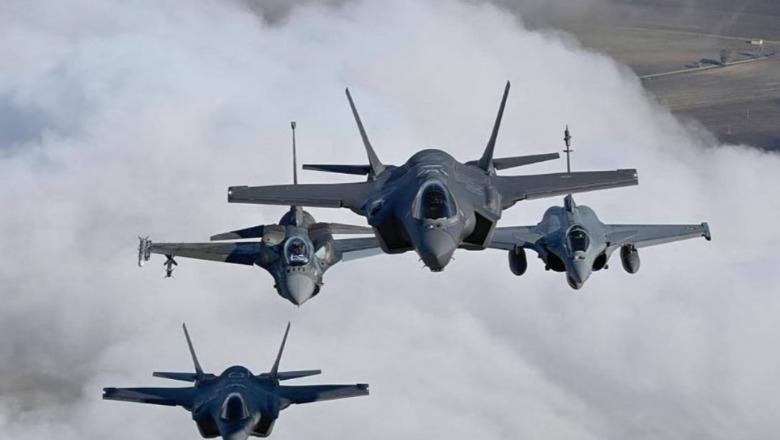
At the same time, the Rafale and F-16 Viper aircraft would take off.
According to the scenario described by NEA.gr, Greek aircraft, without entering Turkish airspace, would launch long-range missiles towards the runways of the airports in Dalaman, Balikesir and Cigli.
In parallel, Greek Spike NLOS and Exocet batteries from the Eastern Aegean islands would strike the Turkish landing ships while they were still in their ports.
The aim of this scenario would be to stop the landing force before it reached the Aegean.
What if Turkey retaliates?
Analysts themselves admit that no preemptive strike can eliminate 100 percent of opposing forces.
This is where the third phase of the scenario begins: dealing with the backlash.
Turkey, according to this hypothetical scenario, would attempt to respond mainly with the missiles and drones it would still have at its disposal.
At this point, the Greek missile and drone defense infrastructure would be activated. The SeaFire radars of the new Greek Kimon frigates, of the Belharra type, would coordinate with the Patriot systems on the ground to intercept missiles and drones in the air.
Objective: Everything to be decided within 24 hours
According to the scenario presented by Greek media, the aim would be for the clash to be resolved in less than 24 hours, without turning into a long and exhausting war.
In the analysts’ scenario, the strikes would aim to paralyze Turkey’s ability to continue offensive operations, hitting its aviation, fleet and landing forces.
Then diplomacy would come into play.
The US, NATO and the European Union, under this scenario, would pressure for an immediate ceasefire, while France would activate the mutual defense assistance clause.
The Greek media makes it clear that this is only one of the possible operational scenarios. The detailed part of the scenario, from the concrete targets to the method of attack, comes from the analysis of the media and its sources and is not an operational plan made public by the Greek military leaders.
Greece-Turkey tensions, what’s happening in the Aegean
The script is published at a time when relations between Greece and Turkey are once again under tension, with disputes over maritime borders, rights to exploit energy resources, and military movements continuing to pit Athens against Ankara.
One of the latest clashes is related to marine protected areas. Turkey declared 26 marine national parks in August 2026, while Athens objects to some of the areas included, claiming that they lie on the Greek continental shelf and violate international law.
Another sticking point is the Turkish doctrine of “Mavi Vatan,” or “Blue Homeland.” Ankara seeks to assert its claims over vast maritime areas, while these claims conflict with Greece’s positions on jurisdiction and energy projects in the Aegean, including offshore wind farms and undersea cables.
At the same time, Turkey opposes Greece’s military rapprochement with Israel. At the center of this is the Greek multi-layered air defense project “Achilles Shield”, which also relies on Israeli technology.
A long-standing issue that continues to divide the two countries is the military presence on the islands of the Eastern Aegean. Turkey accuses Greece of illegally militarizing islands off the Turkish coast, while Athens insists it has the right to defend its territory.
Tensions have also been accompanied by aircraft and drone movements, troop deployments, and military activities in the Aegean area.