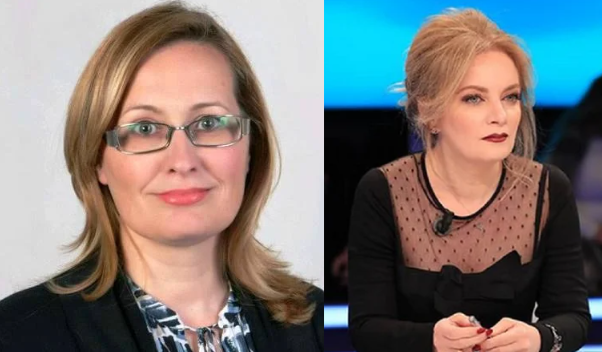
“Albanian medicine is not just oncology!”, declared socialist MP Iris Luarasi, a statement that at first glance aimed to highlight the “transformation” of the healthcare system, but which was enough to touch on another sad reality in our country.
Researcher at the Institute of History Sonila Boçi Pepivani has not chosen to leave unanswered what was said two days ago in the studio of the show “Top Story”. Through a public reaction, she has returned to the socialist MP with a completely different picture than that of clean sheets and modern beds that Luarasi said on the show.
And since the MP said that Albanian healthcare is not identified only with Oncology, the historian, who was diagnosed with cancer years ago, decided to show Luarasi other services, such as Cardiology, where she had a personal experience.
In this reaction, she described a reality that has little to do with “beds that lower and raise” or sustainable standards, but with old equipment, shortages, and a system that, according to her, often leaves the patient on the verge of survival.
“I will talk about Cardiology, in whose surgical ward my husband was operated on three years ago. Moments before the operation, the leg of the operating table broke as soon as he lay down on it. The bed where he stayed after the operation looked like it belonged to the 19th century and the only thing I remember is his constant complaints about back pain, caused by the protruding springs. The four-bed room where he stayed after the operation also seemed to be from the 19th century,” writes the historian, not stopping only at the infrastructure, but going further, also at the missing medicines, the interrupted chemotherapies, the malfunctioning equipment and the long waits that, according to her, make the treatment a battle in itself.
“I wait for months, as an Oncology patient, to have a scan, an echo or scheduled check-ups, just like thousands of other patients,” she writes further, inviting Luarasi to visit the Oncology and see with her own eyes the pain that people in those corridors experience, due to the lack of medications and the huge amounts they have to pay!
Full reaction:
Very disappointing to hear such a statement from a member of Parliament, who comes from the academic world and civil society.
I will not talk about the Oncology Department, which apparently did not set the standard for Albanian medicine. I have written about my experience in that hospital before.
I will talk about Cardiology, in whose surgical ward my husband was operated on three years ago. Moments before the operation, the leg of the operating table broke as soon as he lay down on it. The bed where he stayed after the operation looked like it belonged to the 19th century and the only thing I remember is his constant complaints about back pain, caused by the protruding springs. The four-bed room where he stayed after the operation also seemed to be from the 19th century.
My husband and I have a social status that, if we wanted, would allow us to receive the service “today for tomorrow”, as you say, Mrs. Luarasi. We have friends and acquaintances who would help us if we asked them. But we have chosen to follow the rules, wait our turn and not take it from someone else.
I wait for months, as an oncology patient, to have a scan, an ultrasound, or scheduled checkups, just like thousands of other patients.
As for the hospital infrastructure, the equipment for examinations and treatments, the chemotherapies and medications that are sometimes lacking, the insufficient personnel, and the service that citizens deserve, it is my right to demand them. And I will not tire of demanding them, as long as I live.
I invite you to visit the Oncology Clinic once. I want to see up close the despair on a parent’s face when the hospital doesn’t have chemotherapy medications and he can’t afford to buy them for his 30-year-old daughter. Or the exhaustion and frustration of a woman who left her husband undergoing chemotherapy and ran to pharmacies to find a pump necessary to continue treatment at home. Both were teachers, with five children to raise. For their budget, 4,000 new lek for a pump was a heavy burden.
Not everyone has your social status to receive the service “today and tomorrow.” Most of those treated in public hospitals are people with low incomes, without opportunities and without privileges.
Even if this miracle of infrastructure has occurred in some services, such as General Surgery, the hospital is not just a building or a facade. The hospital is the equipment that works, the medications that are not lacking, the sufficient staff, and the service that is offered to every patient without distinction.
When you provide these, I will join you in your enthusiasm for radical changes in medicine. Until then, I will continue to speak out about what I see and experience every day.