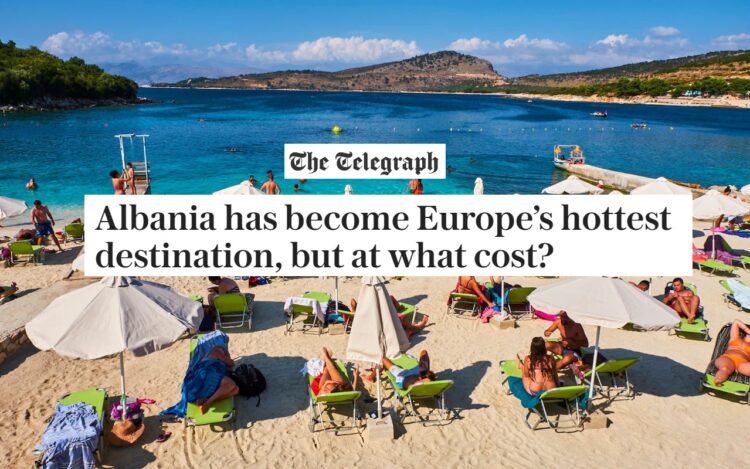
Two summers ago, my friends and I didn’t need to debate where to take our girls on vacation. A clear winner had emerged. Lured by the azure waters, lower-than-average prices, and social media videos touting it as the “Maldives of Europe,” we headed to Albania.
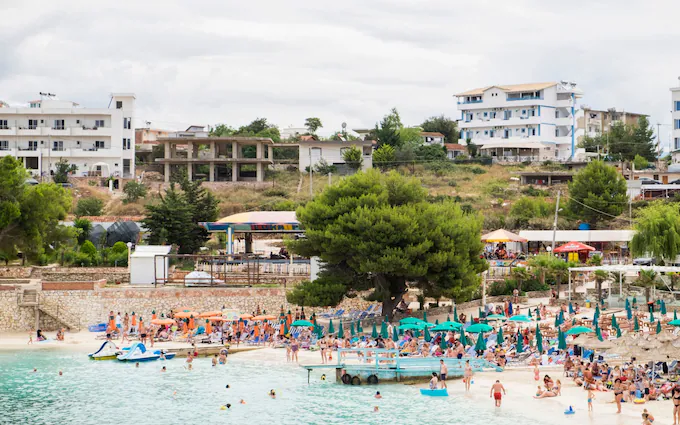
But, far from finding an unspoiled Mediterranean paradise that would justify comparisons to that Indian Ocean idyll, we were greeted by miles of identical beach bars, neon-lit promenades, and bays filled with so many sun loungers that you could barely see their pebbly shores.
Today, the preparation of Albania’s coastline for mass tourism has only intensified. Visitor numbers continue to spiral. Global hotel brands continue to increase, and this summer the long-awaited Vlora International Airport is expected to begin operations, providing a new gateway to the Albanian Riviera.
The most controversial new tourism development is undoubtedly the planned luxury resort, backed by Ivanka Trump and her husband, Jared Kushner, that has recently sparked massive protests in the Balkan nation.
Is this the wake-up call Albania needed to control tourism before it’s too late?
The changing face of Albania’s tourism
Saranda, Albania’s main tourist town, looked very different not so long ago. “It was a quiet port, the tallest building of which was the seven-story Butrint Hotel,” says Gillian Gloyer, author of The Bradt Guide to Albania, who lived in the country for a period starting in 1998. “Back then, there was virtually no tourism and only a few beaches had tourist infrastructure.”
Albania had been severely isolated by its communist regime until the early 1990s, and it was only many years later that it hit the radar of mainstream vacationers, with Lonely Planet naming it the number one destination to visit in 2011.
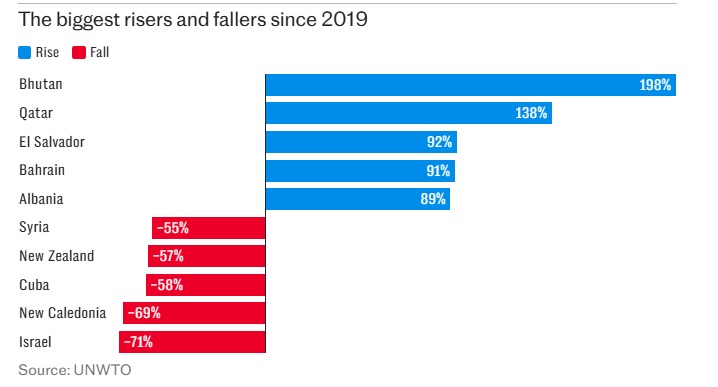
But the real change came after the pandemic, as low-cost airlines set up bases at Tirana Airport and TikTok videos of its beaches in the south went viral. The number of visitors to the country increased by 89% in 2025 compared to 2019, making it the fastest-growing holiday destination in Europe.
Sustainable tourism policies were in place before the boom. The “100 Villages” scheme gave villagers government grants to help them convert their homes into guesthouses, allowing tourists (both foreign and local) to experience traditional Albanian life. But attention soon shifted to building hotels along the coast, with Prime Minister Edi Rama giving his backing to large-scale developments and announcing a target of 30 million annual tourists by 2030, up from around 12.5 million last year.
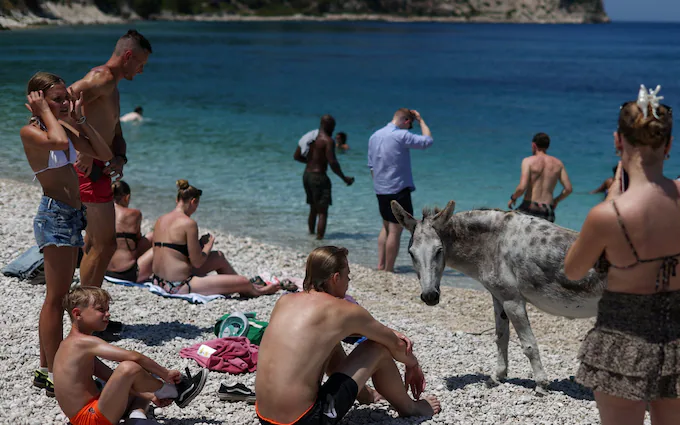
“Many of the Riviera’s beaches, including some in protected areas like Butrint National Park, are now overdeveloped,” says Gloyer. “This is destroying the natural beauty that attracted foreign visitors in the first place.”
Kushner’s luxury resorts
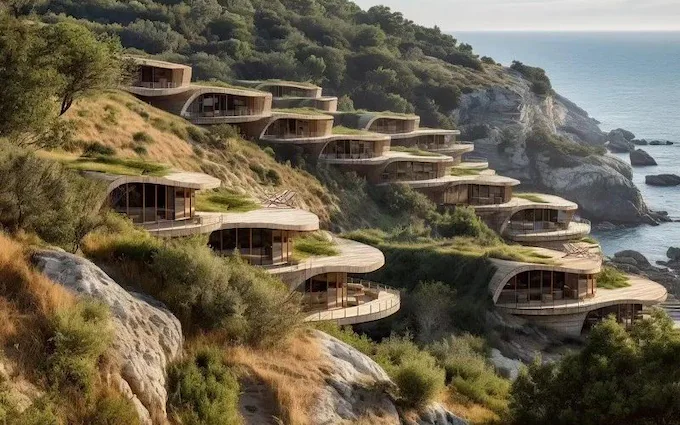
Trump and Kushner’s vision of a 1.4 billion euro, 10,000-room hotel consists of two luxury resorts on Albania’s Adriatic coast. One is planned for Sazan, a rugged pine-forested island that served as a naval base during the communist era and remains riddled with nuclear bunkers and secret tunnels.
“It’s a fascinating historical site that is currently free to visit for anyone with a few euros to spare for the boat trip,” says Gloyer. “If the proposal to turn it into a luxury resort is approved, it will be inaccessible to almost everyone.”
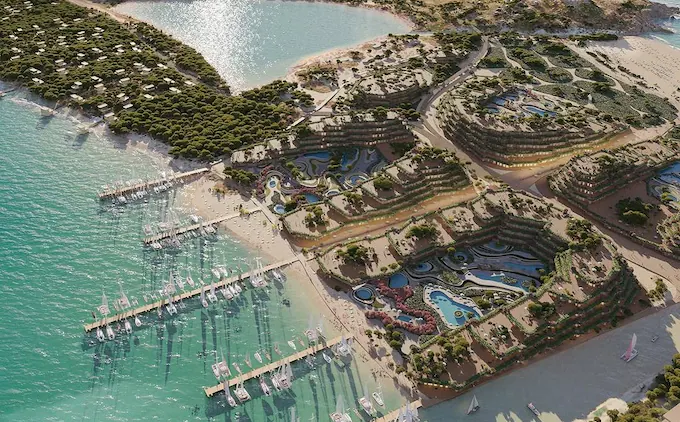
However, the main concern for many people is the biodiversity of the area. A second complex is proposed for a coastal stretch on the mainland, opposite Sazan, embracing the Vjosë-Nartë nature reserve, a popular birdwatching destination.
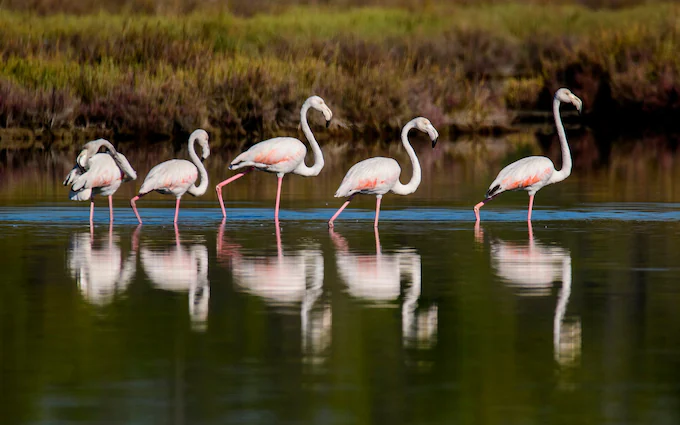
“It is one of the most ecologically vital areas of Albania,” says Aleksandër Trajçe, executive director of the Protection and Conservation of the Natural Environment in Albania (PPNEA). “A multitude of species would be directly affected by these developments, but some of the most critical are the over 200 species of birds that rely on the lagoon.”
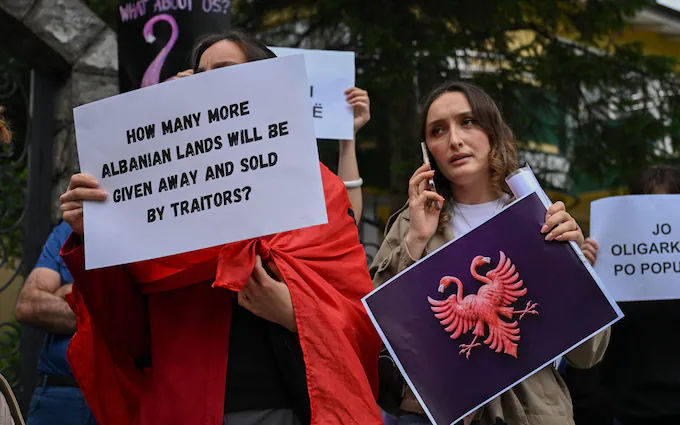
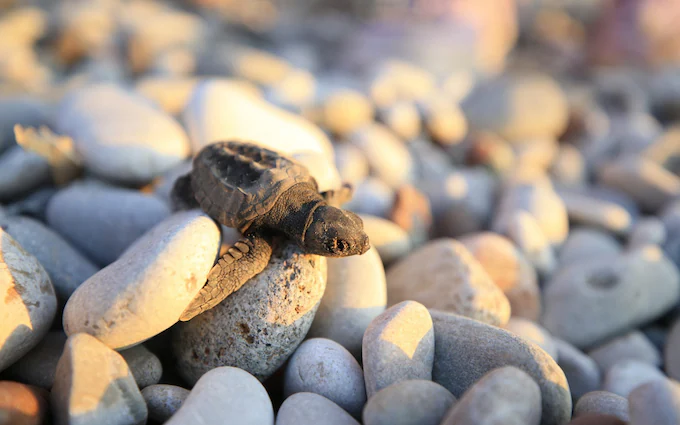
Among them is the flamingo. Demonstrations against the plans have been dubbed the “Flamingo Revolution,” although the construction sites threaten the habitats of many other endangered species, including the Mediterranean seal and the Dalmatian pelican. Sazan itself is surrounded by Albania’s only national marine park and is a nesting site for the loggerhead sea turtle, a species of global conservation concern.
“The overall consequences of development could be catastrophic,” says Trajçe.
Real estate development ‘disguised’ as tourism
Not all residents are against the resort. In fact, one business owner in Vlora is so pleased with the impending influx of tourists that he has named his fish restaurant “Ivanka.”
Another restaurant owner, Arsen Llambro, who owns the “Friendship Tavern” near the Vjosa-Narte lagoon, is a little less insistent, but he still believes the project could improve the area if done properly.
“I think new hotels can bring more visitors, investment and economic opportunities. We shouldn’t rely heavily on imported labor, but if the development brings benefits to the wider community, I agree.”
However, protesters see only cause for alarm.
The Albanian government amended the Protected Areas Law in 2024 to allow what it called “elite tourism development” even in areas of environmental significance, making Kushner’s project just the latest of several projects to encroach on these spaces.
Construction has already begun for a mega-resort in the Bunë-Velipoja wetlands in the north, and proposals have been drawn up for hundreds of tourist villas within Albania’s Divjakë-Karavasta National Park.
“We are witnessing an unprecedented opening of protected lands for large-scale construction. In reality, it is often not about tourism at all, but about large-scale real estate development masquerading as tourism,” says Trajçe.
Tourism has become a controversial topic in many European tourist destinations in recent years. But unlike Barcelona, whose residents are losing their homes, and Venice, which is struggling with crowds, Albania’s industry has become controversial before it has even really started.
Olsi Nika, executive director of EcoAlbania, says that the fencing of the site, the labor camp, and the access roads for the Trump-Kushner project began before the environmental review process was completed.
“Field observations suggest that these preliminary interventions may have already affected sensitive habitats. Heavy machinery operating along the beaches of Dajlan and Portonova is believed to have damaged the nesting habitats of the Loggerhead sea turtle,” he says.
However, those who are against the resorts around Vjosa – Narta and Sazan are not necessarily against tourism. “Albania still has a rare opportunity to avoid the mistakes seen elsewhere in the Mediterranean,” says Nika.
“From our perspective, the biggest risk is not tourism itself, but the loss of ecosystems that constitute our country’s comparative advantage. Sustainable tourism depends on healthy ecosystems, not the other way around.”
In a few years, for many people, the measure of Albania’s tourism success will not be visitor numbers or billion-dollar investment deals. It will be the number of flamingos still wading in its waters. Taken from “ The Telegraph