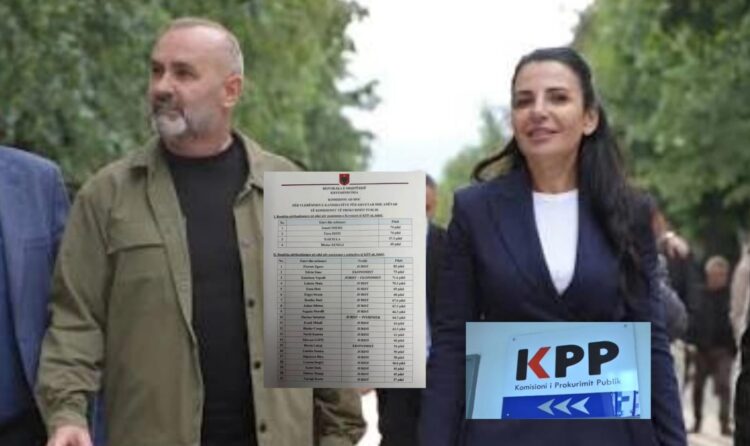
The data emerging from the scoring process adds to suspicions that the selection of the leaders of the Public Procurement Commission may have been predetermined before the Assembly completed the constitutional and legal procedure.
The scenario being discussed is clear: Ismail Shehu as chairman of the KPP and Enea Hoti as vice chairman, with political support from Ulsi Manja and the support of Belinda Balluku.
If this scenario materializes, Ulsi Manja must publicly answer several direct questions:
Is the Law Commission conducting a real, transparent and impartial process, or is it just formalizing a previously reached political agreement?
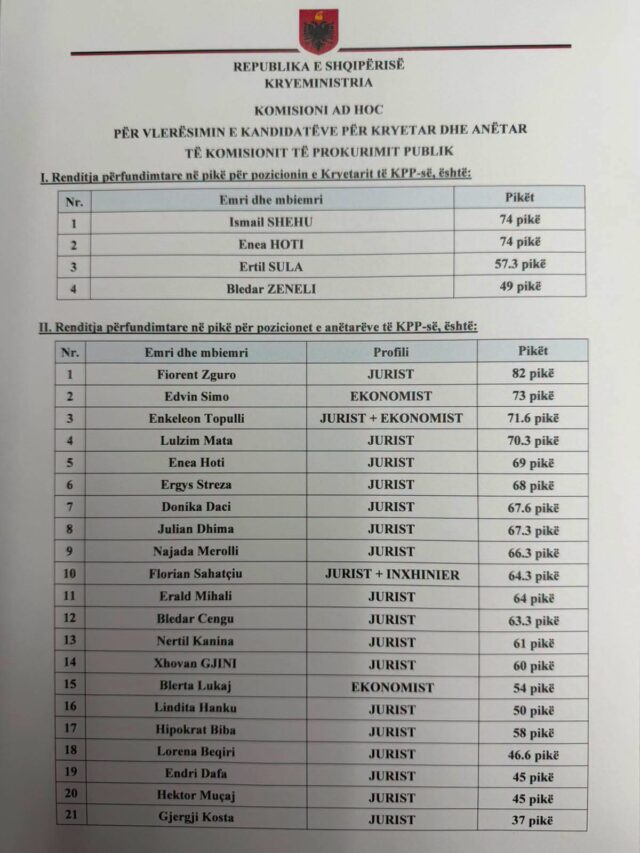
Why are the names of the future leaders of an independent institution being rumored as having been decided even before the parliamentary review is complete?
Who gave politics the right to pre-determine the deputy chairman of the CPC, when the law recognizes this competence for the members of the Commission themselves?
The law stipulates that the Assembly elects the chairman and members, while the vice-chairman is elected by a majority vote of all members at the first meeting of the CPC. Therefore, any prior political agreement for this function would turn the voting of members into an institutional theater.
The Public Procurement Commission is the highest administrative body that controls the legality of tenders. It cannot be treated as a vested interest in power, nor as an extension of the Ministry of Infrastructure, the Laws Commission, or any political group.
Ulsi Manja and Belinda Balluku must publicly declare whether or not they have interfered in this process. Silence, in the face of such a concrete scenario, only strengthens suspicions./Timoni.al