The clash between Tirana and Belgrade over Serbian President Aleksandar Vučić’s statements regarding the Ibar River has continued on social networks.
Following the reaction of Prime Minister Edi Rama, who declared that the possible consequences of a diversion of the Ibar River cannot be limited only within the territory of Serbia, a response has also come from Belgrade.
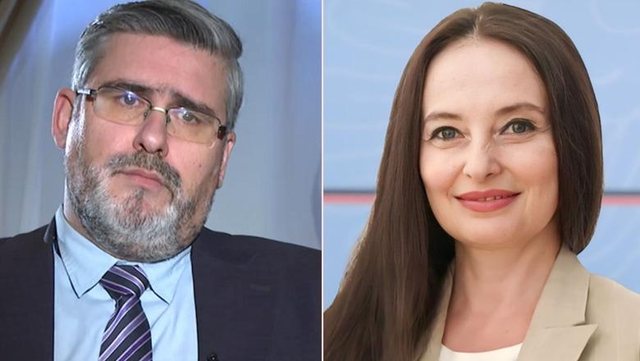
Serbian Minister for European Integration, Nemanja Starovic, has accused Rama of ignoring the United Nations Charter and Security Council Resolution 1244.
In his response, Starovic insists that Kosovo is located within the borders that, according to him, are recognized by the UN as Serbian territory.
“Talking about good neighborly relations, while not respecting the territorial integrity of the neighbor, is nothing but hypocrisy,” the Serbian minister said, shifting the debate from the issue of the Ibar River to the status of Kosovo.
Rama, in his reaction, had rejected the claims about “Greater Albania”, emphasizing that Albania has no territorial claims against Serbia and that Kosovo is a separate state.
The diplomatic clash comes after Vučić’s statements that Serbia is specifically considering the possibility of changing the course of the Ibar River. The issue has drawn strong reactions from Tirana, while Belgrade considers it an issue related to its interests in Kosovo.
The debate between the two countries is expected to continue, with the Ibar issue and opposing positions on the status of Kosovo already at its center.
“The tone is as seductive as it can be, yet it cannot hide the convenient avoidance of the most essential element: the UN Charter and UN Security Council Resolution 1244, which remains fully in force. This is where this almost poetic house of cards collapses. Kosovo is located within Serbia’s UN-recognized borders. These borders are — and must remain — inviolable, regardless of whether we are talking about Serbia, Ukraine, China or Cyprus (including, of course, Albania).
“Talking about good neighborly relations while refusing to respect your neighbor’s territorial integrity is nothing more than hypocrisy wrapped in empty words. The same goes for the grandiose rhetoric about European values and the rights of the Serbian community, carefully leaving out the 2013 Brussels Agreement and the Association of Serb-Majority Municipalities, which has not yet been established. This is the crux of the matter — not the Ibar River or water management plans,” Starović wrote.
According to the Serbian minister, talking about good neighborly relations while not respecting, in his opinion, Serbia’s territorial integrity, is “hypocrisy wrapped in empty words.” He also mentioned the 2013 Brussels Agreement and the Association of Serb-Majority Municipalities, saying that these are the issues that should be at the center of the debate, not the Ibar River.
The response was not long in coming from Minister of State and Chief Negotiator Majlinda Dhuka, who accused the Serbian minister of a selective interpretation of Resolution 1244, emphasizing that it did not restore Serbia’s sovereignty over Kosovo.
“Resolution 1244 did not restore Serbian sovereignty over Kosovo. It established international administration, removed the Serbian Security Forces, created a separate political process for the future status of Kosovo and, most importantly, did not predetermine the outcome of that process,” Dhuka wrote.
The minister also recalled the decision of the International Court of Justice, according to which Kosovo’s declaration of independence did not violate international law.
“International law is not made more useful by selectively citing it, and history does not go back simply because Belgrade continues to expect it to do so,” she continued.
Responding to Belgrade’s claims about territorial integrity, Dhuka said that Albania has no claims against Serbia and that comparing Kosovo to Ukraine does not hold water.
“As for territorial integrity, we can all easily and completely agree that borders should not be changed by force. Precisely for this reason, mentioning Ukraine while discussing Kosovo is not just an inappropriate choice. It is even an argument against itself. Kosovo was not annexed. Albania has absolutely no territorial claims against Serbia, nor any agenda for anything “Greater”, other than a Greater Europe, with Albania, Kosovo and, yes, Serbia, together within it. Let us leave the ghosts of “Greater Albania” and “Greater Serbia” behind and enjoy their well-deserved retirement,” the minister emphasized.
Dhuka also touched on the Brussels Agreement, saying that the Association should be addressed within the framework of dialogue, but so should Serbia’s obligations.
In the end, she brought the debate back to the issue that started it: Ibri.
“So, maybe we can leave the sandcastles for the beach, and the history seminars for another day. The Ibri should carry water, not geopolitical resentment. And if we really want to build it
“Together, in our European future, there is a foundation that is significantly stronger than sand: reality,” Dhuka said.
The debate between Tirana and Belgrade began after Serbian President Aleksandar Vučić warned that he would divert the river, which is the main water supplier to Lake Ujman in Kosovo. The European Union reacted by saying that statements about the possible change in the course of the Ibar River, as well as actions that do not serve the normalization of relations between Kosovo and Serbia, should be avoided.