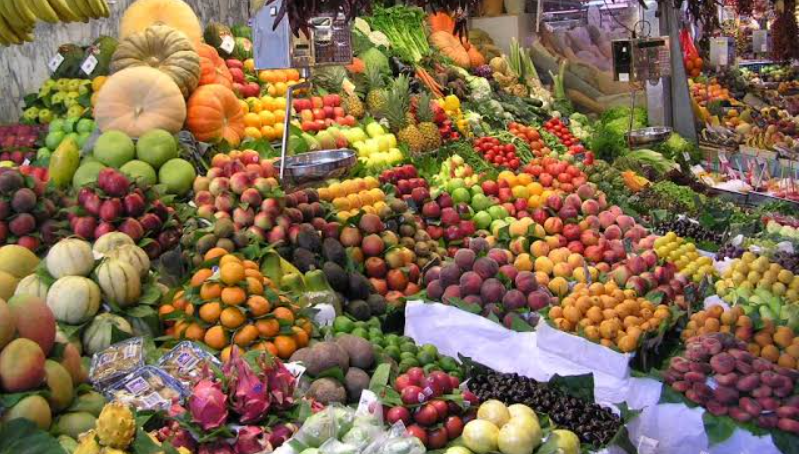
Fruit production constitutes one of the most important categories of the agricultural sector, accounting for a significant share in domestic production and in the daily consumption of citizens. But which municipalities lead in the production of different types of fruit?
To analyze this indicator, Scan Intel took into account INSTAT data on agricultural production. The data reflects production for 2025, divided by municipality.
Korça continues to hold the record for apple production, with around 17.7 thousand tons, followed by the municipality of Maliq, with around 17.2 thousand tons. In third place is Devolli, where apple production reaches almost 13 thousand tons. On the other hand, in some municipalities apple production is much more limited, especially in smaller municipalities such as Libohova, Dropulli and Saranda.
As for plums, Elbasan leads the production in 2025, with 2,513 tons, ranking first among the municipalities in the country. It is followed by Pogradec with 1,546 tons and Kruja with 1,512 tons, while significant production is also reported in Fier, Lushnje and Cërrik.
Elbasan once again leads in cherry production, with 2,868 tons, significantly separating itself from other municipalities. Pogradec ranks second with 1,504 tons, while Berat ranks third with 1,101 tons. At the other end of the ranking is Saranda, which reports the lowest cherry production, while for several other municipalities there is no data reported.
For figs, Berat convincingly leads the ranking in the country, with 5,438 tons produced during 2025. It is followed by Shkodra with 1,708 tons, followed by Elbasan with 1,346 tons and Fier with 1,146 tons. Among the municipalities with considerable production are Tirana and Lushnja, while in other municipalities production is at lower levels.
While for nectarines and peaches, Lushnja leads, with a production of 4,725 tons. Following it are Peqin with 2,756 tons, Fier with 2,717 tons and Elbasan with 2,354 tons. Cërriku, Rrogozhina and Kuçova also have considerable production, while in the rest of the country, production appears more dispersed and with visible differences between municipalities.


