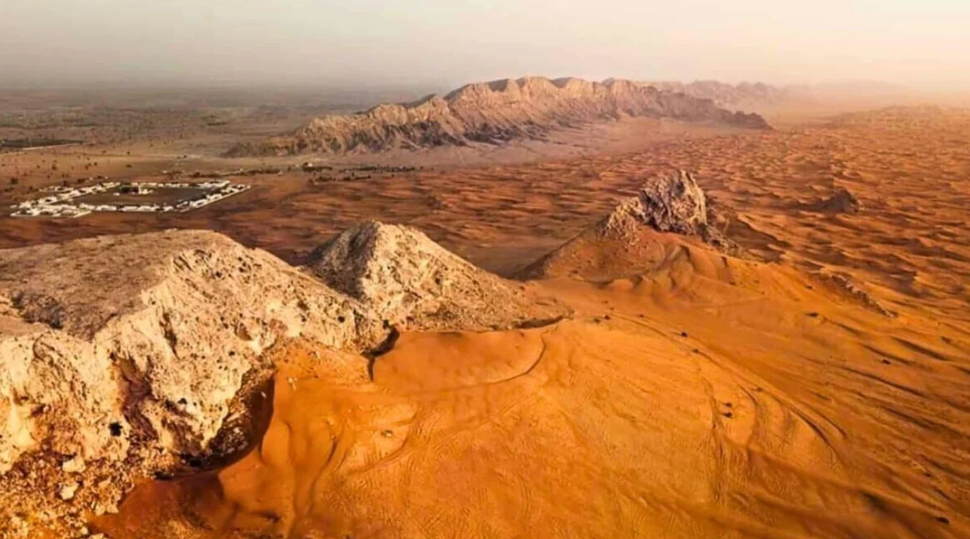
An area now considered one of the driest on the planet was once covered by a warm tropical sea and teeming with life, according to newly discovered fossils beneath the Egyptian desert, dating back more than 70 million years.
Researchers have found 14 fossilized teeth belonging to five now-extinct shark species. The discovery was made on the Abu-Tartur plateau in Egypt’s Western Desert, about 640 kilometers southwest of Cairo.
The teeth ranged in shape, from thin and sharp to broad, serrated specimens. According to scientists, this indicates that the sharks fed on different types of prey and had specific roles in the food chain.
Together with the traces of small fish, invertebrates, and predatory marine reptiles, the fossils create the appearance of a rich marine ecosystem that existed where only desert lies today.
Sharks lived during the Cretaceous period, when the Earth was much hotter and wetter. Parts of what is now Egypt were under the warm waters of the Tethys Sea. Two of the identified species had not been previously documented in Egypt. But the most interesting discovery is related to Scapanorhynchus cf. raphiodon, distinguished by its long, thin teeth.
According to the researchers, this may be the first case of this species ever discovered in Africa, as well as the youngest specimen known in the fossil record. The findings show that millions of years ago this part of Egypt was a completely different environment; a productive tropical sea, where fish, sharks and large marine predators coexisted.