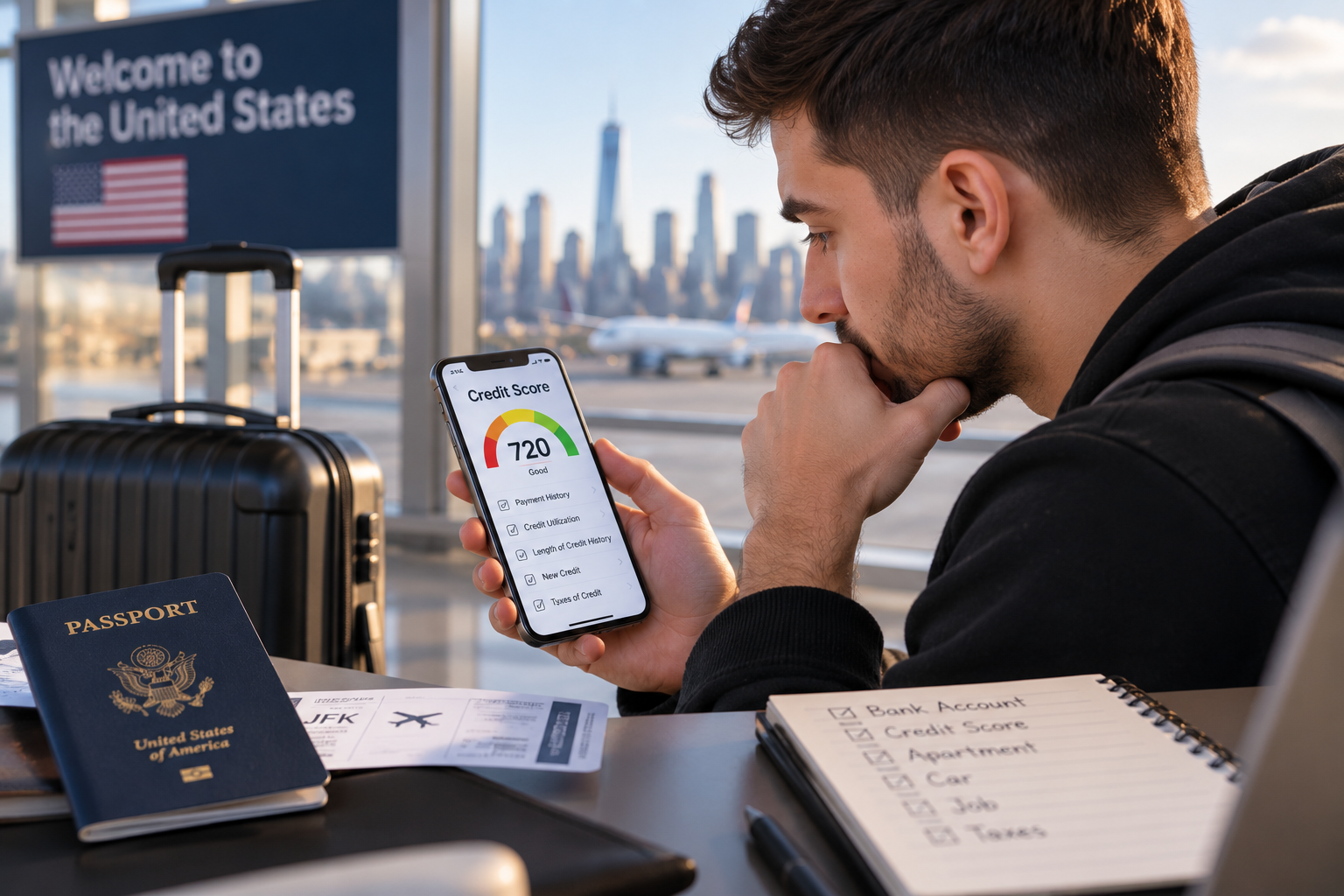
New to the U.S.? Here’s How Credit Scores Work and Why They Matter So Much
Moving to the United States comes with many new financial systems to understand. You may need to open a bank account, rent an apartment, buy a car, obtain insurance, and eventually consider purchasing a home.
One term you’ll hear repeatedly is “credit score.”
For many immigrants, including Albanians arriving in America, the U.S. credit system can initially be confusing. You may have a stable job, savings in the bank, and a history of paying your bills responsibly in another country, yet still have little or no U.S. credit history.
So what exactly is a credit score, why does it matter, and how can someone new to America begin building credit responsibly?
Here’s what you should know.
What Is a Credit Score?
A credit score is a number calculated using information in your credit history. Lenders can use credit scores as one tool to estimate the risk involved in lending money to you.
In simple terms, your credit history provides information about how you have managed certain financial obligations in the past.
The United States has three major nationwide consumer credit bureaus:
Equifax
Experian
TransUnion
These companies maintain credit reports containing information reported by lenders and other eligible businesses.
Credit scores are then calculated using information from those reports.
One important detail many people don’t realize is that you don’t have only one credit score.
Different scoring models and different versions of those models exist. A lender may also obtain information from different credit bureaus.
Two commonly known credit-scoring brands are FICO and VantageScore.
Therefore, the score you see through one app may not always be exactly the same score a mortgage or auto lender sees.
What Is Considered a Good Credit Score?
Many commonly used consumer credit-scoring models use a range from 300 to 850, with higher numbers generally representing lower credit risk.
However, there isn’t one universal score that guarantees approval or a particular interest rate.
Lenders establish their own requirements and may evaluate much more than the score itself.
They can also consider factors such as your income, existing debt, employment information, down payment, loan type, and the specific product you’re applying for.
Your credit score is important, but it is only one part of your overall financial profile.
Why Can New Immigrants Have Little or No U.S. Credit History?
Imagine you recently moved from Albania, Kosovo, North Macedonia, or another country to the United States.
You may have used banks and paid bills responsibly for years.
However, that does not automatically mean you will arrive with an established U.S. credit file.
Traditional U.S. credit reports are primarily based on information reported into the American credit system.
As a result, some newcomers may have a thin credit file or may initially be difficult to score using certain traditional credit-scoring models.
This doesn’t necessarily mean you have “bad credit.”
Having no or limited credit history is different from having a history containing missed payments or other negative information.
For a newcomer, the challenge is often simply establishing enough U.S. credit history.
Why Does Your Credit Score Matter?
Credit can become important when you want to borrow money.
Suppose you eventually want to finance a vehicle