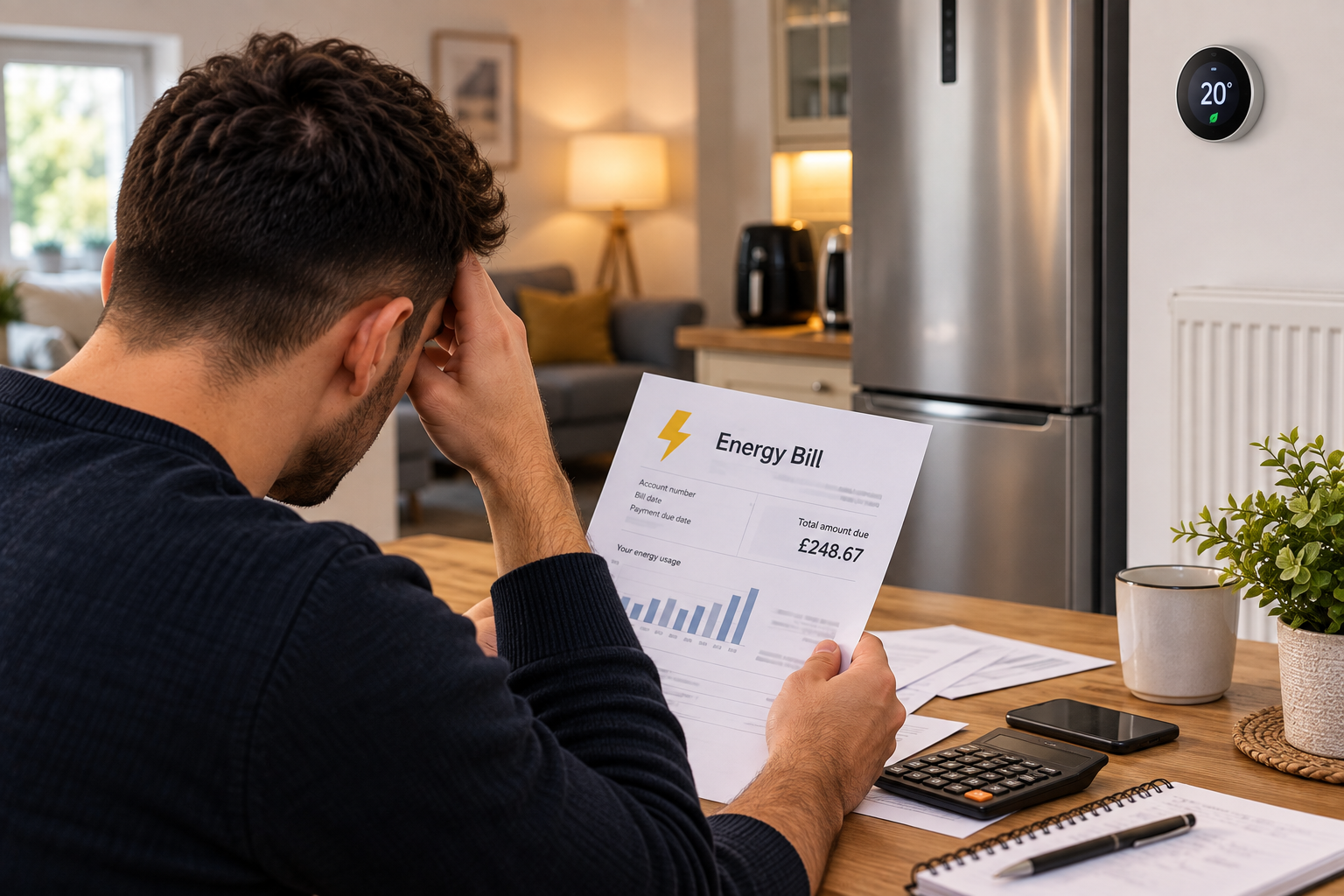
Is Your Electricity Bill Going Up? 7 Things in Your Home You Should Check
You open your electricity bill and immediately notice something is wrong.
Last month: $180
This month: $265
But you don’t remember doing anything dramatically different.
So where did the extra cost come from?
For Albanian families living in America, rising electricity bills can put additional pressure on an already expensive household budget. But before assuming the utility company simply increased your bill, it’s worth checking what’s happening inside your home.
Heating and cooling alone can account for a major share of household energy use, and inefficient equipment, air leaks, old appliances and everyday habits can all increase consumption.
Here are seven things worth checking if your electricity bill suddenly starts climbing.
1. Your Heating and Cooling System
Start with one of the biggest energy users in many American homes:
HVAC — heating, ventilation and air conditioning.
Your air conditioner may run for hours during hot summer days.
Your heat pump or other electric heating equipment may work heavily during winter.
If the system has to work harder than necessary, electricity consumption can increase substantially.
ENERGY STAR says nearly half of the energy used in a typical home goes toward heating and cooling.
Check the Air Filter
A dirty HVAC filter can restrict airflow.
That can force the system to work harder to heat or cool your home.
ENERGY STAR recommends checking filters regularly, particularly during periods of heavy heating or cooling use, and replacing dirty filters as appropriate.
This is one of the simplest things homeowners can check.
Watch for Other HVAC Warning Signs
Pay attention if:
The system runs almost continuously.
Some rooms never reach the desired temperature.
Your energy bill is rising without an obvious explanation.
The equipment makes unusual noises.
Airflow from vents seems weak.
The system frequently needs repairs.
If an older HVAC system is struggling, professional inspection may be worthwhile.
2. Your Thermostat Settings
A few degrees can make a difference when heating or cooling operates for many hours every day.
Imagine nobody is home between:
8:00 a.m. and 5:00 p.m.
But the air conditioning continues maintaining the same temperature you prefer while you’re sitting in the living room.
You’re paying to cool an empty house.
The same issue can occur with heating during winter.
Consider a Smart Thermostat
A smart thermostat can automatically adjust heating and cooling according to your schedule.
For example, it may reduce HVAC use when:
You’re at work.
You’re sleeping.
Nobody is home.
You’re away for several days.
Then it can adjust the temperature again before you return.
ENERGY STAR-certified smart thermostats are independently certified based on actual field data to provide energy savings.
The important point isn’t buying another gadget.
It’s avoiding unnecessary heating or cooling when nobody needs it.
3. Air Leaks and Poor Insulation
Your HVAC system might be functioning correctly.
The problem could be your house.
Imagine running the air conditioner while leaving a window slightly open.
Everyone understands that wastes energy.
But your home can effectively have many small invisible “open windows” through:
Gaps around doors
Poorly sealed windows
Attic penetrations
Cracks
Unsealed plumbing openings
Poor insulation
Leaky ductwork
Conditioned air escapes while outdoor air enters.
Your HVAC system then works harder to maintain the temperature.
Check for Drafts
Walk around the house and pay attention near:
Windows
Exterior doors
Attic access
Basement areas
Electrical penetrations
Plumbing penetrations
Other exterior openings
If you feel significant drafts, the house may benefit from air sealing or weatherstripping.
ENERGY STAR says air sealing and insulation are often among the most cost-effective ways to improve home efficiency and comfort.
4. Your Water Heater
Most people think about air conditioning when discussing electricity.
They forget about hot water.
But water heating can represent a meaningful part of household energy consumption.
The U.S. Department of Energy notes that water heating can account for roughly 14% to 25% of household energy consumption.
Think about how often your family uses hot water:
Morning showers
Evening showers
Dishwashing
Laundry
Cleaning
Baths
Cooking
A family of five can have very different hot-water usage from someone living alone.
Check the Temperature Setting
An unnecessarily high water-heater setting can increase energy use.
DOE guidance commonly points to around 120°F as an energy-saving setting for many households, while individual circumstances and equipment requirements should be considered.
Also watch for:
Hot-water leaks
An ageing water heater
Unusual noises
Running out of hot water quickly
A sudden change in electricity consumption
If your water heater is malfunctioning, professional inspection may be necessary.
5. Old Refrigerators and Appliances
Your refrigerator doesn’t work eight hours and then go home.
It’s operating around the clock.
An ageing or inefficient refrigerator can therefore contribute to electricity consumption every day of the year.
The same applies to other major appliances, including:
Freezers
Clothes dryers
Washing machines
Dishwashers
Electric ovens
Dehumidifiers
Pool equipment
Older air conditioners
That Old Garage Refrigerator Isn’t Free
Many families replace their kitchen refrigerator but move the old one into the garage.
Now they have:
New refrigerator in the kitchen
Old refrigerator in the garage
Separate freezer in the basement
Each device consumes electricity.
Ask whether you actually need every appliance that’s plugged in.
Look for Changes
If your electricity bill suddenly increases, ask:
Did we buy a second refrigerator?
Did we add a freezer?
Are we using the clothes dryer more often?
Did we install an electric heater?
Did we add an EV charger?
Are we running a dehumidifier continuously?
Small household changes can create noticeable differences over a full month.
6. Your Clothes Dryer and Laundry Habits
Laundry can become another hidden energy expense.
Imagine a family runs the dryer:
Once per day
That’s roughly:
30 cycles per month.
A larger family may use it even more.
The electricity used depends on the machine, cycle, load and other factors.
Avoid Tiny Loads
Running several small loads can use more energy than organising laundry efficiently into appropriate full loads.
Also check:
Dryer vent
Lint filter
Drying time
Machine condition
Cycle settings
If clothes suddenly take much longer to dry than before, investigate why.
A clogged or poorly functioning dryer system can create both efficiency and safety concerns.
7. Devices That Stay Plugged In All Day
Walk through your home tonight.
How many things are plugged in?
TV
Gaming console
Computer
Printer
Coffee machine
Chargers
Sound system
Cable equipment
Smart devices
Kitchen appliances
Office equipment
Some electronics continue consuming electricity even when they’re not actively being used.
One phone charger isn’t likely to explain a massive electricity bill by itself.
But many devices operating or sitting in standby across a large home can contribute to overall consumption.
DOE recommends switching off or unplugging equipment that doesn’t need to remain powered and specifically identifies items such as computers, printers and other electronics as opportunities to reduce unnecessary energy use.
Smart power strips can also make groups of electronics easier to shut down.
Compare Electricity Usage, Not Just Dollars
This is extremely important.
Suppose:
July bill: $180
August bill: $250
You might conclude:
“We’re using much more electricity.”
Maybe.
But first compare the actual electricity consumption shown on the bills, generally measured in kilowatt-hours (kWh).
If your kWh consumption increased significantly, your household probably used more electricity.
But if consumption remained relatively similar while the dollar amount rose, other factors may be involved, such as:
Electricity rates
Utility charges
Taxes
Billing-period length
Rate-plan changes
Seasonal pricing structures where applicable
Don’t compare only:
$180 vs $250
Compare:
kWh vs kWh
and then examine the rates and charges.
Weather Can Change the Bill Dramatically
Suppose July was relatively mild.
Then August brought several weeks of extreme heat.
Your air conditioner may have operated much longer even though you never changed the thermostat.
The opposite can happen during a very cold winter with electric heating.
Before assuming something is broken, compare:
Weather
HVAC runtime
Electricity consumption
Previous-year usage
Many utility companies show historical usage on your bill or online account.
Look for patterns.
Example: How Small Changes Add Up
Imagine an Albanian family in the United States notices its electricity bill has increased from:
$170 to $260 per month
That’s an extra:
$90 per month
If the pattern continued for a year:
$90 × 12 = $1,080
So they investigate.
They discover:
The HVAC filter is extremely dirty.
The thermostat keeps cooling the house while everyone is at work.
A garage refrigerator is running continuously.
Several doors have noticeable air leaks.
The clothes dryer is taking much longer than before.
There may not be one giant problem.
Several smaller inefficiencies can combine to create a much larger bill.
Your HVAC System Could Be Getting Old
An old system doesn’t automatically need replacement.
But ageing equipment deserves attention if:
Electricity bills keep rising.
The system needs frequent repairs.
Some rooms are too hot or cold.
The system runs excessively.
Comfort is getting worse.
ENERGY STAR recommends considering professional evaluation when heating or cooling equipment is ageing, requires frequent repairs, or energy bills are increasing.
Don’t immediately spend thousands of dollars replacing equipment solely because of one expensive electricity bill.
First determine what’s actually causing the problem.
Consider a Home Energy Assessment
If you’ve checked the obvious problems but your house still uses much more energy than expected, a home energy assessment or audit can help identify inefficiencies.
An assessment may examine areas such as:
Insulation
Air leakage
Heating and cooling
Ductwork
Windows and doors
Major appliances
Other energy systems
DOE recommends energy audits as a way to understand a home’s overall energy performance and identify opportunities for improvement.
This can be particularly useful for older houses.
Don’t Immediately Buy Solar Panels
When homeowners see a $300 electricity bill, they sometimes jump straight to:
“I need solar.”
Solar may make financial sense for some homes.
But first understand why your house is using energy.
If your home has:
Major air leaks
Poor insulation
An inefficient HVAC system
Bad thermostat settings
Old appliances
then improving efficiency may deserve attention before making a large investment.
Understand your consumption first.
Then evaluate bigger upgrades.
Seven Things to Check
If your electricity bill keeps increasing, start here:
1. HVAC system — Check filters, maintenance and whether the equipment is running excessively.
2. Thermostat — Make sure you’re not unnecessarily heating or cooling an empty home.
3. Air leaks and insulation — Conditioned air escaping from the house wastes energy.
4. Water heater — Check usage, temperature and equipment condition.
5. Refrigerators and appliances — Older or additional appliances can increase consumption.
6. Laundry and dryer — Frequent or inefficient drying cycles can add to electricity use.
7. Electronics and always-on devices — Identify equipment consuming electricity when it isn’t needed.
Then compare your kWh usage from month to month rather than looking only at the dollar amount.
The Bottom Line
For Albanian homeowners in America, an electricity bill that suddenly rises from:
$180 to $250 or $300
shouldn’t automatically be ignored as “just another expensive month.”
Investigate what changed.
Start with the largest potential energy users:
Heating and cooling.
Then check:
Thermostat settings
Insulation and air leaks
Water heating
Major appliances
Laundry
Always-on electronics
A higher bill doesn’t always mean something is broken. Weather, electricity rates and changes in household behaviour can also affect what you pay.
But if consumption continues rising without an obvious explanation, finding the cause early could save hundreds—or potentially thousands—of dollars over time.
Don’t just ask why the bill is higher. Check where the electricity is actually going.
Disclaimer: This article is for general educational purposes only. Electricity rates, household energy use and potential savings vary significantly by home, climate, utility, equipment and household behaviour. Electrical, HVAC and water-heating problems can present safety risks; use appropriately qualified professionals when inspection or repair is needed.