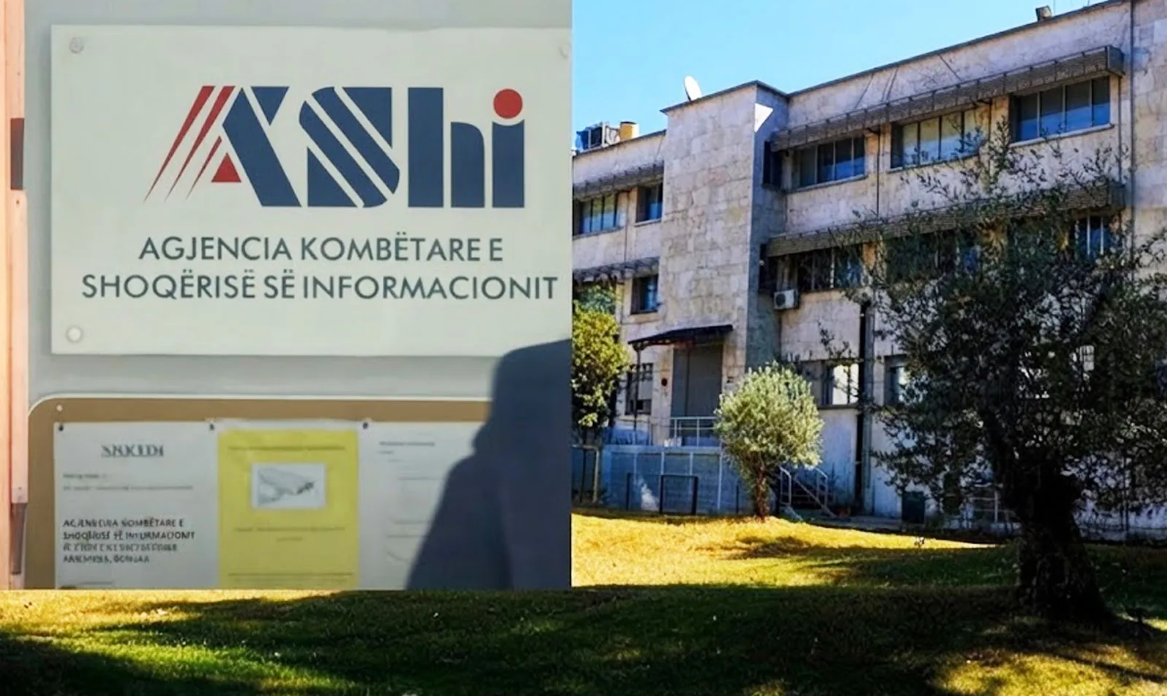
The investigation of the Tirana Prosecutor’s Office into the interference in the Civil Status system is taking on a broader dimension, as the investigative materials also mention the use of computers and credentials related to the AKSHI. But one element must be clearly separated from the claim: the fact that some interferences turn out to originate from devices or networks connected to the AKSHI does not in itself prove that the institution as a structure has ordered or carried out the changes. Precisely the identification of specific users and individual responsibilities is one of the objectives of the investigation.
The latest reports, referring to the investigative file, speak of around 60 interventions in civil data. Meanwhile, in September, a figure of 45 identity changes was reported through the profile of a former employee of the Civil Registry, Pandeli Shirokaj, who retired on June 16, 2023. This difference from 45 to 60 is one of the points that requires clarification: have new interventions been discovered, or does the new figure also include other actions in the system?
At the center of the case is the user profile named “Pandeli Shirokaj”. According to the materials made public, even after his retirement, the credentials were active and are suspected of being used to make changes to the Civil Status registers. The latest reports say that the prosecution is trying to determine from which computers the logins were made and which people actually used the system.
Here the main institutional question arises: how can a profile of an employee who had been retired for more than three years remain active? And, if the system has recorded IPs, devices and login times, then the investigation should be able to determine not only “where” the login was made from, but also “who” was behind the keyboard.
A specific case included in the file is that of Indrit Aliu, alias Indrit Kolleshi and David Isaac. According to the reported investigation, he had changed his first and last name to David Isaac in the Novosela Civil Registry in Vlora. The change was ascertained on November 27, 2025 during a procedure for re-application for a passport and the Civil Registry decided to restore the previous generalities.
But on January 13, 2026, according to the file cited by the media, the change to David Isaac was carried out again at Administrative Unit No. 3 in Tirana, on the basis of a document allegedly issued by the Israeli Ministry of Interior. The prosecution suspects that the document is forged and that the procedure was carried out in violation of the Civil Status Law.
Measures have been taken against Aurel Kotor, an IT specialist at the Ministry of Interior, and Orjola Omit, an employee of the Civil Registry at Administrative Unit No. 3 in Tirana, for this episode. According to reports, both have been suspended from duty, while Indrit Aliu has been declared wanted with the measure of “prison arrest”. These are procedural measures and not final decisions on the guilt of the individuals.
The case becomes even more important due to the fact that the suspected forged documentation was presented as a document of a foreign state. If this is proven, the issue is not limited to an administrative change of personal data. But even here a distinction must be made: the prosecution has raised suspicions and is investigating them; the forgery of the documents must be proven by expert examination and judicial evidence.
Where does the responsibility lie?
Liability cannot be automatically placed on the NAIS simply because some entries were connected to its computers or networks. It must be determined whether there was:
unauthorized use of equipment;
use of another person’s credentials;
negligence in account administration;
interference by specific employees;
or a broader mechanism that has allowed the system’s controls to be circumvented.
Equally important is the responsibility of the structures that administer the Civil Registry. If a pensioner’s profile has remained active for years, the question is not only who used it, but also why the system did not deactivate it and who was responsible for checking the credentials.
Another point that requires transparency is the number. 45 or 60? September’s public reports spoke of 45 changes, while the latest material speaks of around 60 interventions. For an investigation that affects civil registries, the number is not a secondary detail. It is necessary to know how many people were affected, what data was changed and which of these changes were considered illegal by the investigators.
What’s still missing?
The publication of a complete overview of the 60 interventions is missing: which data was changed, in what period, from which IPs, from which devices and which accounts were used.
There is also a lack of a clear answer as to what specific responsibility is attributed to the NAIS as an institution and what individual responsibility is being investigated.
And above all, it must be clarified whether the case of Indrit Aliu is an isolated episode or just one of the cases that the prosecution has uncovered in a broader scheme.
Questions that institutions need to clarify
How many interventions are there really: 45 or 60?
How many people have had their identities changed and what information has been changed?
Why did the “Pandeli Shirokaj” profile remain active after retiring in June 2023?
From which IPs and devices were the logins made and were the physical users identified?
Have other people’s credentials been used without their knowledge?
What concrete responsibility do the suspended employees have and is there evidence for other persons inside or outside the NAKSHI?
Have all foreign documents used for identity changes been verified?
And the biggest question: are we facing a failure of control of the Civil Registry system, individual abuse of credentials, or a more organized scheme? The answer to this question will also determine the real extent of the issue.