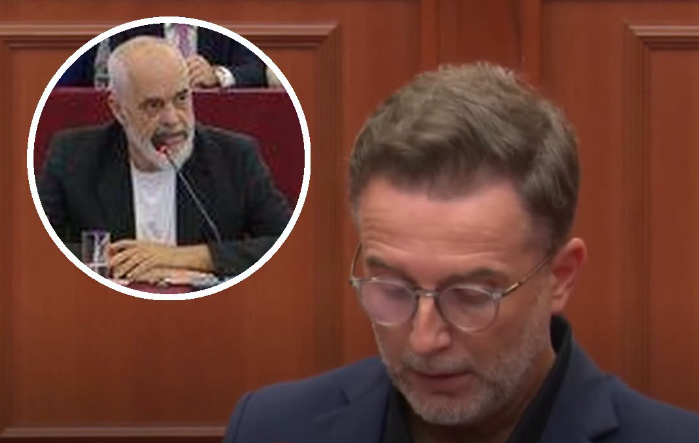
Socialist Party MP Erion Braçe, who was one of the most critical voices within the majority towards the new territorial reform, voted in favor of the draft law in today’s plenary session.
Despite the vote in the Assembly, Brace declared after the session that he continues to be against the new administrative map and that he will explain the reasons for his decision on Friday.
In a statement to the media as he was leaving the Parliament premises, this conversation took place between him and journalists: “I am against it, I will clarify it tomorrow,” said Brace.
Journalist: What happened, Mr. Braçe, the territorial reform…
Erion Braçe: I am against, but still the reform… Journalist: Why did you vote in favor, Mr. Braçe?
Erion Braçe: I’ll explain it tomorrow.
Journalist: Did you consider this the most difficult day? Why did you decide at the last moment to vote yes?
Erion Braçe: …citizens…
Journalist: Why did you decide at the last moment to vote in favor, you…?
Erion Braçe: I’m against it, once again. I’m against this map… Journalist: But you didn’t choose the citizen, you chose the party.
Erion Braçe: No, I chose exactly the citizen.
The new territorial reform was approved with 85 votes in favor amid tensions in the Assembly hall, where opposition MPs reacted harshly. Among those who voted PRO is Elisa Spiropali, who previously issued harsh criticisms of the Socialist Party and the Territorial Reform.
With this approval, the country’s administrative map is reorganized into 46 municipalities, 71 constituent cities and 387 administrative units, while the 12 regions remain intact.
The changes include the merger of 15 existing municipalities with other larger units, a structure on which the 2027 local elections are expected to be held.