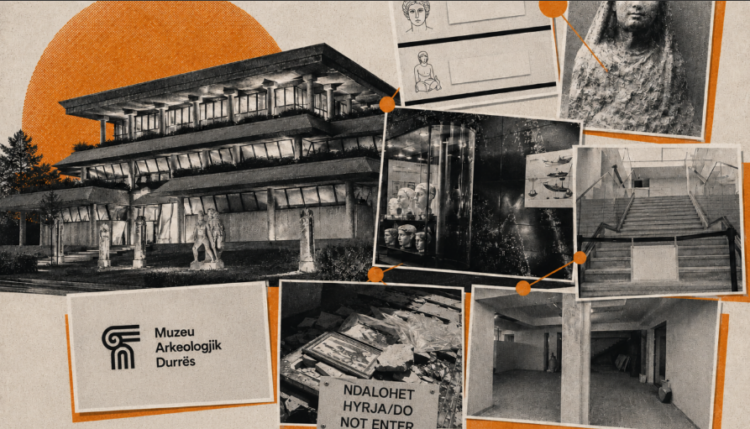
The saga of the next restoration of the Archaeological Museum of Durrës ended on April 28 of this year, almost 4 years after the devastating earthquake that was the reason for the launch of this extensive reconstruction and improvement intervention of the museum premises.
The project takes its place in the “crown” of European Union investments in Albania in the field of cultural heritage, implemented by the international organization UNOPS and which brought interventions within the museum building and in the territory surrounding it, with a bill that cost European taxpayers 3.8 million euros.
The restoration works came after the damage that was found in the building after the earthquake of November 26, 2019, and the project gathered extensive expertise in the first stages, from masonry interventions, to museumization and the creation of a business plan for the museum that houses over 3,000 artifacts, most of which were discovered in Durrës.
“Based on the experience I have here [in the country where I live today], which is part of tourism, the first thing tourists want to encounter in a city they visit is the archaeological values, the cultural heritage of a country, and even more so how the archaeological museum can represent us, which is also a national pride for all of us,” said its former director, Albert Koni, about the museum’s values.
From the bright renderings, to the new museum plan and new additional spaces, the project was promising in its early stages, but the intervention was reduced to mainly construction work. As a result, it created non-functional spaces, an imitation of the past of the pavilions and museum spaces that were never created, although they were promised in the first steps.
The activity of archaeologists at the Institute of Archaeology and the fund of objects they have been managing for decades has been concentrated in a warehouse that does not meet needs, while a large part of the objects are stacked in containers.
The investigation of Amphora, which spanned almost 4 years, resulted in the project ending in interventions that are still far from European Union museum standards, creating a facade that recycles the museum’s past form and does not offer digital pavilions, conditions for the preservation of all artifacts, and spaces dedicated as part of scientific research, laboratory work, and “non-profit economic” activities in the function of the museum.
The missed chance for a “new chapter”
After severe damage and collapses in some monuments and museum buildings following the November 2019 earthquake, the European Union came to Albania’s aid by creating the “EU4Culture” program (European Union for Culture), with a fund of 40 million euros and which intervened in 23 sites designated as national cultural heritage, as well as supporting cultural activities on the ground.
In Durrës, the program benefited the Ethnographic Museum “Aleksandër Moisiu”, the Medieval Hamam, the Venetian Tower, the Durrës Archaeological Museum – and a number of civil society organizations from the city and beyond – which, like other projects in the program, were implemented by UNOPS (United Nations Office for Project Services).
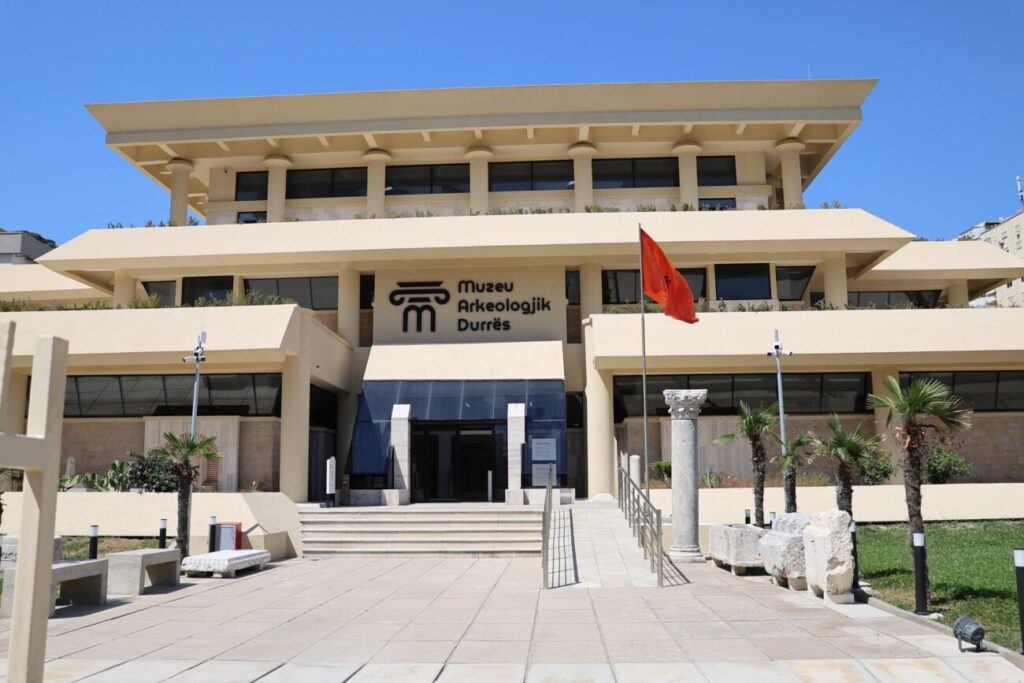
According to UNOPS’ response, the assessment of the museum’s condition after the earthquake created the opportunity for the intervention to expand and take on a transformative character, through a project worth 3.8 million euros (360,000,000 lekë). However, UNOPS did not respond to Amfora’s question as to whether the value of the project increased during implementation. In the table of works during the project implementation, the contract value was listed less, at 348,368,610 lekë or about 2.93 million euros according to the 2022 exchange rate.
On the other hand, Amfora revealed in a report by the “Ministry of Culture” in 2020 on the damage caused by the earthquake, that the Archaeological Museum of Durrës was not listed on the list of priority objects for intervention and in the preliminary estimate of the budget needed to carry out repairs to it, the value was 4 million and 800 thousand lek (about 39 thousand euros at the exchange rate of the time).
The project presented by “ATELIER 4” and designed by architect Alban Efthimi in September 2021, featured interventions in the facade, constructive and construction works, and the creation of new spaces.
Its implementation on the ground has differences between what was envisaged at the beginning of the project and what has been delivered to the cultural authorities by UNOPS today, there are no archaeological pavilions, the space and some of the works are different from the plans in the project renderings.
The winners of the tender that carried out the works are the union of operators “2T SH.PK” – known for construction works and which have been engaged over the years alone or in partnership in 39 public tenders and the company “KAEXH SH.PK” – which has a license in private archaeology, restoration and which has been engaged over the years alone or in partnership in 13 public tenders.
UNOPS did not explain whether there had been architectural, structural or space-use changes, but by comparing the project with the works implemented on the ground, Amfora first discovered that on the outside, in the space behind the museum, the works for the construction of the emergency stairs have a completely different form from the designed project, creating a structure larger in volume and with visible aesthetic changes.
Going inside the museum, on the ground floor or zero, from the project envisaged on paper, only the “Bookstore & Souvenir” sign has arrived, which also takes you to the space where you can enter to the “Toilets”. The space remains empty and no furniture serves the foreseen needs.
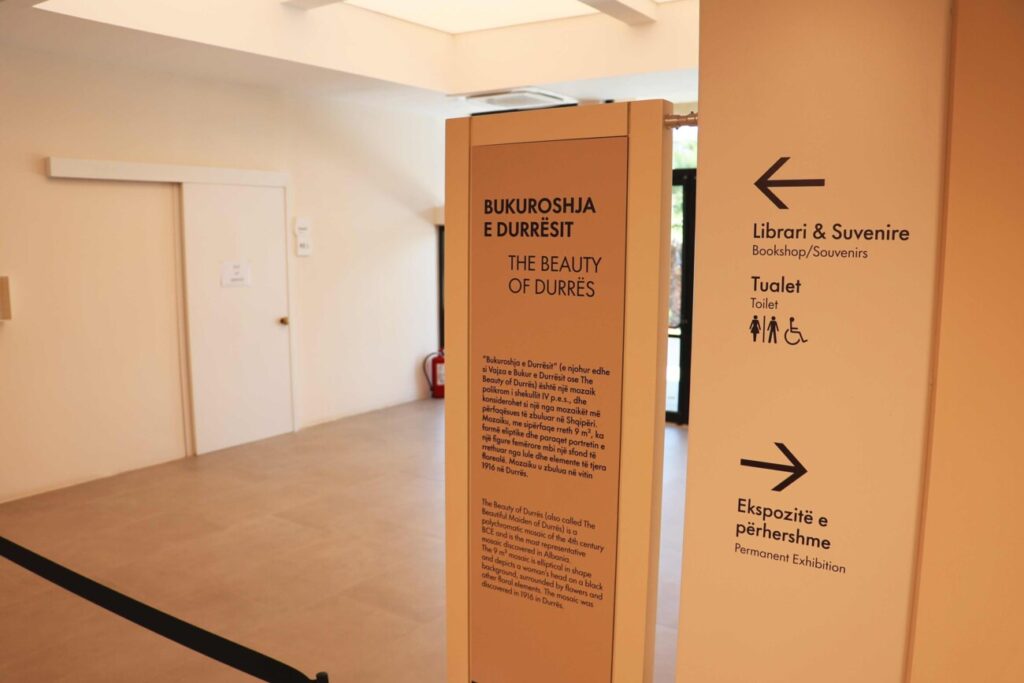
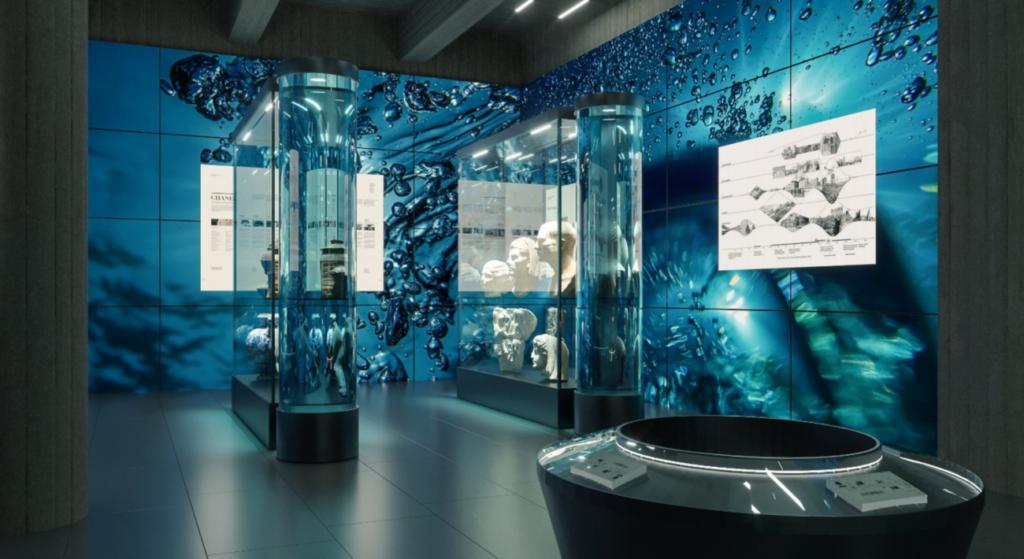
The nearby stairs take you to the second floor of the museum, where it was assumed that for the first time Durrës would have an underwater archaeology pavilion, like a museum that counts thousands of artifacts from the underground and underwater world.
The tape with the inscription “Entry prohibited” is crossed only by the employees of the Durrës Museum Center. Furnished to open as an additional archaeological pavilion, the “heart” of underwater archaeology is missing. The project renderings presented a modern and fully visualized pavilion, which has remained only in the drawers of the UNOPS offices. The LED screens, 3D projections, aquarium-shaped exhibitors seem to belong to the promises of what the museum would be after the restoration, as they are not visible anywhere on the ground.
Albert Koni worked as the head of the museum and the ancient amphitheater until the November earthquake, between 2014-2019, and recalls that there was also a previous project to create some additional facilities suitable for the exhibition of those objects that were in the museum’s warehouses and managed by the Institute of Archaeology.
“It takes coordinated, very professional work with specialists in the field who must undertake these initiatives. Of course, it takes a major project, I don’t know how willing both floors will be to maintain all the cultural heritage assets that we have available in the archaeological museum,” he explained.
Going up one floor, where the project would have “economic activity,” the space is still empty. With a panoramic elevator installed behind the museum that takes you directly there, the third floor is expected to serve as a bar-cafe that remains problematic in terms of management and the fact that it is expected to be accessible to the public who are not visitors.
“…while the upper floor is planned for economic functions. The upper floor will be accessible to everyone, not just museum visitors… The aim is to bring museum visitors, the local community and tourists closer together, creating a vibrant space for interaction and inclusion,” UNOPS explained in a response to Amfora.
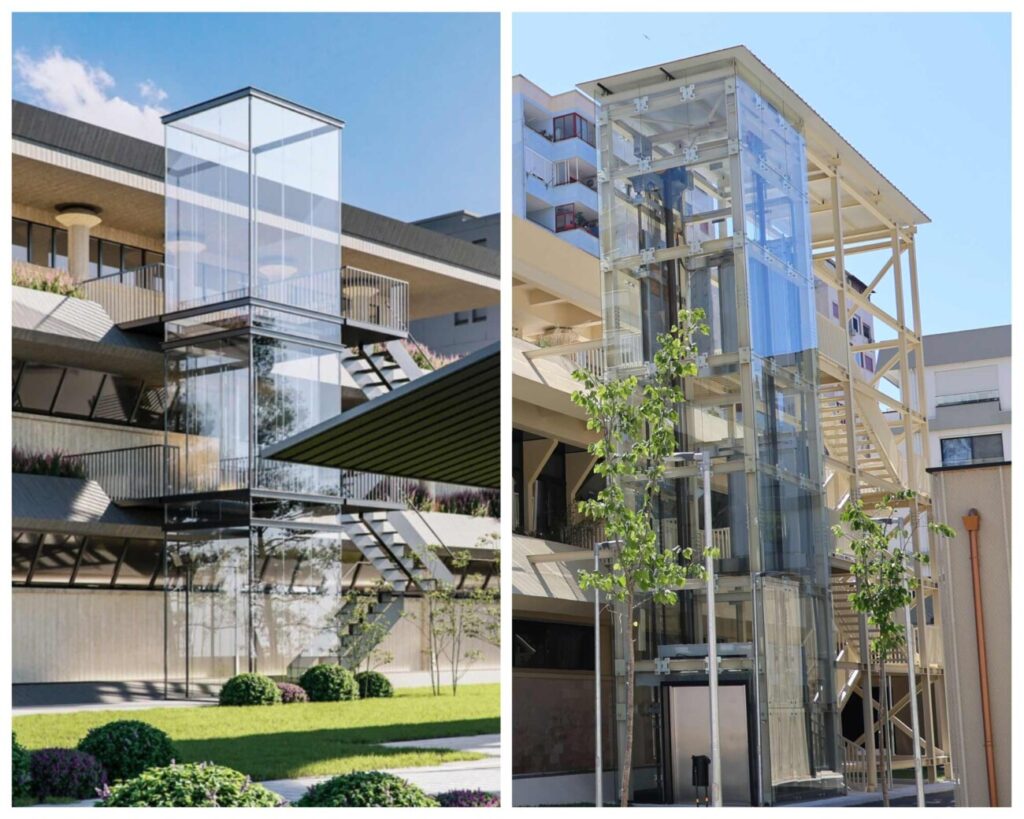
The back part is even more delicate in terms of security, as it houses the funds of the museum and the Institute of Archaeology, which did not improve their management even through this intervention.
Conceived as a project that would also assist the state managing authority, the Durrës Museum Center, the intervention also envisaged helping in the creation of a business plan in order for the museum itself to diversify its income – through services such as the sale of souvenirs, publications or the service of the internal bar-cafe.
Messy intervention: Illyrian “Kleitia” transformed into “Aristomena”
The project for the reconstruction of the museum also envisaged a re-musealization of the pavilions, with the aim of expanding them and enriching the information. In the preliminary needs assessment, experts found that the museum in 2020 had shortcomings in explaining the objects and historical details.
From analyzing the design of the pavilions in the pre-construction phase and those that are already ready to be visited, they are like two drops of water with the existing state that the museum had before 2022, not creating any new value on the ground floor, which has also failed to bring the digital underwater archaeology pavilion to the first floor.
The organization of the museum tour remains the same on the ground floor, starting with prehistory, continuing towards antiquity, and one of the spaces where the museum’s guides proudly stopped over the years was that of Illyrian artifacts.
“In this pavilion, the Illyrian character is very clearly presented, we can highlight here the bust of an Illyrian woman, ‘Kleitia’, this type of bust is very special in terms of its appearance and clothing. It is related to the Zadri culture in Shkodra and this type of veil is still used today by young women and girls in this area”, explained in an interview for Amfora, Bledar Bica, the former tour guide of the museum until its closure for restoration.
But what was called “Kleitia” before the intervention has now been restored there with the name “Aristomena.” The name “Kleitia” is inalienable as a historical fact because it was carved on the chest of the bust that was placed next to the tomb of the Illyrian woman with that name.
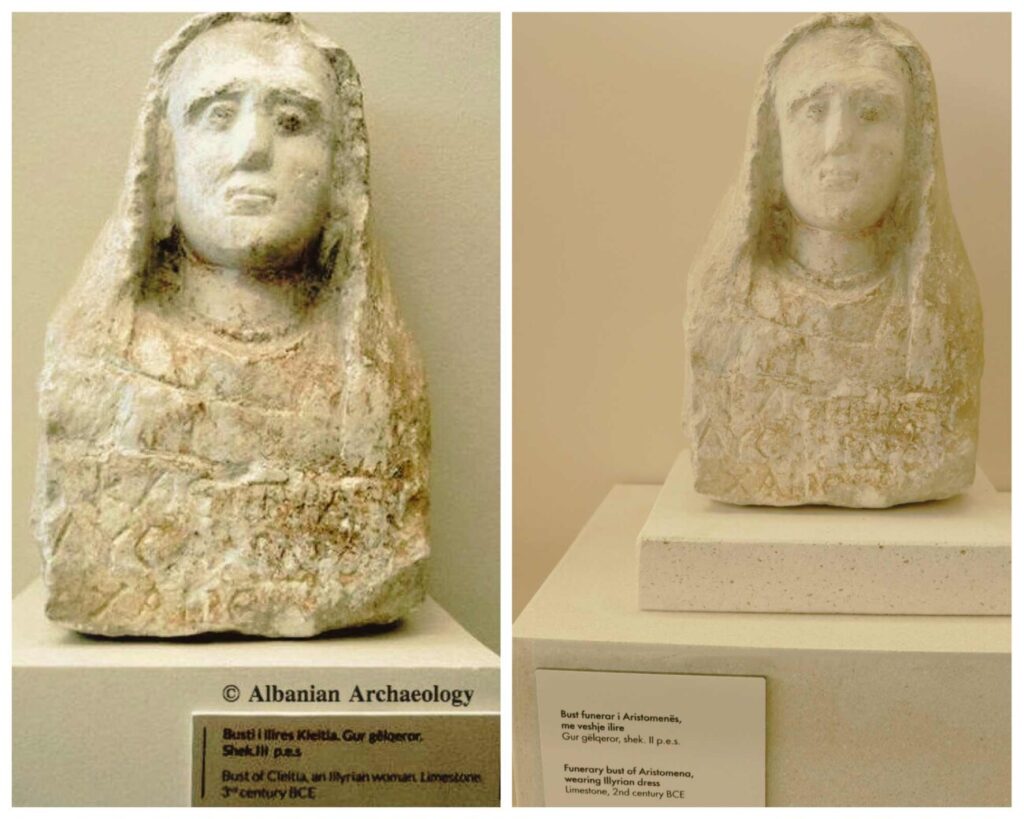
In an article published in 2020, archaeologists Neritan Ceka and Olgita Ceka identify the Durrës funerary bust as “Kleitia Lysandrou,” noting that although she bears a Greek name and patronymic, she is depicted in typical Illyrian clothing.
The authors write that three female funerary names are known from Dyrrachium: Euklea Lykou, Kleitia Lysandrou and Aristomenea, which are treated as three different monuments. According to them, they bear Greek names, but are depicted in Illyrian clothing – this is because the city itself was Illyrian and inhabited by them together with Greek settlers.
Ironically, the article is found in the publication of the proceedings of the international archaeological conference held in Tirana on December 16-18, 2019 and was edited by Italian archaeologist Giuseppe Lepore and Albanian archaeologist Belisa Muka – the latter turns out to be part of the working group that carried out the museumization project.
A little further from the Illyrian “Kleitia”, there is the showcase of “Artemision”, one of the most extraordinary funds and at the same time the most studied by international teams of archaeologists. The entire exhibition of archaeological finds has been restored without bringing any innovation from the state it was in before the restoration.
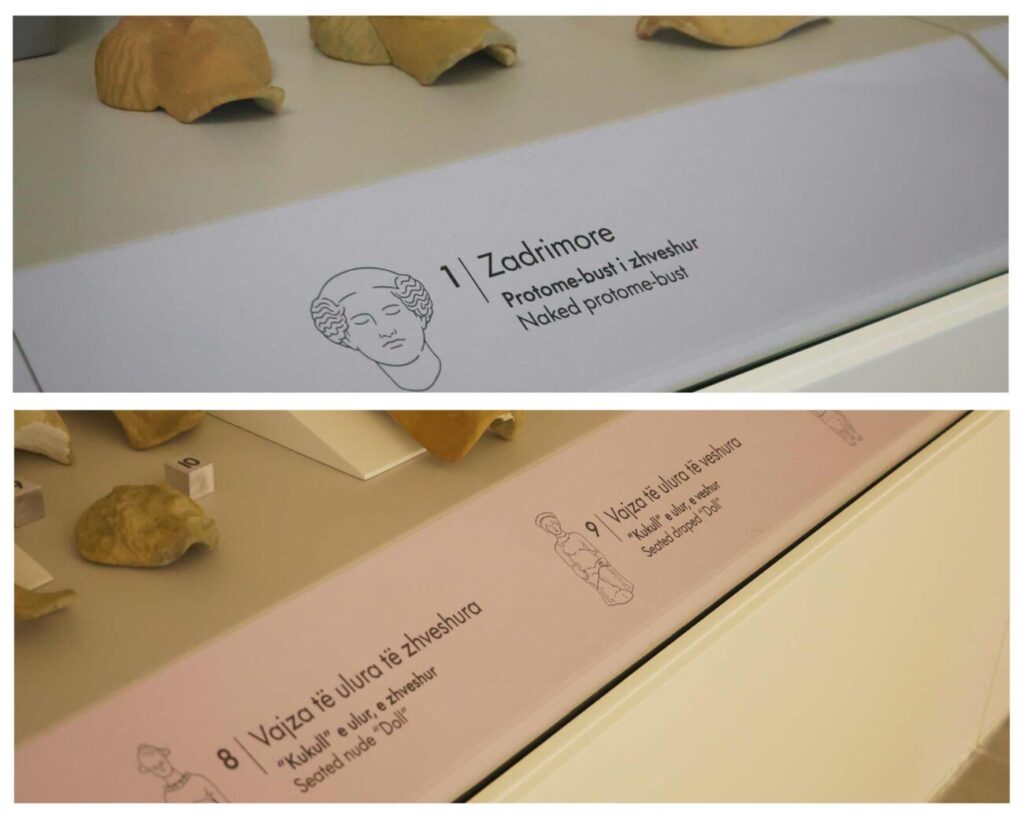
Their descriptions as a whole seem almost on the verge of banality. “Seated naked girls/Seated naked doll”, “Seated clothed girls/Seated clothed doll”, “Woman seated on a throne”, are some of the descriptions of Artemis figurines, failing to compensate for the “poverty” of historical information, a problem that this project itself was designed to solve.
The “Artemision of Dyrrachium” is considered one of the most important religious complexes of ancient Durrës. The temple is dedicated to the goddess Artemis and functioned for centuries as a cult center, where believers deposited clay objects with the bust of Artemis, as a sign of worship and thanksgiving.
Its importance has been reported by scholars as far back as Harvard University, who have called it one of the key sources for understanding the cult of Artemis on the Adriatic coast. But the first description visitors encounter of it in the reconstructed Durrës museum seems almost out of context, christening the clay figurine with the inscription “Zadrimore/Protome-naked bust.” The term “zadrimore” refers to the typology of the hairstyle and not the identity or function of the artifact, which can leave the visitor without essential information about the object’s origin and significance.
UNOPS limited the documents that Amfora requested, even though it is an international organization operating as part of the United Nations and independent of Albanian institutions. In no case did it refuse to make available a copy of the museumization plan, the architectural project and other technical details, which it said should have been requested from the Albanian authorities, to which it had submitted them.
However, the Minister of Tourism, Culture and Sports, Blendi Gonxhja, on the day of the museum’s inauguration, exposed the chain of experts of the museumization and curation project, which turned out to be a messy copy of what the museum had before.
He mentioned professors, researchers and academics who are the “cream of the crop” of Albanian archaeology, whose work should result in the reconceptualization of the pavilions and their enrichment with new information.
“I want to express my gratitude to all the institutions and individuals involved in EU4Culture projects…as well as the authors Iris Pojani, Lorenc Bejko, Belisa Muka and Luan Përzhita, and the curator Yllka Gjikopuli,” Gonxha mentioned in his speech.
UNOPS explained in its official response that the museum exhibition was completely redesigned and that out of a total of 2,854 artifacts that were preserved during the works, they were then restored in a new organization with 56 exhibition units, where over 2,300 artifacts covering the period from the Neolithic to the Ottoman period are presented. According to them, the exhibition of objects was expanded to the first floor for the first time, although the underwater archaeology pavilion was not realized according to the initial concept presented.
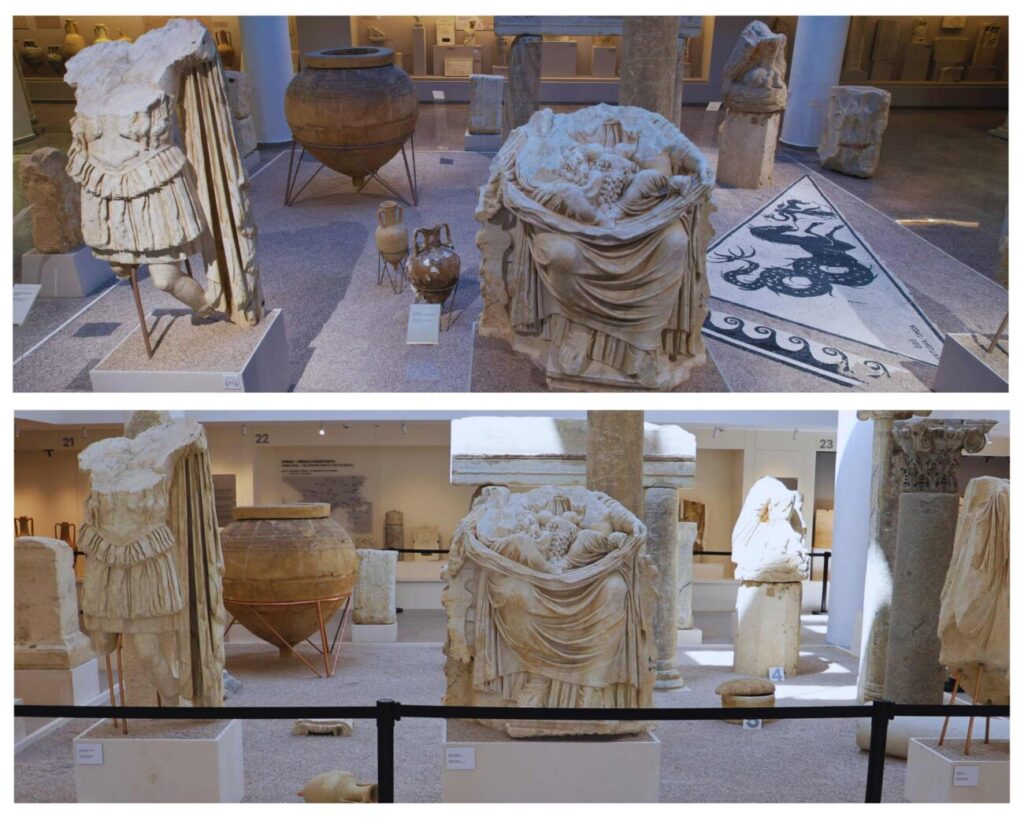
But for the former museum director, Albert Koni, he had both floors equipped with artifact displays even before, emphasizing that a large part of the collection remained unexposed and located in warehouses behind the museum.
“…in the first floor [ground floor] exhibition, which consisted of 2412 objects, which included the prehistoric, archaic, classical and medieval periods. The second floor [now called the first] was the late Middle Ages, which consisted of 700 artifacts. Of course, about 2 thousand other objects were in the side warehouses of the museum,” he recalled of the phase before the interventions in the museum.
On the other hand, the conception of the architectural project led to the creation of several spaces dedicated to the restoration and preservation of archaeological objects. The “Conservation Laboratory” and the “Gipsoteca” are new spaces that have a pompous name, but which constitute nothing more than empty rooms that do not offer any working instruments for the restoration processes and technical interventions in the objects.
“Through the architectural intervention, spaces for the conservation laboratory, the plaster library and the museum archive have been created and enabled. However, equipping these spaces with specialized conservation equipment and tools was not part of the scope of this intervention,” UNOPS explained about the spaces that in the past were also incomplete rooms with instruments.
The future does not look bright at all for the museum, which, although it attempted to bring the mosaic known as the “Beauty of Durrës” as an added value, can only be seen on a printed wall page. The coffers with multi-year compensation were closed as soon as Prime Minister Edi Rama and the other participants left on April 28 because the mosaic’s assembly requires specialized intervention, after it was transferred from the National History Museum in Tirana.
The project was conceived as an intervention that would also bring digital storytelling, taking the museum to another level of interaction through contemporary technology. But 4 years after the project’s launch, what remains on the museum’s walls is not much different from the past.
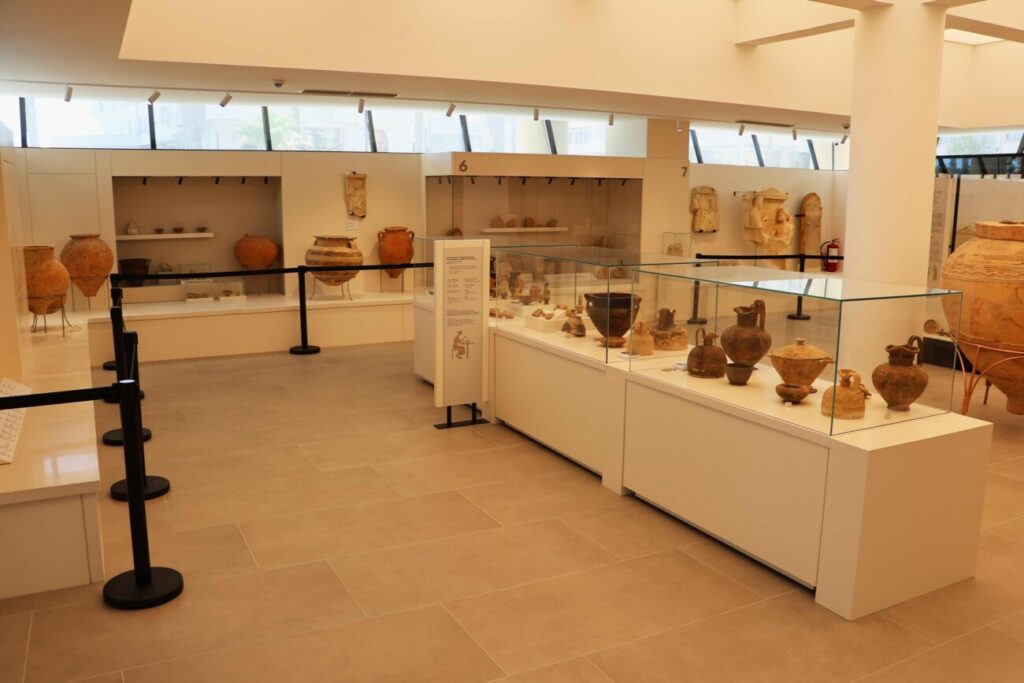
Audio guides, digital screens, and interaction with apps were not offered through the intervention – at a time when the museum no longer has its former tour guide and aims to expand its activity across all three floors, which in parallel requires an increase in human resources.
Regarding this other failure of the initial project, UNOPS explained that this intervention remains part of the next projects, which could offer audio or digital interactive guide services.
“Their placement was foreseen in the initial project concept, along with wider elements of digital interpretation. However, these could not be realised due to a combination of factors, including some unresolved ownership issues (now resolved), as well as budgetary constraints of the EU4Culture programme,” the official response explained.
Property registration, the “warhorse” for the project’s extension
The restoration of the Archaeological Museum almost turned into a TV series because the deadlines for completing the works were repeatedly violated, and according to UNOPS, the reason was the fact that the museum did not have a certificate of ownership, an old wound.
Restoration works began near the end of 2022, with an initial 17-month deadline for their completion, but it was postponed several times and the most important archaeological museum in the country closed its doors to the public for almost 4 years.
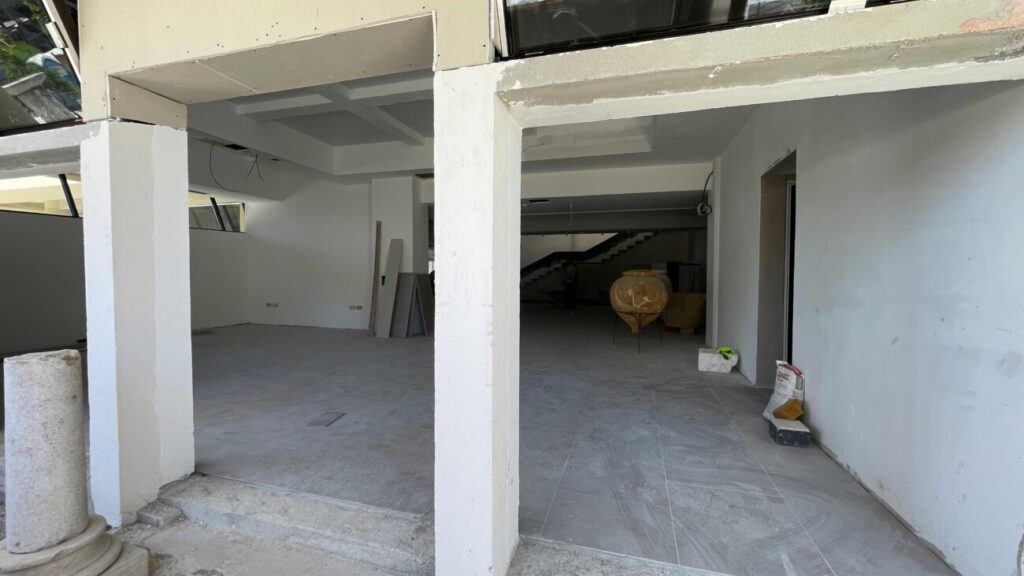
The management of the project by UNOPS did not alleviate the “old blunder” that now almost every 10 years brings the museum to close for about 5 years for restoration purposes. The Archaeological Museum of Durrës was first established in 1951 next to the current building – which was inaugurated and opened to the public in 2002. Then in 2011 it was closed for a complete reconstruction undertaken by the Albanian government and reopened in March 2015, to be closed for another four years in 2022.
“According to the rules, the construction permit could not be obtained without registering the property in the name of the Government of Albania. This process took time and involved decision-making at high levels,” UNOPS said in a response to Amfora Media.
“This process lasted 25 months, as it involved a series of high-level decision-making and required close cooperation and coordination between all partners,” the response continued.
UNOPS blamed delays in project implementation on the lack of property registration – an excuse that, according to Amfora’s investigation, does not match the facts, despite the fact that the Ministry of Tourism, Culture and Sports also held this line.
“One of the main issues that emerged during the implementation of the project was the need to register the property where the Museum building is located, owned by MEKI, in order to obtain a construction permit,” the ministry said in its response.
Amfora revealed that the ownership certificate in the name of the “Republic of Albania” has been available for the 1724 square meter plot of land since at least June 2023 and if we refer to the calculation of the official line of works of 17 months – they should have been finished at least in November 2024. While the final inauguration took place almost a year and a half later, on April 28, 2026. Today, the museum has opened its doors with reduced hours from morning to lunch and remains closed on weekends, until the full preparation by the Durrës Museum Center, which will have the entire infrastructure “in testing” for 1 year. It now has a new staff of at least 33 employees, which is double the current staff to serve visitors with dignity.
“There was a problem with the mortgage of the museum’s territory, because a family had an apartment in its space, but did not live there,” recalled Albert Koni, former head of the museum and amphitheater sector until December 2019.
“The specialists made the necessary efforts and as far as I know, the mortgage process was completed at that time. The entire territory of the museum was mortgaged and with a certificate of ownership, thanks to the intervention of specialists from the Institute of Archaeology,” he recalled, according to information he had until December 2019.
The restoration “locked” the archaeologists and the archaeological fund in containers
The Archaeological Museum of Durrës represented an almost unique case in the country, where on the one hand the museum was administered with its own funds by the “Ministry of Culture” and the archaeologists who conduct the studies, along with the main fund of discoveries, are part of the Institute of Archaeology, which is subordinate to another ministry, that of education.
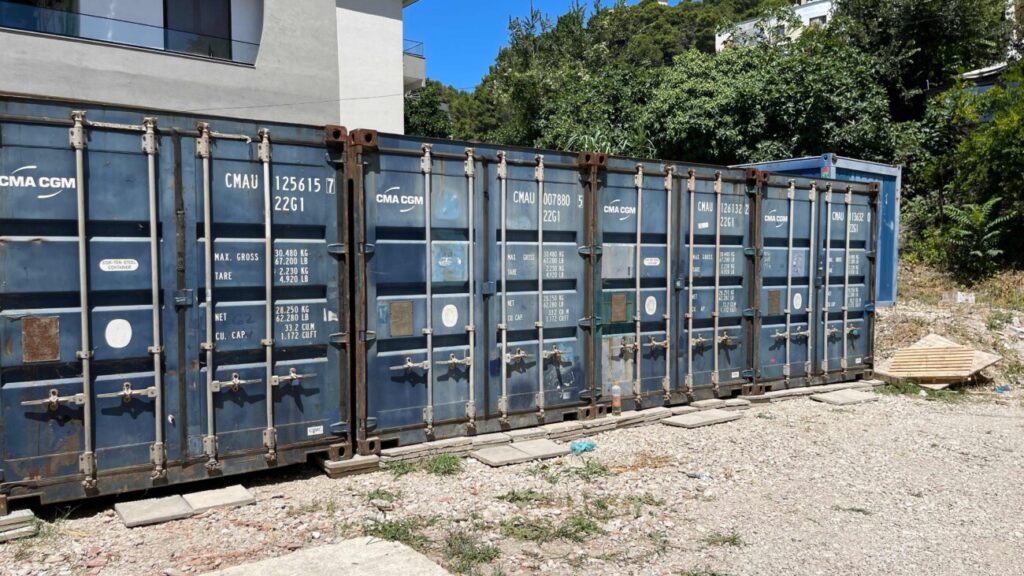
With the start of the works, employees of the “Ministry of Culture”, represented by the Durrës Museum Center, and “employees” of the Ministry of Education, represented by the Institute of Archaeology, ended up in containers for almost 4 years, where they had to manage their work and carry out the scientific research process.
The project, which focused on removing windows and tiles, required its complete emptying in order to finalize the interventions. Along with them, the furniture was also taken out, which, after observing Amphora for about 4 years, was left at the mercy of atmospheric conditions, completely degrading.
“The furniture and office equipment used by archaeologists, which were in functional condition and valuable for daily activity, have been taken out into the yard… As a result, they have been severely damaged and are now out of use, creating another significant shortage of basic working tools for scientific staff,” the Institute of Archaeology explained in an official response.
Along with the furniture, the ancient glass workshop also ended up in the sun. Restored after archaeological discoveries at the former Lulishtja 1 Maji, the glass workshop of the Roman neighborhood was last found during the almost 4-year monitoring of the Amphora outside the technical conditions of conservation. Although it was supposed to be transported and stored under the “Fragile” label, it was found to be almost destroyed and crushed.
“The repair of the objects and their placement in the museum’s exhibitions is carried out by UNOPS through its contractor, under the supervision of the Durrës Museum Center and the National Institute of the Cultural Heritage Registry,” UNOPS explained, proving that the entire institutional chain could not prevent the flagrant damage to the glass workshop.
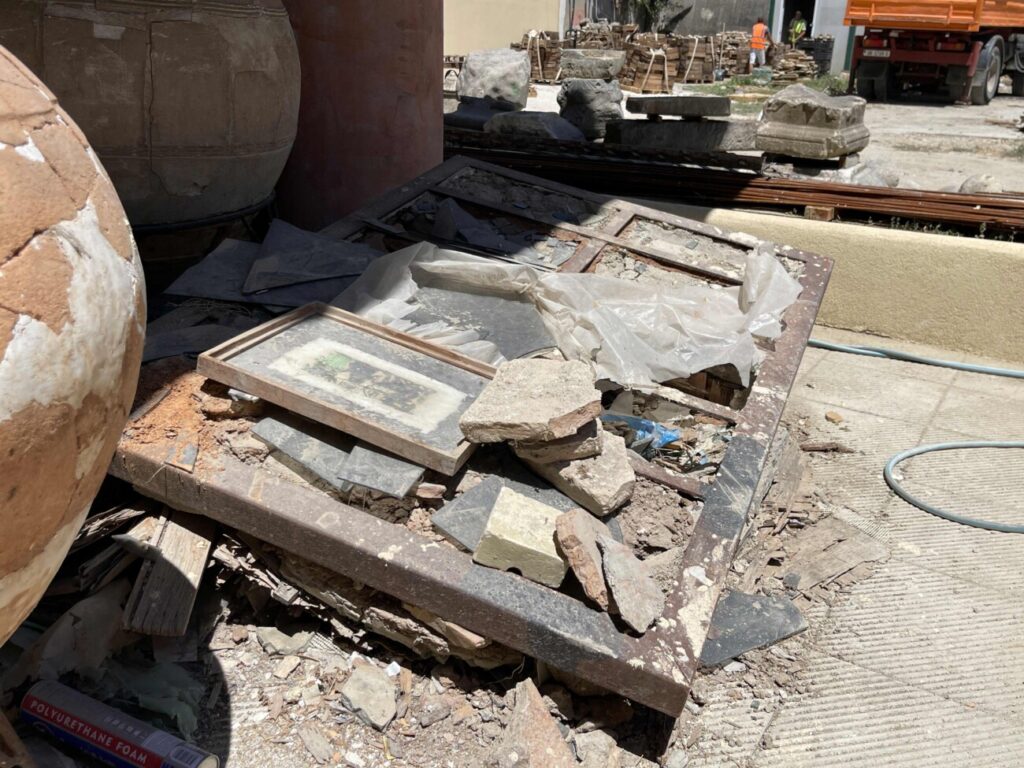
On the other hand, UNOPS, in its response, stated that it has reported every 2 weeks on the progress of the works to the Ministry of Tourism, Culture and Sports, although it refused to make these reports public and directed that they be requested directly from the ministry – while categorically denying that any objects were damaged during the restoration process.
“No. All work was carried out in full compliance with UNOPS quality standards and HSSE (Health, Safety, Social and Environmental) management systems, to ensure the integrity of the site and its artifacts,” UNOPS explained.
Amfora documented in monitoring the works for a period of almost 4 years that the objects of the Institute of Archaeology’s fund were also transported using cranes that moved open crates placed haphazardly on top of each other and that did not ensure the preservation of the objects inside them.
It was also found that the objects were kept in open crates very close to the museum’s surrounding wall, where the perimeter was unprotected as a result of the works in progress and which could easily have been passed from the courtyard of a palace to the fund of the Institute of Archaeology “which stood in the sun”.
“The reconstruction and museumization project of the National Archaeological Museum of Durrës has respected the relocation plan approved by the National Council of Material Cultural Heritage (KKTKM), since taking measures to package and relocate the artifacts, securing them in safe spaces, as well as the construction of new technical areas in the back for the storage of artifacts, part of the archaeological fund of the Institute of Archaeology”, explained the Ministry of Tourism, Culture and Sports.
UNOPS indicated that the project has created new structures for the storage of archaeological artifacts and with different conditions than before – while the warehouse that was built in recent years was leveled during the works to build a new one, while it does not meet even half of the needs. However, the newly built warehouse results in the same situation as in the internal spaces of the “museum laboratories”, where basic storage infrastructure is missing.
“In the outdoor space, artifacts that were located in old and unsuitable warehouses have been moved to a new purpose-built storage space, while large ones that were previously exposed to atmospheric conditions will be arranged under a new canvas-shaped structure next to the new warehouse, while the greenery and landscaping of the territory around the museum will significantly improve the appearance and experience of the space,” UNOPS explained.
But in the warehouse where the archaeological collection is stored, there are carelessly welded metal shelves, others that have been inherited over the years, “relic” tables from the communist period – a far cry from the warehouse’s facade, which is interwoven with decorative iron installations.
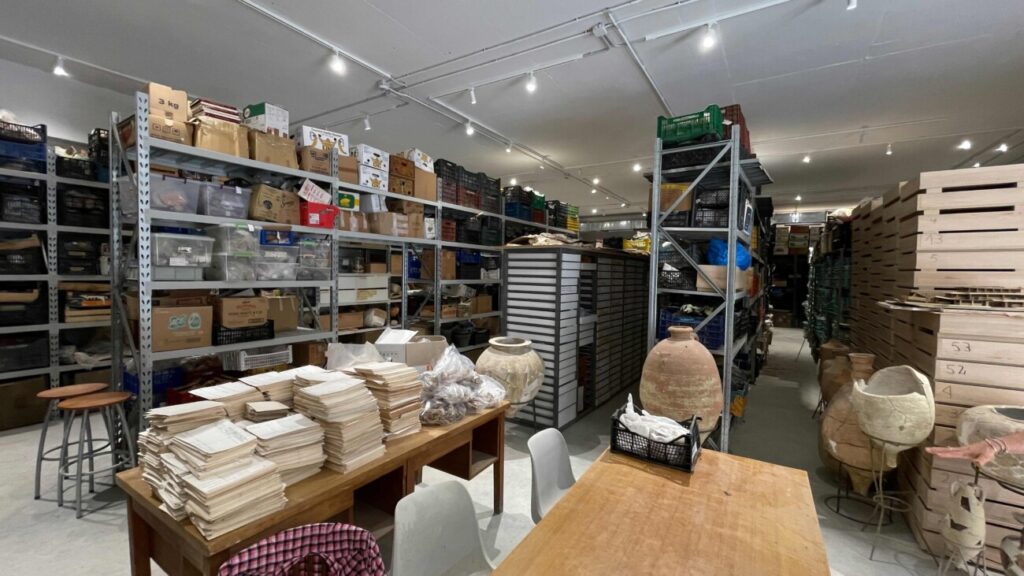
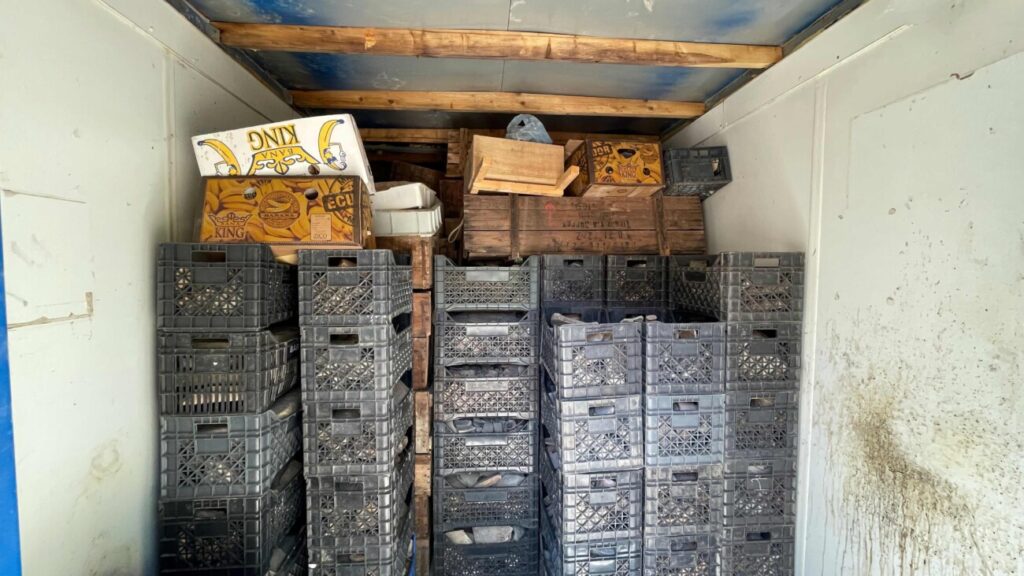
While a little further on, a door attempts to cover 6 containers that are “provisional storage” for thousands of archaeological objects, which in the case of study require the emptying of dozens of crates to find the right one.
“A significant part of the archaeological fund with a research character and comparative material is still located in 6 metal containers, located in the museum’s courtyard. These containers, initially intended as a temporary solution, have now become the only possible spaces for storing this material, as well as for accommodating archaeologists,” explained the Institute of Archaeology.
Through requests for the right to information, Amfora read the positions of the Institute of Archaeology and similar documents, where archaeologists from the core of Durrës raised their voices about the risk that archaeological funds would be left without appropriate storage conditions.
They emphasized that the problem was not simply the temporary nature of the works, but the lack of a long-term vision for the artifacts that continue to be discovered every year in Durrës. Their demands went beyond daily needs, touching on the very essence of preserving archaeological sites.
“The Institute of Archaeology (IA), in cooperation with archaeologists engaged in the city of Durrës and in agreement with the heads of the relevant departments, has forwarded a series of requests and recommendations regarding the immediate needs for the preservation and management of archaeological materials discovered in this city of particular historical importance,” stated the Amfora Media Institute.
From the beginning of the process, the Institute of Archaeology requested that the archaeologists’ spaces not be affected, as they were not just offices, but also the place where the discovered materials were stored and documented.
“These spaces had an essential role in the process of documenting, studying and preserving archaeological data,” the Institute of Archaeology emphasized.
Faced with the constant need for space for the organization and storage of archaeological funds, he proposed the construction of a new special structure, which should have been designed on the basis of clear and efficient criteria for the organization of archaeological funds and the creation of optimal working conditions for archaeologists and technical support staff.
“This building would ensure the long-term preservation of archaeological heritage with contemporary standards, as well as significantly improve the efficiency and quality of research and scientific work in the field,” explained the Institute of Archaeology.
However, the requests of archaeologists from the Institute of Archaeology in Durrës were not taken into account and in addition to the warehouse for storing objects, the containers are also overflowing with objects, consequently leaving the archaeologists who carry out scientific research without offices.
For almost 4 years, the archaeologists’ research work has been carried out in metal containers, divided by calendars to enable rotation among archaeologists, but today even those containers are no longer found, leaving as a memory only the metal containers of the international transport format for the collection of objects – completely outside the minimum storage conditions according to European Union norms.
“To my knowledge, I can tell you that it is really not appropriate at all for the objects to be left in containers. I hope that this will be temporary and a permanent solution will be found regarding the exhibition of those objects. This requires unique, truly collaborative work,” explained Albert Koni.
After two years in provisional conditions, the situation for archaeologists did not improve, but on the contrary, instead of returning to the offices they once had near the archaeological museum, they were permanently taken away. This move by the Ministry of Tourism, Culture and Sports, after taking over the museum, deprived the Institute of Archaeology of the opportunity to be present where the center of scientific research is located, at the fund of discovered objects.
“The situation has recently deteriorated. The Ministry of Economy, Culture and Innovation (MEKI) has made the decision to change the administration of the premises that were previously used by the AI, near the museum,” the Institute explained.
“As an alternative, archaeologists have been offered two metal containers for long-term use as workspaces. This solution is inappropriate and does not even meet the minimum requirements of a professional environment for research work, processing of archaeological material, documentation and cooperation with foreign experts,” the Institute further explained.
In its response, UNOPS explained that the project did not provide workspace for archaeologists from the Institute of Archaeology in Durrës, as their subordinate ministry, the Ministry of Education, is not a direct beneficiary of the “EU4Culture” program.
“From the design, we can confirm that the new storage space was built to house the artifacts of the Institute of Archaeology. The direct beneficiary of the ‘EU4Culture’ project is the Ministry of Economy, Culture and Innovation. The Institute of Archaeology operates under the mandate of other institutions, different from the Ministry of Economy, Culture and Innovation,” explained the project implementer, the international organization UNOPS.
She stated that the hearing with interest groups was held in October 2021 and despite the efforts of the Institute of Archaeology, it failed to anticipate the situation created after the reconstruction of the museum and the need to share the premises between ministries.
“The Institute of Archaeology has requested from MEKI to take the necessary measures to restore the minimum working conditions for scientific staff and to guarantee the preservation of archaeological funds with professional standards, in implementation of the Agreement signed for the Archaeological Museum of Durrës,” the Institute explained in its official response to Amfora.
“Of course, an optimal, truly concrete solution must be found, based on the links of cultural heritage. The specialists of the Institute of Archaeology must have a dignified representation. I personally, from an institutional, but also personal, side, will never reject the great work they have done over the years in that institution”, praised the former head of the museum, Albert Koni.
The “EU4Culture” program, managed by UNOPS, closed this June after almost six years of implementation (2020–2026), leaving behind a significant impact on the preservation and revitalization of cultural heritage in Albania, with the revitalization of 23 cultural heritage sites through a total budget of 40 million euros from the European Union. Meanwhile, the project implemented by UNOPS after the November 2019 earthquake for the restoration of the National Archaeological Museum of Durrës resulted in being reduced to a mainly construction-based intervention, unlike what it promised in the first steps regarding museumization, digitalization and financial management./ Amfora.al