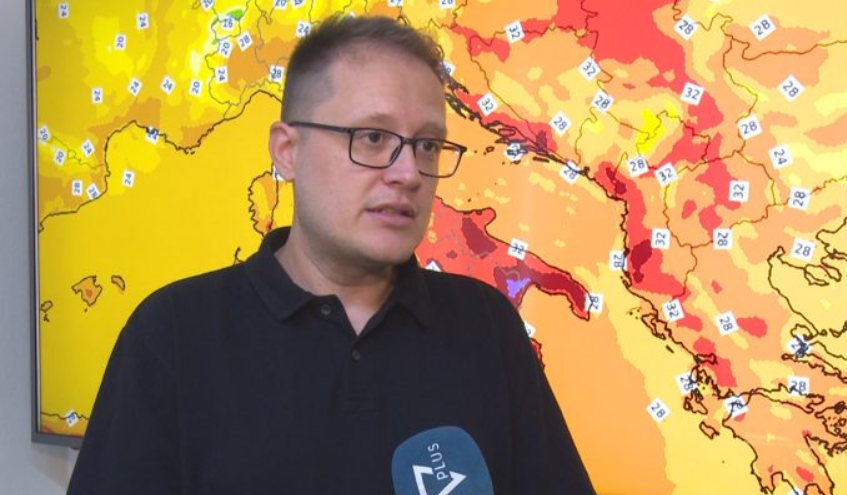
Albania continues to experience high temperatures even in the last days of August.
According to data from the Military Meteorological Service, temperatures are 1 to 2 degrees higher compared to the same period in previous years. The heat will continue on Friday and Saturday.
“Our country continues to be affected by the African anticyclone and, thus, for the end of August we are in, the values, mainly of midday temperatures, are one to two degrees higher than in the end of August of previous years.”
“Temperatures at noon will continue to remain high tomorrow and Friday, with values up to 40-41 degrees Celsius, mainly in cities such as Berat, Gjirokastra and Elbasan. They will also continue to remain high on Saturday, with values up to 40-41 degrees,” said Elvi Jahaj, forecaster, Military Meteorological Service.
The hot air masses have also created what citizens perceive as heavy and suffocating air.
“During these days, in addition to high temperatures and hot air, we have also had the penetration of dust and sand from North Africa, due to the African anticyclone, which makes temperatures feel several degrees higher than they really are. The impression of suffocating air is created. So, high temperatures and hot air, but also sand and dust, make people feel much higher temperatures and also have the feeling of oxygen deprivation,” adds Jahaj.
The change in the situation is expected to begin on Sunday, while with the beginning of September, temperatures are expected to experience a gradual decline.
“Starting from Sunday, but also at the beginning of next week, temperatures, both in midday values, but also in minimum values, i.e. in the morning, will begin to gradually decrease.
“So, from 40 and 41 degrees Celsius, they can drop to 37 or 38 degrees Celsius in the western lowlands. Also, in the morning values, which will be high during the day on Friday and Saturday, at values of 26 to 28 degrees, we will drop to values of 22 to 24 degrees Celsius,” he said.
According to meteorologists, episodes with such temperatures have been recorded before, but have become more frequent in recent years.