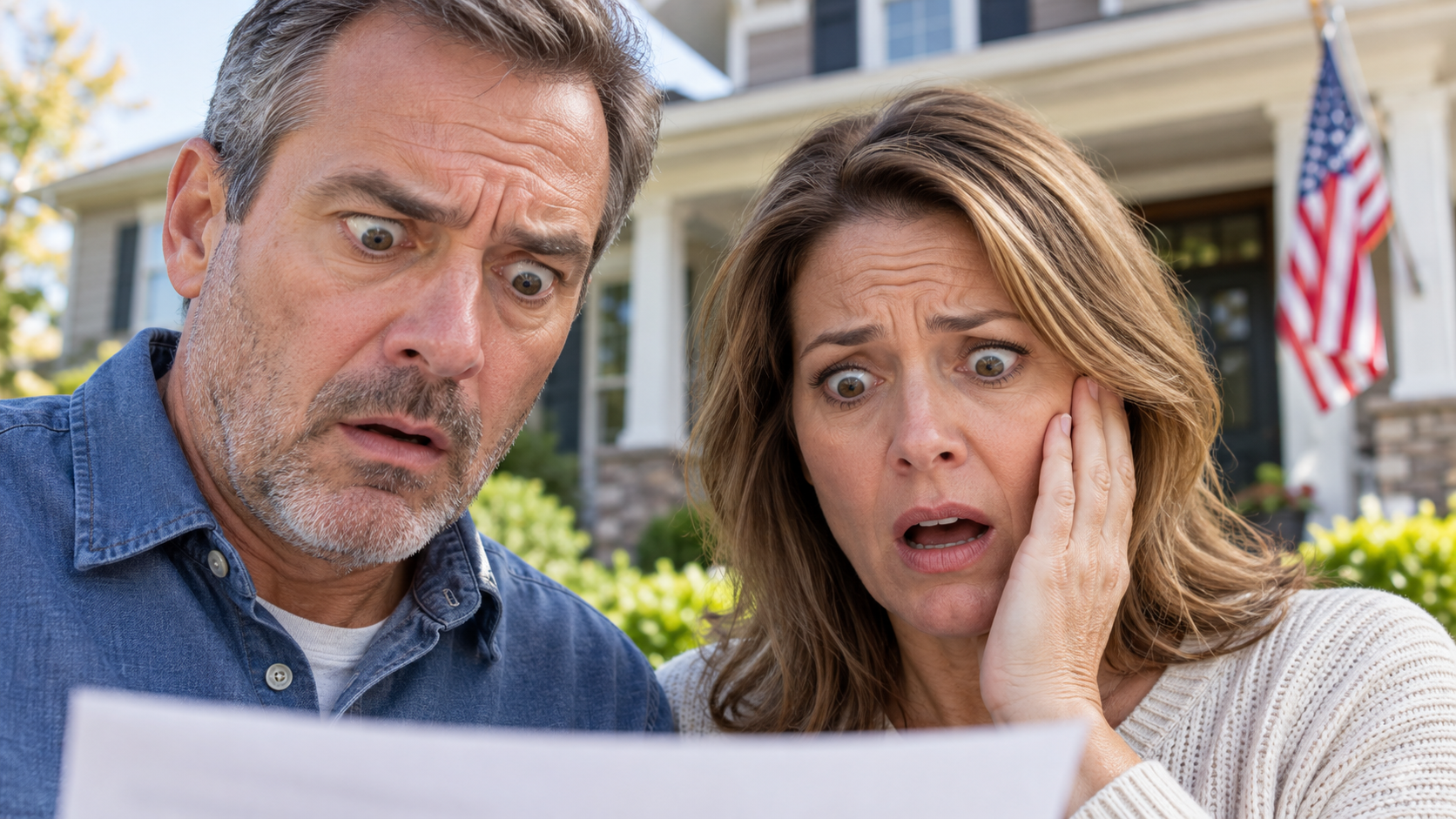
For many Albanian families living in America, owning a home represents years of hard work, financial sacrifice and long-term planning. But even after purchasing a property and securing a fixed-rate mortgage, homeowners may face expenses that continue to change.
One of the most important is **property tax**, an annual cost that can amount to thousands of dollars depending on where the home is located.
For homeowners in New York, New Jersey, Connecticut and other states, understanding property assessments, tax rates and available exemptions may help prevent unnecessary financial surprises.
## A $500,000 Home Can Have Very Different Tax Bills
Consider two hypothetical homeowners who each own a property valued at $500,000.
Suppose the first homeowner’s annual property tax bill equals $5,000, while the second pays $12,000.
That represents a difference of **$7,000 per year**, or approximately $583 per month.
The comparison is illustrative. Actual property taxes depend on local assessment methods, applicable tax rates, exemptions and other rules.
Two properties with similar market values do not necessarily have similar taxable values.
## What Is a Property Tax Assessment?
Local governments commonly use assessed values to determine property tax obligations.
However, the assessed value is not always identical to the price a homeowner paid or the property’s estimated market value.
Different jurisdictions use different assessment systems.
A property may also be subject to exemptions, assessment limitations or other adjustments that affect the final taxable amount.
This is why homeowners should review their actual assessment notices instead of assuming their tax bill is calculated directly from the home’s advertised market price.
## Why Your Tax Bill Can Increase
Property taxes may change because of reassessments, changes in local tax rates, modifications to exemptions or other local government decisions.
An increase in a property’s assessed value does not always produce an identical percentage increase in taxes.
For example, a 10% increase in assessed value does not necessarily mean the final property tax bill rises by exactly 10%.
The outcome depends on the full local tax calculation.
## What Happens If Your Taxes Rise by $2,400?
Imagine a family previously paying $8,000 annually in property taxes.
If the annual bill increases to $10,400, the household faces an additional **$2,400 per year**.
That equals **$200 more per month** when averaged across the year.
For a homeowner who pays taxes through a mortgage escrow account, the increase may eventually affect the monthly mortgage statement.
The timing and amount of the adjustment depend on the servicer’s escrow analysis.
## What Is a Property Tax Exemption?
Some jurisdictions offer property tax exemptions or relief programs for eligible homeowners.
Depending on the location, programs may be available to qualifying primary-residence owners, seniors, veterans, people with disabilities or other designated groups.
Eligibility requirements can include residency, ownership, income, age and application deadlines.
A homeowner should not assume that purchasing a property automatically enrolls them in every available exemption program.
## New York Homeowners Should Know About STAR
New York offers the School Tax Relief program, commonly known as **STAR**, for eligible homeowners.
The program provides school property tax relief through a credit or, for certain existing recipients, an exemption.
Eligibility and benefit amounts depend on applicable rules, including ownership, primary-residence requirements and income.
Homeowners should review information from the New York State Department of Taxation and Finance to determine whether they qualify.
## New Jersey Has Property Tax Relief Programs Too
New Jersey also administers property tax relief programs for eligible residents.
The state’s programs have included benefits for qualifying homeowners and, under certain programs, renters.
Requirements can vary based on income, age, residency, ownership and the relevant benefit year.
Residents should use the New Jersey Division of Taxation’s official information to check current eligibility and application procedures.
## Could Your Property Assessment Be Incorrect?
Property assessments can sometimes contain errors.
For example, a property record may list an incorrect building size, property characteristic or other detail that affects valuation.
Homeowners may have the right to challenge an assessment through a local appeal process.
However, an appeal does not guarantee a lower assessment or tax bill.
Deadlines and procedures vary by jurisdiction, so homeowners should review their official assessment notices promptly.
## A Hypothetical Tax Savings Example
Suppose a homeowner has an annual property tax bill of $9,000.
If an eligible exemption or successful assessment adjustment reduces the annual bill by $1,000, the homeowner would save approximately **$83.33 per month** when averaged over a year.
Over five years, that would represent $5,000 in savings if the reduction remained unchanged.
This example is hypothetical and does not represent a guaranteed benefit from any particular program.
## Why This Matters for Albanian Families
Many Albanian households have invested heavily in homes across New York, New Jersey and surrounding states.
A property may be worth hundreds of thousands of dollars, but its ownership costs can continue increasing even when the mortgage principal-and-interest payment remains fixed.
Families should therefore consider property taxes alongside insurance, maintenance, utilities and other recurring expenses.
## What Homeowners Should Check
A useful starting point is the latest property tax bill or assessment notice.
Homeowners can review the assessed value, exemptions currently applied, payment deadlines and local appeal procedures.
They may also want to verify whether they qualify for any state or municipal property tax relief programs.
For families planning to buy a home, researching property taxes before making an offer can help create a more realistic monthly budget.
## The Question Every Homeowner Should Ask
For Albanian families in America, owning a home is about more than paying the mortgage.
Understanding property taxes can help protect household finances and prevent avoidable expenses.
**The important question is not simply “How much is my home worth?” but “Am I paying the correct property tax amount, and am I receiving every exemption or credit for which I qualify?”**
Checking those details may be worth the time, especially for homeowners facing rising housing costs.
*Disclaimer: This article is for general educational purposes only and does not constitute personalized tax, legal, real estate or financial advice. Property tax assessments, exemptions, credits and appeal procedures vary by jurisdiction. All financial examples are hypothetical.*