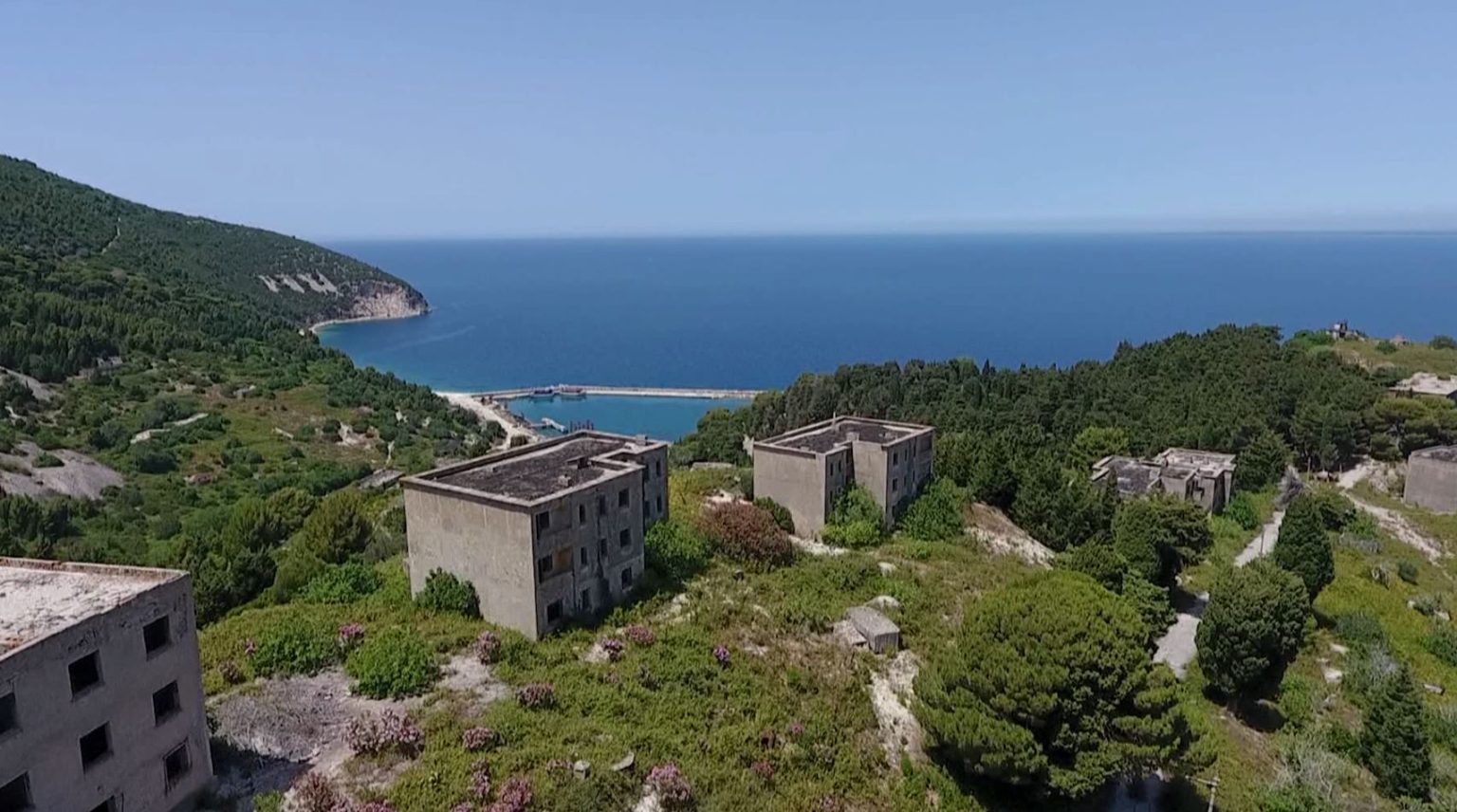
A declassified Central Intelligence Agency document has revealed new details about the strategic importance of Sazan Island during the Cold War. The secret July 1959 report, prepared in cooperation with the US Navy’s photo intelligence center, describes the island as one of Albania’s most important military points for controlling access to the Adriatic Sea.
According to the document, Sazani was fully militarized and under the control of Albanian army and navy forces. American analysts noted the presence of coastal and anti-aircraft artillery batteries, radar systems, as well as a network of bunkers, machine gun positions, and underground warehouses scattered throughout the island.
The report also mentions the existence of a possible “TOKEN” radar position, considered part of the early warning and area defense system. According to the CIA, these capabilities turned Sazan into a fortified complex of particular strategic importance in the Mediterranean.
The document also highlights the Port of Shën Kolli, where, according to aerial reconnaissance, a small naval base operated. Kronshtadt-class patrol boats and small torpedo boats were identified there, while a long structure near the port was suspected of being used for underwater repairs of naval vessels.
However, the report refuted some of the suspicions of the time. American intelligence had found no evidence to confirm the existence of a submarine base or large underground fuel depots on the island. The document also noted that there had been no significant expansion of military infrastructure compared to previous observations.
Accompanied by aerial photographs, maps and detailed sketches, the document demonstrates the great interest of American services in monitoring Albania’s defense capacities during the height of the Cold War, when Sazani was considered a key point for controlling naval movements in the Adriatic.