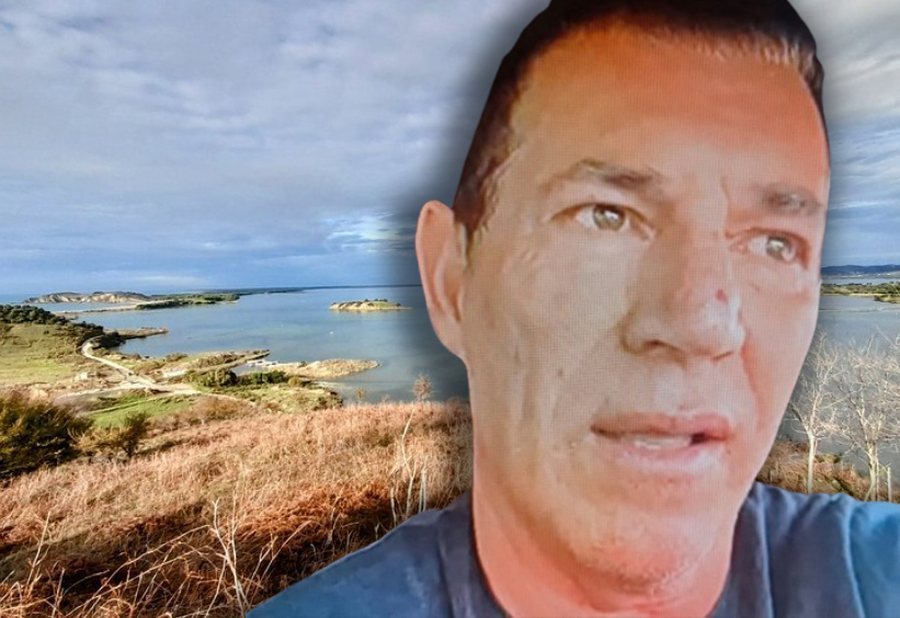
Artur Shehu’s name was first linked to serious events in Vlora, in the late 1990s, when a gunfight with Myrteza Çaushi in his bar ended with three victims and two injured, among them Zani himself.
Luan Bedini, Shehu’s uncle, also lost his life in that event. After those developments, Shehu fled to the United States of America, where he also obtained asylum status.
After moving to the US, Shehu built a vast portfolio of properties and investments in the Vlora area and the surrounding coast, assets that have been associated with legal proceedings for years and are now under investigation by SPAK. Not only the lands in Zvërnec, but also hundreds of hectares in Karaburun and other areas in Vlora, assets that in the SPAK file are closely linked to development plans in what has been commonly called the ‘Mafia Summit in Aruba’.
‘According to the partial evidence presented, these meetings appear to be related to real estate projects in Albania, potentially financed with illegal funds, with the support of political authorities’ from the investigative file.
Artur Shehu is mentioned in direct contacts with Alfredo Hamzai and in joint meetings with Arben Ismailaj, Adrian Rama and Elton Memeti, including the meeting held in Antwerp, Belgium on February 12, 2019.
For investigators, this is not an isolated episode. It appears to be part of a chain of coordinated movements, where the same names appear in different countries in Europe and beyond, in an activity that, according to the file, was related to the organization of international drug trafficking.
“It seems clear that Artur Shehu holds a leadership position within the organization. He travels around the world to attend meetings to organize trafficking; He seems fully aware of the real estate investments, but is clearly linked to cocaine trafficking, most likely overseeing the network,” from the investigative file.
Despite this information, Artur Shehu’s name is still not linked to the cocaine trafficking charge. But, in Vlora, before the violent clashes with Zani Çaushi’s group, everyone remembers him as the owner of a private ship with which he was rumored to be transporting suspicious cargo.
Since leaving Albania in 1999, he has been a shadowy figure. He tried to stay out of the public eye and appears in the file as a very cautious person.
From the decrypted communications on Sky ECC and from verifications of his movements, a character emerges who avoided sensitive discussions on the phone, especially when it came to dirty business.
‘On 07.07.2020, Adriani tells him about a conversation he had with a person (who is the person under investigation, Artur Shehu). The person in question asks him not to talk to him on the phone at all, neither about money, nor about houses, nor about land, nor about “Bune”, but to wait until they meet in person.
He then tells him that after the 15th (July) he will be in Istanbul, and asks citizen Adrian Rama to leave a day earlier to wait for him there’ from the investigative file.
Following this conversation, TIMS system checks administered on the file show that Adrian Rama traveled to Istanbul several times during the summer of 2020 to meet with Artur Shehu. The communications mention negotiations with Turkish citizens, agreements still pending, and planned visits to Zvërnec to view properties that interested the group.
‘From the investigations carried out so far, reasonable suspicions based on evidence result that the properties with no. 262 Cadastral Zone 1007 and the property with no. 1/1 Cadastral Zone 3951, have been obtained illegally, through forgeries, through the same modus operandi as has happened with other properties, through the use of forged documents, both in terms of obtaining ownership from state institutions, as well as in terms of registration for the purpose of inheritance. This data is obtained from a series of judicial, civil and criminal decisions developed over the years, which shed light on the forgeries made in the benefits of the property in question’ from the investigative file.
“One of the issues that arises in the process is the fact of who is the owner of the item. If the item was obtained by person A with forged documents, that means that this person was never the owner of the item and ownership must be returned to where the item originated,” said Rezart Kthupi, a lawyer.
“Forgery is easily verifiable from an objective point of view because it requires a graphic expertise, or verification of documentation records that do not match and is consumed and managed to be recorded as a criminal offense. What is difficult for the investigative body is the development of this property through forged documents,” said Dritan Jahja, lawyer./InsideStory