The 2025 Money Laundering Report reveals seven ways in which this illegal activity is carried out.
According to the Financial Intelligence Agency report, it turns out that the greatest profits were made through online marketing, from which around 4 million euros were gained.
“Eleven companies registered in Albania have benefited from transfers worth EUR 3,740,000 from various countries in Europe and Asia,” the report states.
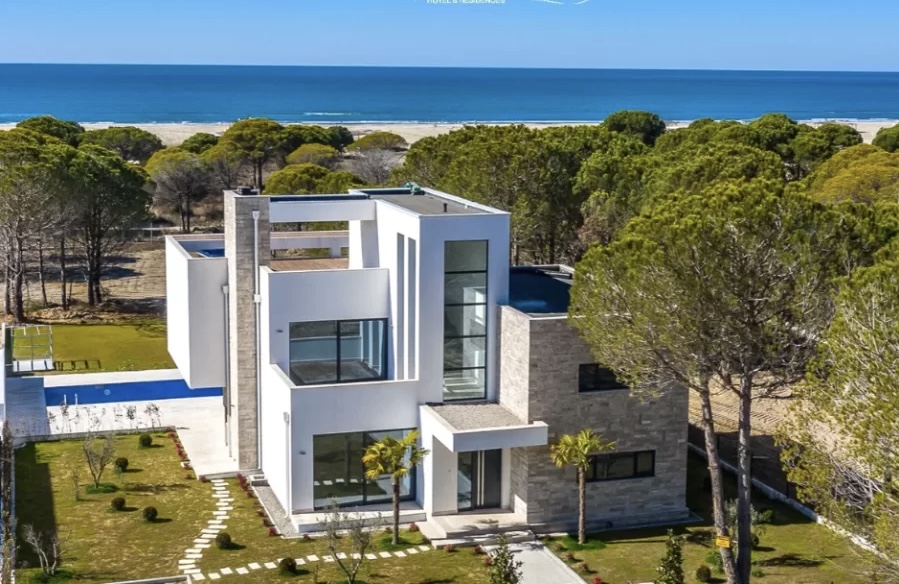
Another way is through real estate, where the purchase of a villa worth 1.5 million euros, on the coast, by a girl only 18 years old, stands out.
A former state official, who had been convicted of abuse of office, was also involved in the money laundering activity.
Below are the typologies of money laundering:
Typology 1
The use of personal accounts for unregistered commercial activity, accompanied by frequent
cash deposits.
The Albanian citizen has opened an account in bank Z and during the period 2024–2025, deposits of around EUR 300,000 were found in his accounts
by citizen A himself, as well as by several other citizens. From
the verifications carried out in the civil status register, it results that some of these persons have
family relationships between them, such as sister, brother and cousins.
Further checks were carried out at commercial banks on the bank accounts of all
citizens involved in this activity. These checks revealed that
a total of around EUR 1,900,000 had been deposited during the same period.
According to the data administered, the scheme has operated as follows:
• Citizen A, along with 9 other citizens, were provided with prepaid cards, which
were used to purchase luxury brand products in different countries.
• These citizens made deposits into their personal accounts or into each other’s accounts, while a significant portion of the funds were then transferred to
Mastercard cards. • Analysis of the use of these funds shows that they were mainly used to
make online purchases.
• In addition to the deposits, the bank accounts were also credited with a significant amount
, around EUR 350,000, as VAT refunds through the companies “Planet
Tax Free” and “Global Blue Tax Free”. These funds were also used to make purchases
of products of various brands.
From the verifications carried out at the Central Bank and the tax system, it results that citizen A registered
entity X in 2024, with the object of activity ‘online clothing sales’.
According to the declared data, for 2024 the entity reported zero income, while at the beginning of
2025 the activity was deregistered. Verifications were also carried out for the other citizens involved,
which resulted in data only on their employment status.
From these verifications, it is evident that some of them were employed in the same companies with activities unrelated
to the above activity.
Based on the suspicions generated by the data analysis, specifically:
• Circulation of significant amounts through the banking system, which turn out to be
related to the exercise of an unregistered online trading activity;
• Benefiting from VAT reimbursement, while no VAT has been paid for
the import of goods into Albania;
• Lack of individual declared income from the citizens involved, which could
justify the deposits made,
the case was sent for further investigation to law enforcement bodies
Typology 2
Investments in real estate with unknown or unjustified sources of funds.
Citizen A, during the years 2021 – 2025, is found to be involved in a series of notarial deeds through which
he acquired real estate in various areas of Tirana and Kavaja.
Initially, in 2021, he invested in the city of Kavaja, where within a 3-month period he purchased
7,500 m2 of land for EUR 260,000 and benefited through the donation of 1,500 m2
.
Furthermore, in
2022, it purchased 8400 m2 in the Preza area
at 520 Lekë/m2. While during 2023 – 2025, it made the
highest number of investments, in the Dajti area in Tirana, where through real estate purchase contracts
it acquired 56,000 m2
of ‘arable land’ with prices per m2
ranging from 4 – 21 EUR.
Furthermore, in addition to the above anomaly regarding the acquisition of assets at prices lower than
market levels, cases have also been identified where these assets have been resold within a short period of time at
significantly higher values.
• Specifically, in March 2022, citizen A sold citizen B a real estate property
of the ‘arable land’ type with an area of 6,200 m² for a value of EUR 423,000, while
verifications show that just a few months earlier he had purchased it from another citizen for
a value of EUR 30,000.
• On the same date, another similar transaction was carried out, where citizen
A sold citizen B a real estate property of the ‘arable land’ type with an area of 1,850
m² for a value of EUR 180,000, which he had purchased just a few months earlier for only
EUR 15,000.
Also, in the same area where citizen A has acquired most of the properties at relatively
low prices (4–21 EUR/m²), transactions have also been carried out with the company “X”, from which citizen
A has purchased real estate of the ‘arable land’ type at a significantly higher price, around 75 EUR/m².”
In addition to numerous investments made as an individual, verifications show that citizen A has
also registered the company “Beta” in 2022, with an object of activity in the field of construction and excavation,
through which he has acquired significant areas of real estate in the areas of Petrela and
Mullet, specifically around 52,000 m² in Petrela and 16,000 m² in Mullet.
The analysis of the purchase deeds revealed the same anomaly in the manner of acquiring these properties,
transactions at extremely low prices per m².
From the analysis of the financial statements, sales and purchase books, it results that this company, although
newly established, has shown considerable financial activity since its second year of operation.
According to the data declared by the Beta company:
− It has reported profits reaching around EUR 1,700,000, most of which has been
transferred to reserves, while the dividend distribution has been relatively low, around EUR 70,000.
− Since the first year of activity, there has been a considerable number of registered machines
, an element that raises doubts regarding the source of financing or the method of obtaining
them.
From the verifications carried out on the source of income used to make investments, it results that
citizen A has used as a source of financing funds obtained from the sale of real estate in the amount of
EUR 423,000 and EUR 180,000.
In addition, transfers of funds from the account of company “X” have also been identified as mediation payments
in the negotiation with the owner of the land, as well as transfers from the account of his company “Beta”.
While the accounts of the company “Beta” had numerous credits for the liquidation of invoices and
loan disbursements, these funds were used partly for the company’s activities and partly for the liquidation of
real estate purchase contracts.
Verifications conducted at the Albanian Property Registry revealed a large number of
immovable assets owned by citizen A and the company “Beta”.
Taking into consideration:
• The high number of real estate transactions, most of which were
purchased at prices significantly lower than the market price, raises doubts about the real source of
payments for their purchase;
• Two of the properties were purchased at a very low price and resold within a
short period of time at a value several times higher;
• Investments in real estate began in 2021 and continued in 2022-2023,
while business activity began to grow in 2023;
• The rapid growth of business activity, accompanied by a high volume of
sales and purchase transactions, as well as significant investments in machinery and equipment, led
to the case being referred for further investigation to law enforcement agencies.
Typology 3
Suspicious investments in real estate and works of art from international sources of funds and
companies registered in tax haven jurisdictions.
Citizens A and B, with Albanian citizenship and foreign nationality, during 2025 purchased
real estate and works of art in the territory of the Republic of Albania, in high values, using
funds coming from jurisdictions and businesses registered in jurisdictions with fiscal incentives, which increase
the complexity and doubts about the origin of the funds.
Specifically, in February 2025, citizen A, 18 years old, purchased a villa on the coast worth EUR 1.5 million.
According to the administered data, the financing for this purchase was provided by her sister,
citizen B.
Citizen B, 40 years old, resident in a country that has fiscal incentives X, supported this investment through
funds received from her bank account in a country in Southern Africa (AF1), considered to have
increased risk in relation to corruption and the informal economy.
Further during 2025, citizen B purchased a villa on the coast worth 1.7 million EUR, financed from
a personal account in a country with fiscal incentives (Z).
Also, during the first half of 2025, citizen B appears to have invested in Albania
in the purchase of works of art worth around EUR 700,000.
According to the data we have, citizen B is the sole partner of a business (B1), operating in the
online gaming sector in Seychelles (where the latter is a partner of a company registered in country Z,
company B2, with the same field of activity).
The income received from the dividend distribution was transferred to the account of citizen B in the country of
residence X, in the amount of several million EUR, part of which was used for these investments.
Considering that the transfers were not made from the country of residence or
business activity, the AIF has cooperated with partner FIUs, where we were informed that:
− The activity of company B2, in country Z, has been deregistered since 2023;
− Citizen C, the husband of citizen B, is involved in illegal activities related to
organized crime.
In addition, this citizen, together with several citizens from her country of origin, registered company Y
in 2019, with activity in the hotel sector, and at the beginning of 2025 she left this company,
with low profits.
In conclusion of the case, taking into consideration the following elements:
• The use of international funds for the purchase of real estate and
high-value works of art,
• Source of funds, secured from business activities with increased risk,
• Suspicions of the use of companies registered in countries with fiscal incentives to
hide the origin of funds,
• Family ties to individuals involved in known criminal activity,
• Involving several jurisdictions for the circulation of funds (country of residence, country of
ordering transfers, countries where the business operates),
the case was sent for further investigation to law enforcement agencies.
Typology 4
The use of related companies for the circulation of international funds in the online marketing sector
Eleven companies registered in Albania have benefited from transfers worth EUR 3,740,000 from
various countries in Europe and Asia.
Further analysis of these companies has identified connections between them, which consist of exercising
activity in the same field, specifically in the provision of online marketing services, as well as the
involvement of the same individuals in different roles, such as administrators, partners or persons with the right
of representation.
Another common element identified is related to the time of the activity, as these entities
were registered in 2024 and for a period of six months or within the same year they turned out to be
deregistered.
Taking into consideration the above elements, which create doubts about the nature and purpose of
the activity of these entities, AIF has cooperated with the tax authorities.
We were subsequently informed by the tax authority that some of these companies have been referred to law enforcement agencies
for criminal offenses of concealment of income and non-payment of taxes.
By analyzing the banking activity of 11 companies, the countries from which
the highest volume of funds transfers were received were identified and subsequent communication was made with partner FIUs in 7 different countries.
The information provided by these countries revealed several anomalies related to the sending companies,
specifically:
• Fund turnover much higher than declared;
• Use of entity accounts for transit purposes, funds are transferred to
different countries immediately after crediting;
• Transfers outside the profile or field of activity of the entity and without
justifying documentation;
• The entities have developed activity during the same period as the entities registered
in Albania and most of them have been deregistered,
The case was referred for further investigation to law enforcement agencies.
Typology 5
Purchase of real estate by persons with a criminal record in the field of narcotics
Citizen A has made several deposits into his account in the total amount of EUR 50,000 with savings income
as well as received transfers from third parties in the form of loans/gifts in the total amount of
EUR 75,000.
The verifications conducted on the third parties showed that they have no family relationship with citizen A.
Also, from the analysis of financial movements, it is evident that citizen A transferred the amount of
EUR 120,000 to the account of citizen B in a European country for the purpose of purchasing a real estate property.
Further verifications also show that citizen A has changed his generalities and is recorded
as a person with a criminal record in the field of narcotics.
Taking into account the following anomalies:
• Loan/gift from third parties without any proven connection between them;
• Transfer of funds abroad for the purchase of real estate,
the case was sent for further investigation to law enforcement agencies.
We were further informed that the case has been referred to the Prosecutor’s Office for the criminal offenses of concealment of income and
laundering of the proceeds of a criminal offense or criminal activity.
Typology 6
Investment in real estate by a former state official convicted of abuse of office.
Citizen A, a former employee of a state institution, convicted of corruption and abuse of office, during
2024 signed enterprise contracts for the reservation of real estate such as an apartment
worth EUR 60,000, parking spaces worth EUR 35,000 and units worth EUR 60,000.
From the data in the bank account of citizen A, it resulted that the funds for the purchase of real estate
were accumulated in the account from deposits, transfers from third parties in the amount of 140,000 Eur, such as: donations,
loans, debt settlement, etc., with unclear connections between the parties.
Taking into consideration:
• The low purchase price of real estate below market value;
• Structuring incoming payments from different persons;
• Unclear connections between the parties;
• Transfers to centralized accounts for the purpose of acquiring real estate and
granting loans,
The case was referred for further investigation to law enforcement agencies.
Typology 7
Fraud scheme with POS transactions for financial gain
Albanian Company X, established with the field of activity: “Import, export and wholesale and retail trade of
various food and industrial goods”, with a foreign citizen administrator A, on 06.12.2024 established
business relations with one of the second-tier banks in Albania.
On 24.12.2024, it put 2 POS into operation and immediately conducted tests on both terminals with a
foreign card issued by a bank in Belgium, with the cardholder Belgian citizen B.
On 26.12.2024, Company X credited the account via POS, with the Belgian card in the amount of 96,000 EUR,
the majority of which, 83,000 EUR, was withdrawn from the account.
On 31.12.2024, the account was re-credited via POS, in the amount of EUR 152,000, and company X
on the same date attempted to re-credit the amount of EUR 790,000, but failed to do so as
the transactions were blocked by Mastercard International.
On 03.01.2025, the Bank in Albania was notified by Mastercard, after the company attempted to exceed the
allowed limit on the card and suspicions arose about card transactions, as a result, the bank blocked the accounts
of company X and immediately initiated the “Charge back” procedure.
For the execution of POS transactions (completed and attempted), with a total value of approximately EUR 1,000,000,
company X has justified them through tax invoices, with the same value as the transfers, in favor of entity
Y, with an address in Belgium, based on an agreement concluded on 01.09.2024, between company Y,
represented by Belgian citizen B, and company X, which states that: company X will provide company Y with
services such as: Escort; Car rental; VIP car rental, etc., and the value of the services provided in total would amount to EUR 2,500,000. Company X, one month before the transfers, has also added the “Tourist, Travel Agency” service
as part of its activity .
Based on the above, taking into account the following elements:
• Withdrawing funds worth EUR 1,034,688 beyond the allowed limit on the card, exploiting
a weakness in the prior Automation process and then transferring them to the account of
company x using the POS system and not bank transfers;
• Carrying out transactions in a short time and during the New Year holidays;
• Adding the activity “Travel Agency” to the scope of activity of
Albanian company X, about a month before the transactions were carried out in order to justify
the transactions carried out,
• The alleged provision of services by Albanian company X to Belgian company Y does not
match the activity that company X has been carrying out in Albania over the years,
suspicions arise that Albanian company X, with administrator foreign citizen A, in
collaboration with company Y, with representative citizen B, are involved in a
fraud scheme, potentially also in violations of a fiscal/tax nature, the case was referred to
law enforcement agencies for further assessment./Top Channel