In addition to Koçek’s group, later other people involved in drug trafficking also invested significant amounts of cash in construction projects carried out by Shtufi.
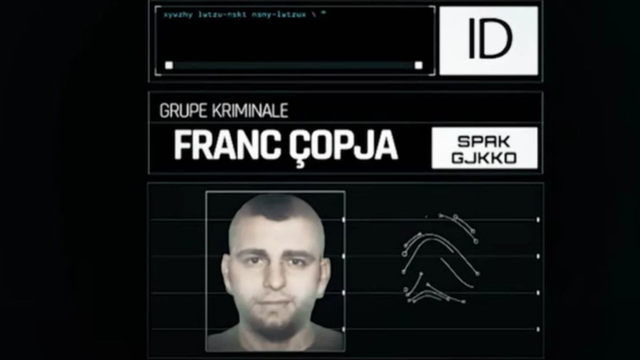
The SPAK file also seems to have quite an interesting implication of Franc Çopja, one of the strongmen of Elbasan, known as a sworn enemy of Erjon Alibej. Investigators have discovered some interesting communications between Çopja and Koçek, where they talk about investments for money laundering.
Excerpt from the investigative file: “In communications dated February 1, 2020, Luçiano Koçeku writes to Franc Çopja that he had “well arranged the company documentation with credits and letters”, adding that he had a declared income of around 30 thousand euros per month. A few days later, in another conversation, he states that he owned five companies and that he had covered most of them with credits, loans and supporting documentation. In the same conversation, Koçeku expresses concern about the possibility of controls or investigations that could expose his financial activity.”
In the massive action, SPAK partially seized several luxury towers in Tirana, the development companies of Shtuf and other individuals, hundreds of apartments, service units, garages and construction sites still under construction. Hundreds of high-value bank accounts have also been seized. In total, the value is estimated at around 500 million euros, a record amount for Albania.
The SPAK file describes a whole mechanism of successive alienations, registrations and transactions, which, according to investigators, were intended to remove traces of the real source of the wealth.
According to SPAK, the assets were transferred from one hand to another through a series of legal transactions that at first glance seemed normal, but which, according to investigators, served to make it difficult to trace the real beneficiaries. These properties were then included in development and construction projects, entering the formal economy and taking on the appearance of legitimate investments.
Part of the investigative file: “After registration, their numerous fragmentation and subsequent alienation, in the form of purchase, exchange or other forms, with the aim of making it difficult to trace and benefit from these, by avoiding and severing the connection between the resident in whose name the properties are registered and their ultimate beneficiaries, which are criminal groups, who either benefit as owners due to the conclusion of contracts with various construction companies.”
“If the developer of that property was aware that this property had falsified documentation. So, a comprehensive investigation must be conducted to prove the investor’s connection to the knowledge of the fact of falsification of the documentation on which he is developing that work,” said Dritan Jahja, lawyer.