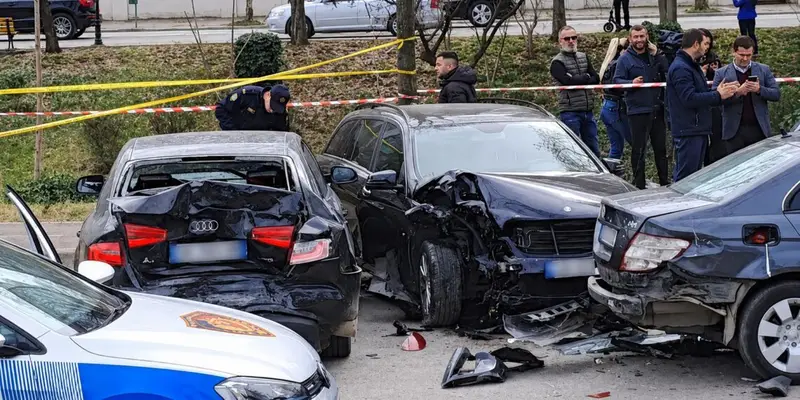
A road accident can have consequences in a matter of seconds that can affect the health, property, and income of several people. In these cases, mandatory third party liability insurance plays an important role in covering liability for damages caused to third parties.
A specific case that occurred on the Levan-Tepelena axis, in the Mollaj area, where two vehicles collided and four people were injured, serves as an example to explain how TPL can function in such a situation.
What does TPL cover?
TPL insurance covers the driver’s liability for damages caused to third parties while using the vehicle.
Coverage includes damage to property and damage to the person. Damage to the person includes the consequences of death, bodily injury and deterioration of health, as well as material and non-material damage as defined by the relevant framework.
In a two-vehicle accident, the activation of the TPL is related to the determination of liability for causing the damage. The insurer of the responsible vehicle handles the claims for compensation of the injured parties, in accordance with the established documentation and procedures.
How can TPL work in this specific case?
Taking the above accident as just a hypothetical example, let’s assume that after investigation the authorities determine that one of the vehicles is responsible for causing the collision.
In this situation, the TPL of the responsible vehicle activates coverage for damages caused to third parties.
If there are passengers in the at-fault vehicle and they suffer injuries, they are treated as injured persons and can claim compensation for the damages suffered. Injured persons in the other vehicle are treated in the same way.
This means that TPL extends to persons injured as a result of the accident, according to the determined liability and documented damage.
The regulation stipulates that any person who has suffered damage from the use of a means of transport in the territory of Albania has the right to claim compensation for the losses or damages suffered.
What happens to the responsible driver?
The TPL contract determines that the driver of the vehicle that caused the accident is included in the category of persons who do not benefit from this contract for damages caused to him as a driver.
In this way, TPL functions as third-party liability insurance and covers damages that the responsible driver causes to other persons and their property.
The responsible driver would need either basic health insurance or accident insurance for hospital coverage.
How is responsibility defined?
In a road accident, liability is determined by the competent authorities based on evidence and documentation collected at the scene.
The Traffic Police and the investigation team document the circumstances of the accident, while the documentation for determining the cause of the accident becomes part of the damage practice. The regulation provides for the minutes of the finding of the violation by the Traffic Police and, as the case may be, the court decision or the documentation of the criminal proceedings for determining the cause of the accident.
How is a claim for compensation submitted?
The injured party files a claim for compensation with the insurer responsible for the vehicle that caused the accident.
The claim is submitted in writing or electronically and is registered by the insurance company. The injured party is provided with a claim registration number and information on the documents needed to complete the claim file.
The claim for compensation must be filed within two years from the date of the accident.
In cases where an accident involves two vehicles identified and insured with TPL, the regulation also provides for the possibility of submitting a claim to the direct insurer, when the relevant agreement exists between the insurance companies.
Why is it important to know TPL?
Knowing how TPL works helps every driver understand what happens financially after an accident.
An accident can involve damage to vehicles, bodily injury, and economic consequences for several people. TPL creates the mechanism for handling these damages to third parties, according to the liability determined by the authorities and the documentation presented.
For this reason, every driver must check the validity of their TPL policy and be familiar with the notification and compensation claim procedure.
MINICASCO insurance
In the case of material damage, an insurance that should be recognized for covering the damage to the vehicle causing the damage would be MINIKASKO. This accident meets the conditions for MINIKASKO, if the causing vehicle had it, to be activated: up to ten thousand euros of material damage to the causing vehicle, instead of being paid by the owner of the vehicle, MINIKASKO insurance would pay it. How is it activated? The accident must have occurred: vehicle to vehicle, in motion and on a motorway.
Sigurime.Online brings concrete cases to make the functioning of insurance in everyday life more understandable. Each case is used as an informative and hypothetical example to explain the mechanisms of insurance. Determining responsibility for a road accident is the exclusive competence of the investigative bodies at the scene and the relevant authorities. / sigurime.online