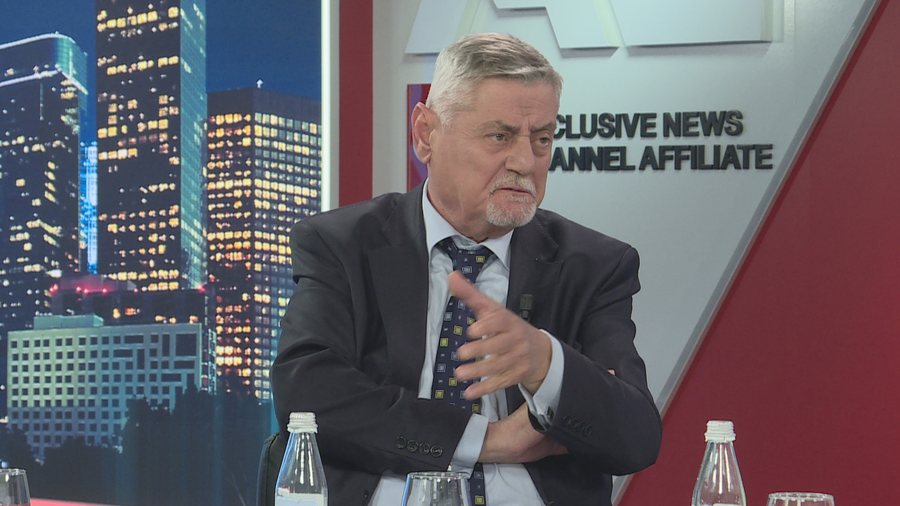
The head of the LZHK, Dashamir Shehi, has commented on the resignation of the Minister of Health, linking her departure to the way in which, according to him, Prime Minister Edi Rama has built and operates the government cabinet.
In an interview with “A2 CNN”, Shehi was critical of the role that ministers have today within the government, arguing that they have less and less political weight and space to make decisions independently.
According to him, the change of a minister no longer constitutes an important political event, as the head of government can make other changes to the cabinet at any time.
“Tomorrow he will remove five more, he has devalued the government. Ministers come from nowhere. There is no space for a minister to make decisions on his own, he signs and seals everything,” declared Shehi.
The head of the LZHK argued that persons who take on ministerial positions should have a clear political or professional profile. According to him, a minister should either have a consolidated political career that has led him to head a ministry, or be a professional with exceptional technical capacities in the field he undertakes to lead.
“When you become a minister, you must have two qualities; either you are a strong political person, an MP, and this is the culmination of a kind of career – and I am for this type of category – or you are a super technician who puts others down with the knowledge and capacity you have to lead, which may have been the case of the lady,” said Shehi.
According to him, these should be the basic criteria of meritocracy in building a government cabinet. However, Shehi claims that such logic is not applied in Albania and that, in many cases, the selection of ministers is not necessarily related to political weight or professional expertise.
“These are the parameters of meritocracy and these do not apply in Albania. He removes him and puts in the most incapable one, because he knows very well that it will not create any problems for him,” he said.
Shehi also raised the issue of ministerial autonomy, claiming that the concentration of decision-making in the hands of the prime minister has weakened the individual role of cabinet members. According to him, a minister who does not have his own political base or professional authority finds it more difficult to oppose the prime minister’s decisions or impose his own policies within the sector he leads.
Focusing specifically on the Ministry of Health, Shehi said that the problems of this sector cannot be solved with frequent changes in political direction. According to him, healthcare requires long-term policies, sustainable investments and continuity before the results become visible to citizens.
He emphasized that reform and investments in the health system require years, even decades, which, according to him, makes it even more important that the management of this sector does not rely only on the names of ministers, but on sustainable institutional strategies.
Sheh’s statements come after the resignation of the Minister of Health, a development that has reignited the political debate over the method of selecting ministers, the weight they have within the cabinet, and the responsibility they bear for the policies of the departments they lead.
For the oppositionist, the issue goes beyond the removal of a single name. According to him, the main problem remains the model of government functioning and the relationship between the prime minister and the ministers, who, in the Sheh’s view, should have more political and professional authority to truly exercise the responsibilities that the position gives them.