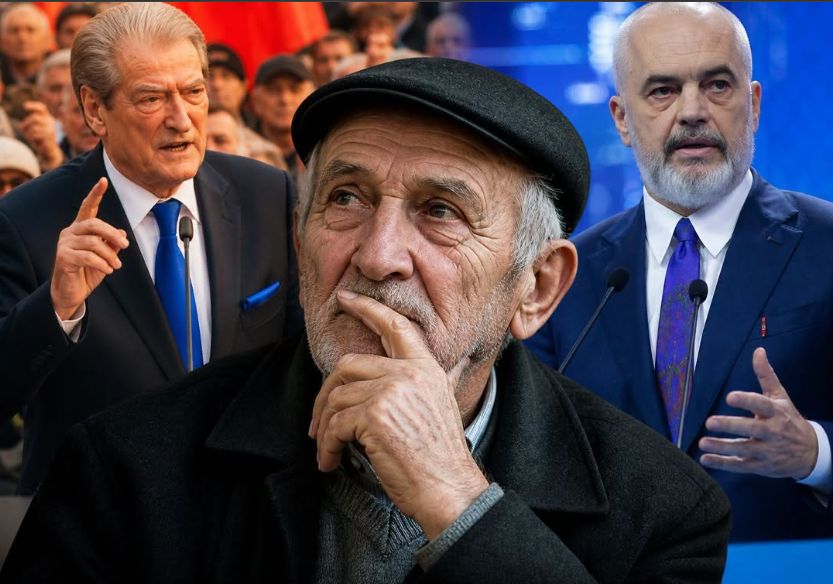
A phenomenon that is increasingly being observed in Albania is the stronger support that older people give to Sali Berisha, compared to Edi Rama. While young people are often divided on political positions, the older generation seems to have a clearer preference, and the reasons behind this choice are more complex than they seem on the surface.
According to political analysts, one of the main factors is historical memory. The elderly have directly experienced the transition period in the 1990s, where Berisha was seen as the figure who brought about pluralism and the collapse of the communist system. For many of them, this remains an emotional and political reference point that is not easily replaced.
Another element is related to the way of communication. Berisha often uses a more traditional and direct language, which resonates more with the older generation, while Edi Rama has a more modern and sometimes ironic style, which is not always understood or accepted by the elderly.
Economic and social factors also play an important role. Pensioners often feel neglected by current policies and tend to revert to figures they have known for a longer time, associating them with a period when they felt safer or more represented.
However, this is not an absolute picture. There are also many older people who support Rama, especially because of the stability and recent reforms. But the overall trend shows a clear generational divide, where memory, emotions and personal experience have more influence than current political promises.
Ultimately, this difference in support is not simply a political issue, but also psychological and historical – a clash between the past and the present that continues to influence citizens’ choices.