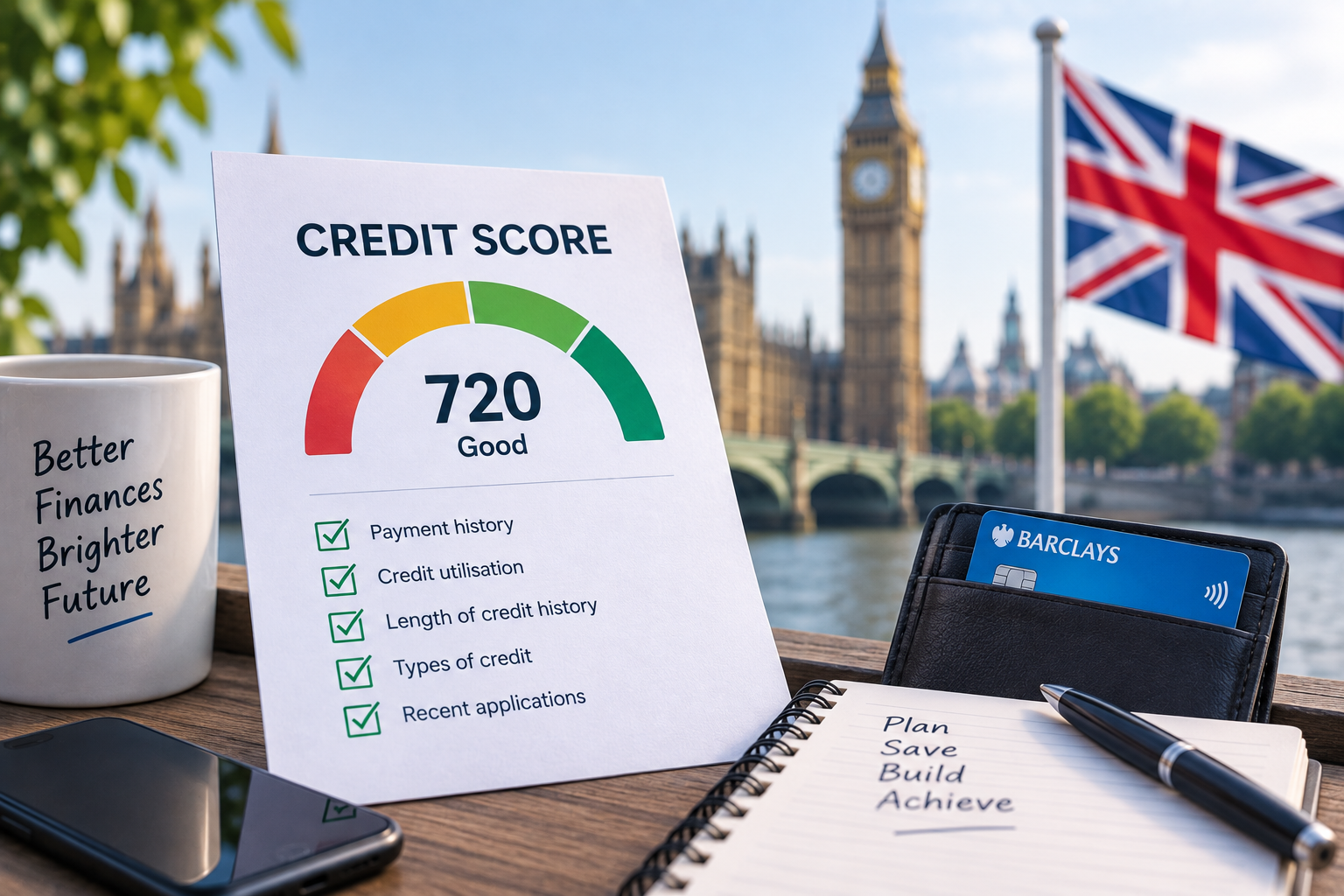
Albanians in England: How Do You Build a Credit Score and What Can Damage It?
If you’re an Albanian living and working in England, your salary isn’t the only financial number that can matter when you want to borrow money.
Your credit history can become important when you apply for a:
Credit card
Personal loan
Car finance agreement
Mortgage
Overdraft
Mobile phone contract
Other forms of credit
But people who have recently moved to the UK can face a particular problem:
They may have little or no UK credit history.
Even if you have a good salary and have never had financial problems in Albania or another country, UK lenders may have limited information about how you’ve managed credit in Britain.
So how do you build a strong credit profile in the UK—and what mistakes could damage it?
Here’s what you should know.
1. What Is a Credit Score?
A credit score is a numerical indication based on information in your credit report.
Your credit report contains information about how you’ve managed certain financial accounts and credit commitments.
For example, it can contain information about:
Credit cards
Loans
Mortgages
Overdrafts
Payment history
Outstanding balances
Credit applications
Financial associations
Certain public records
Electoral register information
When you apply for credit, lenders can use information from your credit report alongside other information from your application to decide whether they want to lend to you.
2. You Don’t Have One Universal UK Credit Score
This is extremely important.
People often ask:
“What credit score do I need to buy a house?”
But the UK doesn’t have one universal credit score that every bank uses in exactly the same way.
Different credit reference agencies can provide different scores.
Major UK credit reference agencies include:
Experian
Equifax
TransUnion
Your score can therefore look different depending on where you check it.
More importantly, lenders can use their own lending criteria.
A high score from a credit reference agency does not guarantee that a mortgage, loan or credit-card application will be approved.
Your income, existing debts, affordability and the lender’s own criteria can also matter.
3. Why Can New Immigrants Have Difficulty With Credit?
Imagine you move from Albania to England.
You have:
A stable job
£3,000 monthly income
Money in savings
No debt
A history of paying bills responsibly
But you’ve only lived in Britain for a few months.
The problem may not be that you have bad credit.
You may simply have a limited UK credit history.
Lenders want information that helps them understand how you’ve managed borrowing and repayments.
If your UK credit file contains very little information, evaluating you can be more difficult.
Building credit history therefore takes time.
4. Register on the Electoral Roll If You’re Eligible
One of the commonly recommended steps for improving a UK credit profile is registering to vote at your current address when you’re eligible to do so.
Electoral register information can help lenders confirm:
Your identity
Your address
Your residential stability
But eligibility matters.
Not every person living in the UK is automatically eligible to register to vote.
If you’re eligible, make sure the address on your electoral registration matches your current address.
Address inconsistencies can create unnecessary problems when lenders try to verify your identity.
5. Build a History of Paying Accounts on Time
Payment history is extremely important.
If you have a credit card, loan or another reported credit agreement, paying on time helps demonstrate responsible credit management.
Imagine your credit-card payment is due on the 20th of each month.
Repeatedly forgetting the payment can eventually damage your credit profile.
A simple way to reduce this risk can be setting up a Direct Debit for payments where appropriate.
Don’t rely entirely on memory.
One forgotten payment can create much more inconvenience than setting up an automatic payment.
6. A Credit Card Can Help Build Credit—If Used Responsibly
A credit card can help establish repayment history.
But you don’t need to spend huge amounts of money.
Suppose your credit limit is:
£1,000
You use the card for:
Fuel: £80
Groceries: £100
Phone bill: £30
Total:
£210
Then you repay the balance according to the card’s terms.
Over time, responsible use can contribute to your credit history.
The goal isn’t to create debt.
The goal is to demonstrate that you can manage credit responsibly.
7. You Do NOT Need to Pay Interest to Build Credit
This myth costs people money.
Some people believe:
“I need to leave a balance on my credit card every month so the bank sees I’m using credit.”
That isn’t necessary.
You don’t need to deliberately carry an interest-bearing balance simply to build a credit history.
Using a card and paying the balance in full and on time can demonstrate responsible credit use without intentionally paying unnecessary interest.
Building credit should not mean making banks richer through avoidable interest charges.
8. Watch Your Credit Utilisation
Credit utilisation describes how much of your available revolving credit you’re using.
For example:
Credit limit: £2,000
Balance: £1,500
Credit utilisation:
£1,500 ÷ £2,000 = 75%
A very high utilisation ratio can potentially make you appear more dependent on borrowing.
Now imagine your balance is:
£400
Your utilisation would be:
£400 ÷ £2,000 = 20%
That’s a very different credit profile.
There isn’t one magical percentage that guarantees approval, but keeping utilisation relatively low can generally help protect your credit profile.
9. Don’t Max Out Your Credit Cards
Having access to £5,000 of credit doesn’t mean you should spend £5,000.
Imagine:
Total credit limit: £5,000
Total balance: £4,700
You’re using:
94% of your available credit.
Even if you haven’t technically missed a payment, consistently being close to your limits can concern potential lenders.
It can suggest that you depend heavily on borrowed money.
If possible, keep balances manageable relative to your available limits.
10. Missing Payments Can Damage Your Credit History
One of the biggest mistakes is missing agreed payments.
This can include payments connected with:
Credit cards
Loans
Mortgages
Certain mobile contracts
Other reported credit agreements
Late or missed payments can remain visible on your credit report for years.
A single mistake doesn’t necessarily destroy your financial future, but repeated missed payments can create serious problems.
If you think you’re going to struggle with a payment, contact the lender before simply ignoring it.
11. Defaults Are More Serious
If repayments remain unpaid for a significant period, a lender may eventually record a default, depending on the circumstances.
A default is a serious negative mark on a credit report.
It can make obtaining new borrowing more difficult.
This is why financial problems should be addressed early.
Ignoring letters, emails and payment reminders generally doesn’t make the debt disappear.
12. County Court Judgments Can Cause Problems
A County Court Judgment (CCJ) can also seriously affect your credit profile.
A CCJ can arise when someone you owe money to takes court action and obtains a judgment against you.
CCJs can remain on your credit report for years, subject to specific rules about payment and registration.
This can make future borrowing more difficult.
If you receive genuine court documents relating to debt, don’t ignore them.
Consider obtaining appropriate debt or legal advice.
13. Avoid Applying for Too Much Credit at Once
When you formally apply for certain credit products, the lender may perform a hard credit search.
Hard searches can be recorded on your credit report.
One application isn’t necessarily a problem.
But imagine you apply within a short period for:
Three credit cards
Two personal loans
Car finance
An overdraft increase
A lender reviewing your file could interpret that pattern as a sign that you’re urgently looking for credit.
Multiple applications over a short period can therefore work against you.
14. Understand Hard Searches vs. Soft Searches
Not every credit check is the same.
A soft search generally doesn’t affect your credit score in the way a formal credit application can.
For example, checking your own credit report is a soft search and does not damage your score.
Some eligibility checkers can also use soft searches.
A hard search, however, can occur when you formally apply for credit.
Before submitting several applications, consider using eligibility tools that use soft searches where appropriate.
This can help you understand your chances without immediately creating multiple hard-search footprints.
15. Be Careful With Joint Financial Accounts
Your credit report can contain information about people with whom you’re financially associated.
This can happen through products such as:
Joint bank accounts
Joint loans
Joint mortgages
If you have a financial connection with someone who has significant credit problems, lenders may potentially take that association into account.
Simply living with someone doesn’t automatically create a financial association.
The important factor is generally having a relevant joint financial product or credit connection.
So think carefully before taking joint credit.
16. Check Your Credit Reports for Errors
Don’t assume everything reported about you is automatically correct.
Check your credit reports periodically.
Look for:
Incorrect address
Accounts you don’t recognise
Payments incorrectly marked late
Old financial associations
Duplicate accounts
Credit applications you didn’t make
Incorrect personal details
If you find incorrect information, contact the relevant credit reference agency and follow its dispute process.
An error shouldn’t be allowed to damage your ability to obtain credit simply because you never checked your report.
17. Fraud Can Damage More Than Your Bank Balance
An account you don’t recognise could potentially indicate identity fraud.
Imagine checking your credit report and discovering a loan you’ve never applied for.
Don’t ignore it.
Investigate immediately.
Protecting your credit file also means protecting:
Passwords
Bank information
Identity documents
Personal details
National Insurance information
Online accounts
Credit damage caused by identity theft can take time to correct.
18. Your Salary Is Not Your Credit Score
This surprises many people.
You can earn:
£60,000 per year
and still have a weak credit profile.
Another person might earn:
£30,000
and have a strong history of responsibly managing credit.
Income and credit history are different concepts.
Your salary itself isn’t simply a line on your credit report that automatically increases your credit score.
However, lenders can consider your income and affordability separately when deciding whether to approve an application.
So a strong credit score doesn’t mean a bank will lend you an unlimited amount.
19. Why Credit Matters When Buying a Home
For many Albanian families in England, the biggest reason to care about credit history is eventually buying a home.
When applying for a mortgage, lenders don’t simply ask:
“What’s your credit score?”
They can assess a much wider financial picture.
That can include:
Income
Employment
Existing debts
Monthly commitments
Credit history
Deposit
Affordability
Recent credit applications
Payment history
A clean credit report doesn’t guarantee mortgage approval.
But serious credit problems can make the process more difficult or potentially more expensive.
If you plan to apply for a mortgage soon, avoid unnecessary financial disruption beforehand.
20. Example: Two People With the Same Salary
Consider two workers.
Worker A
Salary: £40,000
Pays credit card on time
Uses £500 of a £4,000 limit
Has few recent credit applications
Has stable address information
Checks credit reports regularly
Worker B
Salary: £40,000
Frequently misses payments
Uses £3,900 of a £4,000 credit limit
Recently applied for five new credit products
Has an unpaid default
Both earn the same salary.
But their credit profiles could look dramatically different to a lender.
That’s why income alone doesn’t determine creditworthiness.
21. Don’t Close Old Accounts Without Thinking
Closing an unused credit account can sometimes make sense.
For example, perhaps the card has an annual fee or creates a temptation to overspend.
But closing an account can also change your total available credit and therefore affect your utilisation.
Example:
Card A limit: £4,000
Card B limit: £6,000
Total available credit: £10,000
Balance: £2,000
Overall utilisation:
20%
If you close Card B, available credit falls to:
£4,000
If the £2,000 balance remains, utilisation becomes:
50%
So don’t automatically close an old credit card simply because you stopped using it.
Consider the broader financial impact first.
22. Building Credit Takes Time
There is no legitimate button that instantly creates a perfect credit history.
If you’ve recently arrived in England, don’t panic because your credit file is limited.
Build it gradually.
Maintain stable information.
Pay accounts on time.
Use credit responsibly.
Avoid unnecessary applications.
Keep balances manageable.
Check your reports.
Correct errors.
Over time, you’re creating evidence of how you manage financial commitments.
23. Seven Things That Can Damage Your Credit Profile
Remember these seven common problems:
1. Missing or making late payments
Payment problems can negatively affect your credit history.
2. Using too much of your available credit
Frequently being close to your credit limits can be a warning sign.
3. Making many credit applications in a short period
Multiple hard searches can hurt your profile.
4. Defaults
Serious unpaid debts can remain visible for years.
5. CCJs and other serious public-record problems
These can make borrowing considerably harder.
6. Incorrect information you never correct
Always review your credit reports.
7. Poor financial associations
Joint financial products can connect your credit profile with another person.
A Simple Credit-Building Checklist for Albanians in England
If you’re building your UK credit history from scratch:
Check your credit reports.
Make sure your personal information is correct.
Register on the electoral roll if you’re eligible.
Use your current address.
Pay every credit commitment on time.
Direct Debits can help prevent accidental missed payments.
Use credit carefully.
Don’t borrow simply to “create a score.”
Keep credit utilisation manageable.
Avoid constantly operating near your maximum limits.
Space out credit applications.
Use soft-search eligibility tools when appropriate.
Check for fraud and errors.
Investigate accounts you don’t recognise.
Prepare early for a mortgage.
Don’t wait until the week before applying to examine your credit history.
The Bottom Line
For Albanians living in England, building a good credit profile isn’t about earning the highest salary or borrowing as much money as possible.
It’s about demonstrating responsible financial behaviour over time.
A strong foundation generally means:
Paying on time
Managing borrowing responsibly
Keeping credit utilisation under control
Avoiding unnecessary applications
Maintaining accurate personal information
Checking your credit reports
Dealing with problems early
And remember one of the most important UK credit lessons:
Your credit score is not the final decision.
Different credit reference agencies can show different scores, and lenders use their own affordability and risk assessments when deciding whether to offer you a mortgage, loan, credit card or other financial product.
Build the history—not just the number.
If you plan to buy a home in England in the future, the responsible financial habits you establish today could become extremely valuable when it’s finally time to apply for a mortgage.
Disclaimer: This article is for general educational purposes only and does not constitute personalised financial, credit, mortgage, debt, legal, or investment advice. Credit-scoring methods and lenders’ criteria vary and can change. Always check your own credit reports and the current terms of a financial product before applying.