Here’s how 110 million euros were extorted for two ghost TPPs in Vlora that did not produce a single kilowatt of energy, Bujar Leskaj sheds light on the behind-the-scenes of the scandal that is devouring Albanians’ money and calls on SPAK to launch investigations
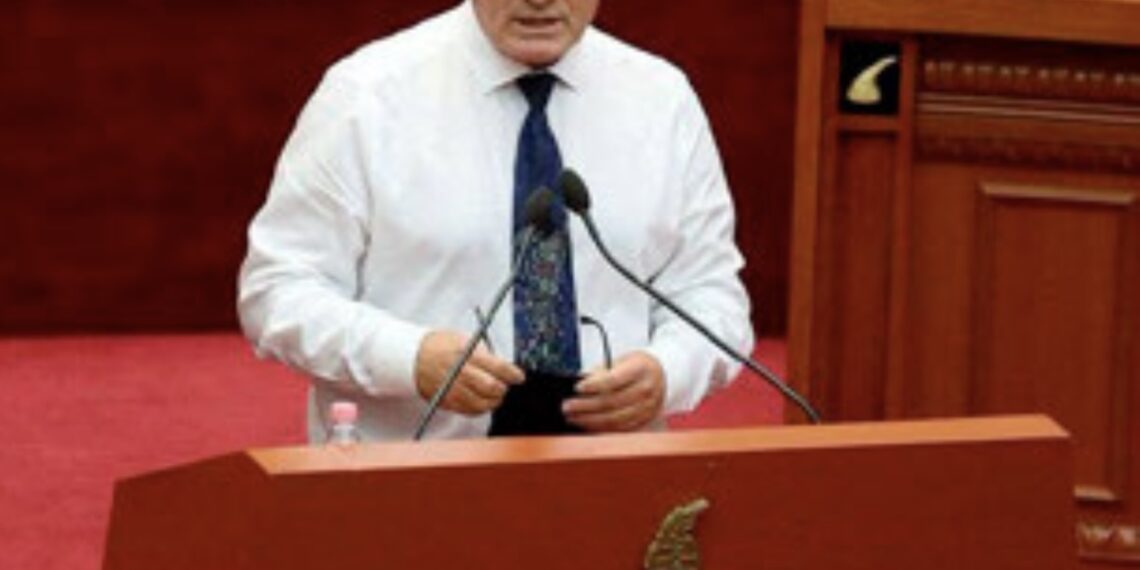
The Democratic Party MP for the Vlora Region, Bujar Leskaj, has reacted harshly regarding the mega-affair of the two ghost floating TPPs in Triport (Vlora). Through a detailed analysis published on social networks, MP Leskaj has shed light on the behind-the-scenes of this financial scandal worth over 110 million euros, which is mercilessly devouring Albanian taxpayers’ money. He denounced the fact that the two plants rented since September 2022 have not produced a single kilowatt-hour of energy for the national system to date.
According to the Democratic MP, the government’s justification for dealing with the energy crisis has completely failed, turning into an unbearable financial burden. Although these floating platforms remain idle due to technical and procedural problems, the state continues to pay daily rent worth tens of thousands of euros, along with mooring and maintenance costs. Mr. Leskaj emphasized that these major funds could have financed strategic investments in solar energy, wind energy or modern battery systems.
This extraordinary economic and financial damage, which has no precedent in the region and beyond, raises serious questions about administrative and political responsibilities. In this context, he urgently called on the Special Prosecution Office (SPAK) to immediately launch investigations to uncover the truth and bring those responsible for this corrupt affair to justice. Meanwhile, the democratic legislator underlined that only through full transparency and independent auditing can the public interest be protected. Below we reflect the full reaction of Mr. Leskaj.
Reaction of DP MP, Bujar Leskaj
“On July 20, 2026, the Albanian Power Corporation announced a tender worth over 20 million euros for maintenance services of two old TPPs in Triport, Vlora, leased by the government in September 2022. I.
The two floating TPPs in Triport: the dark financial mega-scandal of the Rama sect
In almost four years, these two floating power plants have cost Albanian taxpayers around 90 million euros, in daily rent worth tens of thousands of euros, in mooring costs, in maintenance and in operating expenses. The lease of two old floating power plants in Vlora is the most problematic case of public funds management in the Albanian energy sector.
After almost four years since the signing of the contract, these production units have not entered into operation, while the cost to taxpayers continues to increase. In total, the bill, with the realization of the tender announced by KESH, will reach approximately 110 million euros, without producing a single kilowatt-hour of energy for the Albanian electricity system! When it took the decision to bring the floating TPPs into operation in September 2022, the Rama sect justified it with the alleged argument that Albania was facing the international energy crisis and the risk of a lack of production from hydropower plants due to drought.
The objective was to provide energy in times of crisis, reduce imports and guarantee energy security. The reality turned out to be quite different. The TPPs never entered production due to technical, infrastructural and procedural problems. As a result, they did not produce energy, did not reduce imports, did not affect the stability of the energy system and did not generate income for KESH or the OST. The investment did not achieve any of the objectives for which it was justified.
II. The absurd bill of an unprecedented energy affair in the region and Europe
The problem is made even more serious because the payments have not been completed. Even though the plants are not working, the state continues to pay the rent, mooring costs, maintenance and operating expenses. The essential question today is simple: what did Albanian citizens benefit from this project? In public economics there is a clear principle: every euro spent must create a measurable value for citizens. Every public fund used for a project that does not yield results creates a “lost opportunity cost”, or opportunity cost.
In the case of floating power plants, the same funds (110 million euros) could have financed investments in solar and wind energy, battery energy storage systems, energy efficiency programs, and support for domestic energy production by businesses and households over these four years. These investments would have created long-term capacities and would have brought clear and significant economic benefits, even after the crisis is over.
So, the extraordinary opportunity cost of this gigantic waste and abuse of public money is easily understood. A similar investment wasted in this way has no precedent in the region and throughout Europe. Five questions require urgent answers for the Democratic Party opposition, which has strongly denounced this affair, and for the entire public opinion: 1. Was the leasing of floating TPPs the best alternative in the conditions of the 2022 crisis? 2. Why have the plants not functioned in accordance with the objectives for which they were contracted? 3. What is the total cost that the Albanian state has paid and will pay for this project? 4. Have the possibilities for renegotiating or terminating the contract in the interest of public finances been considered? and 5. What administrative, financial or political responsibilities have been identified to date?
III. The serious criminal and institutional responsibility of the Rama sect
A project of this magnitude cannot be left without an analysis of responsibilities. It must be made clear who proposed this solution, on what study the decision was based, who supervised the implementation of the contract, which institutions monitored the achievement of the objectives and what measures were taken after it became clear that the plants were not delivering the expected results. Accountability is an essential element of public financial management.
The two idle floating power plants in Vlora call for an investigation by SPAK every day, a need for transparency and an audit. The case of the two old floating power plants deserves a full technical, financial and legal audit. An independent audit should analyze the reasons why the plants were not put into operation according to expectations, the real costs of the contract, whether there is an economic damage to public finances and how much it is, as well as the lessons to be learned for future strategic projects.
“Only accountability and transparency can restore citizens’ trust in the way their tax funds are administered. But with the Rama sect in power, there is no accountability and transparency!” writes Democratic MP Bujar Leskaj.