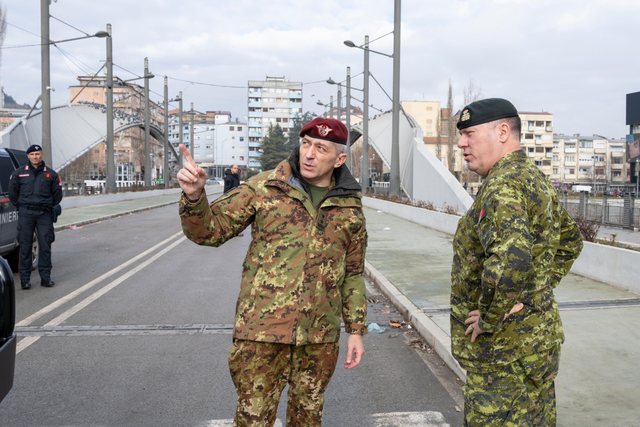
KFOR has begun the gradual withdrawal of its permanent presence from the bridge over the Ibar River in Mitrovica, justifying the decision with “improving the security situation”.
However, the NATO mission emphasizes that it will maintain a strong presence in northern Kosovo and may return troops to the field if the situation deteriorates. The decision comes after a series of incidents in the north, including the demolition of 17 Serb-owned buildings near Lake Ujman and allegations of violence by Kosovo Police members against a resident during a check.
KFOR is gradually transferring some responsibilities to the Kosovo Police, while the authorities in Pristina hope that this will create the conditions for the reopening of the main Mitrovica bridge to traffic. In the case of the Visokë Deçan Monastery, the Kosovo Police are also expected to gradually be integrated into the structures securing the facility. But in the north there is still a low level of trust in Kosovo institutions, especially the police.
Representatives of the Serbian community argue that the reduction of KFOR and the reopening of the bridge are taking place at an inappropriate time, citing recent incidents and security concerns. On the other hand, some experts assess that the Kosovo Police has created sufficient capacities to maintain order in the north and that, after the establishment of Pristina’s institutional control in this part of Kosovo, the closure of the bridge no longer presents the same security justification as before.
However, tensions and lack of trust between the Serbian community and Kosovo institutions indicate that the situation remains fragile.