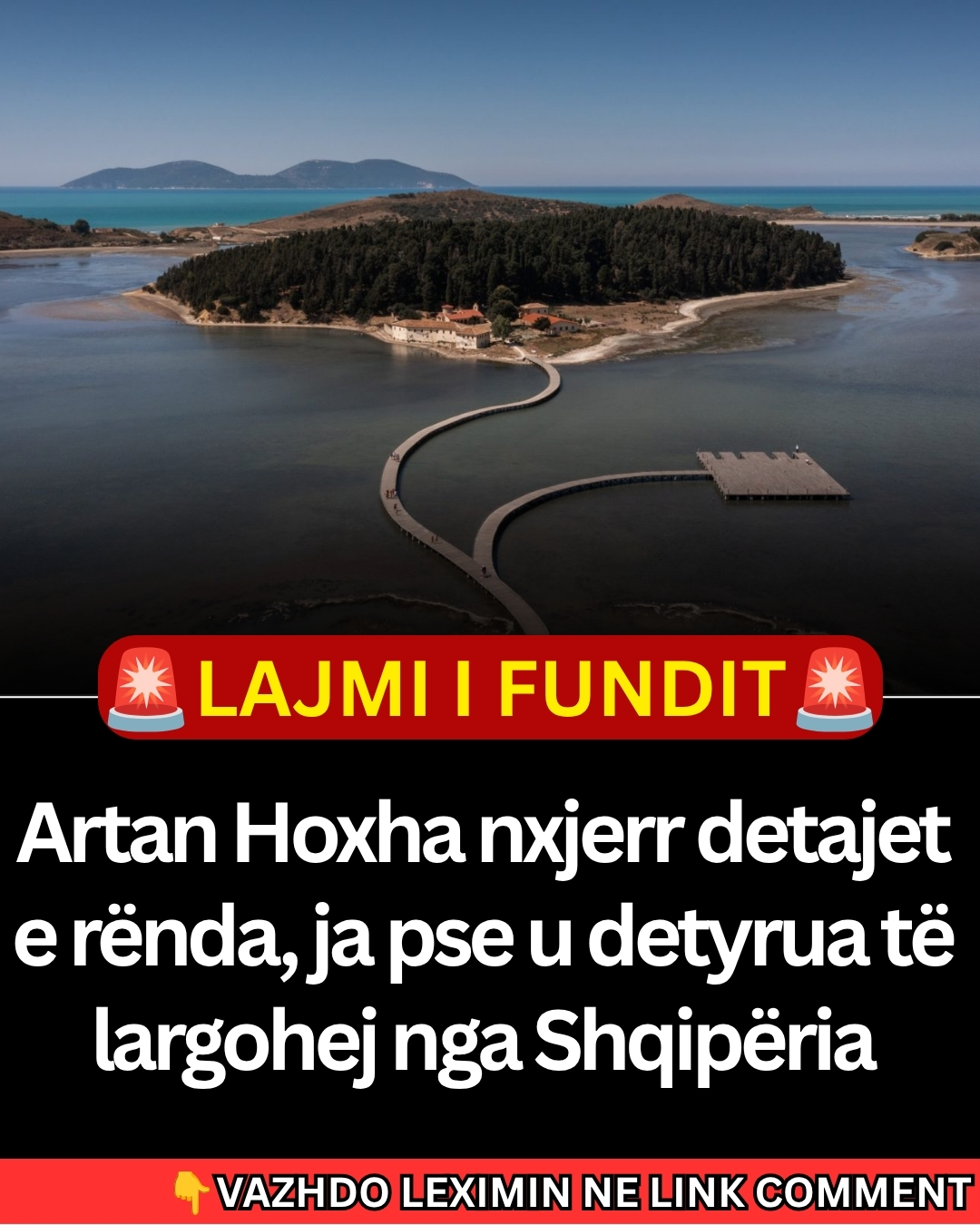
The protests against the tourist project in Zvërnec are no longer just a debate about the concreting of the coast or the protection of the Vjosa-Nartë area. They have become a major political, public and historical issue, where the interests of billions of investments, land ownership, SPAK investigations and well-known names from the Vlora underworld of the 1990s collide.
For several days in a row, citizens, activists and civil society representatives have been protesting in Tirana against the construction of the luxury resort in Zvërnec. In the fifth protest, citizens marched from Skanderbeg Square to the Prime Minister’s Office, demanding the cancellation of the project, the repeal of the strategic investment framework, the cancellation of the amendments to the law on protected areas and the resignation of the government. According to reports, the project in Zvërnec has been presented by the government as an investment worth around 4 billion dollars.
The issue has also received international attention, as the project is linked to investments close to Jared Kushner, the son-in-law of US President Donald Trump. Reuters reports that thousands of Albanians have protested in Tirana against the project of a company linked to Kushner, in a sensitive area near the Vjosa-Narte protected landscape, where there are habitats for flamingos, seals and sea turtles. Environmentalists warn that the project endangers hundreds of hectares of coastline, while the government and developers claim that the investment will be implemented in compliance with environmental legislation.
But beyond the environmental debate, the name of Artur Shehu, one of the landowners in the area where the project is planned, has also come into the spotlight. SPAK has imposed a seizure of over 195 million dollars transferred to the accounts of Albanian landowners, including Artur Shehu and others, while it had previously verified the transfer from investors from Qatar. According to reports, the investigation is related to the verification of property titles and suspicions of property alienation in the Zvërnec area.
Shehu’s name has returned to the debate after the statements of investigative journalists Ferdinand Dervishi and Artan Hoxha. Dervishi, on the show “Të Paekspozuarit”, described Shehu as a well-known character in Vlora since the time of the boat traffic, mentioning an old clash with Zani Çauşi, where according to him there were victims and a relative of Shehu was killed. Dervishi also said that Shehu has been seen for years as a man of great influence, who has not been caught by the law, but who has been mentioned in investigations and debates about properties in Zvërnec.
Meanwhile, according to today’s statement by journalist Artan Hoxha, the great clash of 1998 between the people of Zani Çaushi and Artur Shehu was precisely related to the battle for the lands of Zvërnec and the surrounding areas. This has shifted the debate from a current tourist project to a much longer history: who really controlled these lands, how the ownership titles were acquired, and why this particular area has become the hottest point of public conflict.
Artur Shehu himself has reacted publicly for the first time, denying the accusations and stating that the land in Zvërnec is an old family property. He said that his tribe has 460 hectares, while about 253 hectares are with a certificate of ownership. Shehu has also denied the claims about the meeting in Aruba, describing them as untrue, and stated that SPAK is free to verify the documents.
At this point, the Zvërnec issue has gone beyond a local protest. It has become a symbol of the greater doubts that accompany the development of the Albanian coast: disputed lands, hastily approved strategic investments, lack of transparency, environmental concerns, and old underworld figures who resurface whenever it comes to areas of staggering value.
The government, on the other hand, insists that the investment will not be stopped. Prime Minister Edi Rama has invited the protesters to dialogue, but they have refused, demanding the cancellation of the project. At the same time, the majority defends the project as a historic opportunity for elite tourism, while the opposition and activists see it as an example of the capture of public and natural wealth by large private interests.
For the protesters, Zvërnec is no longer just a coastal village or an investment zone. It has become the dividing line between two models: an Albania that develops while preserving nature and public property, or an Albania where the coast, lagoons, and the most precious lands pass into the hands of a few people with the blessing of politics.
If SPAK’s investigation into the property titles goes to the end, the Zvërnec case could open one of the most important files of recent years: not only who will build the resort, but who got the land, how they got it, and why these old stories of Vlora are today becoming the heart of the largest citizen protest against the concreting of the coast.